-
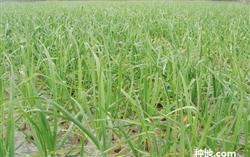
What should you pay attention to when growing garlic? These key points you need to master
What should you pay attention to when growing garlic? Please guide. When growing garlic, pay attention to the following aspects: fine soil preparation. For growing garlic, fertile, loose, well-drained sandy soil is best, and continuous cropping should be avoided as much as possible. Generally, deep plowing is 15-20 cm; together with deep plowing, apply 1000-1500 kg of barnyard manure per mu, build beds about 2 m wide,...
-
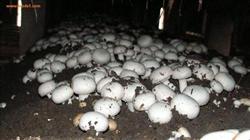
How to prevent and control button mushroom diseases? These measures must be mastered
Disease prevention and control principles: prevention first, with equal emphasis on prevention and control. 1. Rot disease: a fungal disease, mainly characterized by white mycelium as fine as spider silk appearing on the casing soil layer of the mushroom bed, growing irregularly and arranged in a spider-web pattern; infected mushroom bodies basically stop growing and gradually turn brown, soften and rot. Prevention and control measures: treat the casing soil material to prevent disease before it appears. For chemical treatment of the mushroom shed, generally use Baibingsha to spray the mushroom shed in a carpet-like manner to thoroughly kill pathogenic bacteria; after sealing for 2 days, it can be put into use. Keep the shed temperature above 12°C and shed humidity below 90%. If disease is found, immediately take measures to dig out and clean up.
-
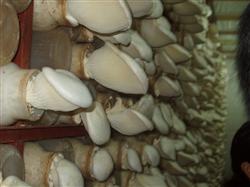
Three key techniques to master in the mushrooming management of the white king oyster mushroom
As a premium and rare edible mushroom, the white king oyster mushroom has developed rapidly in China, but many cultivation attempts end in failure. I would now like to share some of my experience in cultivating the white king oyster mushroom with everyone. 1. Post-ripening cultivation: after the mycelium of the white king oyster mushroom has fully colonized the bag, it cannot be induced to fruit immediately; it needs 50-60 days of physiological maturation before it can fruit. At this stage...
-
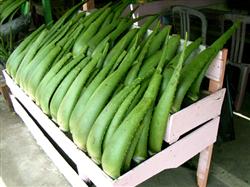
Detailed Guide to Edible Aloe Cultivation: Mastering the Key Points of Planting and Management
Section 1 Overview. Aloe is a perennial succulent herbaceous plant of the genus Aloe in the Liliaceae family. It originated in and is mainly distributed across the African continent, and wild resources exist in Yuanjiang, Yunnan Province, China. The edible part of aloe is the juicy, fleshy leaf, which contains abundant nutrients, mainly including relatively large amounts of B vitamins...
-
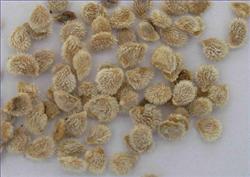
How to choose tomato seeds? Master these selection tips
How to choose tomato seeds? How should seeds be handled properly? Please explain and guide. For methods of selecting tomato seeds, you can refer to the following: 1. The selection of seeds should be based on the growing season, cultivation method and market demand to choose a suitable tomato variety. Excellent tomato varieties should have characteristics such as disease resistance, high yield and good quality. ...
-
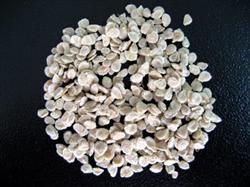
How to judge the quality of tomato seeds? These methods you need to master
How to judge the quality of tomato seeds? Methods needed, please advise. The quality of tomato seeds mainly depends on seed plumpness, germination rate, germination vigor and seed purity. (1) Plumpness, that is, how plump the seeds are. It is generally expressed by 1000-seed weight, i.e. the weight of 1000 seeds (grams). The greater the 1000-seed weight, the...
-
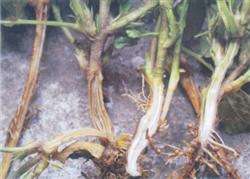
How to prevent and control peanut bacterial wilt? These methods you need to master
How to prevent and control peanut bacterial wilt? (1) Crop rotation: rotating between flooded and dry land for 1-2 years shows obvious results. On dry land, rotate with cereal crops; for lightly infected land 1-3 years, for heavily infected land 4-5 years. (2) Select disease-resistant varieties: currently promoted resistant varieties include Xiekangqing, Ehua No. 5, Zhonghua No. 2, You 92, Guiyou 28...
-
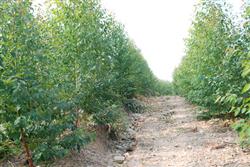
Eucalyptus planting: master the suitable growing areas and strictly control seedling quality
I. Fertilizer requirements. Eucalyptus is one of the three major fast-growing tree species, with a well-developed root system, strong absorption capacity and large growth volume. With sufficient water and fertilizer supply, it grows 1.5-5.5 m taller in 1 year and can be harvested for use in 4-5 years. The main nutrient elements absorbed by eucalyptus are: nitrogen, phosphorus, potassium, calcium, magnesium, zinc, boron, etc. According to research, each eucalyptus tree annually averagely...
-

How to plant apple trees? Master the cultivation techniques for better growth
How to plant apple trees well? Please give guidance. The following methods can be referenced for apple tree planting: 1. Seedling cultivation techniques; new orchards should all adopt new rootstocks and new varieties. It is recommended to use the wild sweet tea rootstock unique to the Yimeng Mountains for apple seedlings, locally known as (sweet tea has a high degree of wildness, strong soil adaptability, resistance to disease, drought and waterlogging, adaptability to a wide range of temperature conditions, and long lifespan). To improve the quality of new orchards, strictly prepare the land, apply sufficient base fertilizer, and before planting dig planting holes according to the required density, with a specification of 0.6m x 0.6m and a depth of 0.6m. Keep subsoil and topsoil separate. Apply base fertilizer per mu (organic fertilizer) 1500kg-2000kg. According to local soil conditions, more organic fertilizer containing fine sandy soil can be applied, (a small amount of nitrogen fertilizer 0.1kg per tree, potassium fertilizer 0.2km, compound fertilizer 0.2kg can be added) and mixed with topsoil and backfilled to 15cm from ground level, then trampled firm. Make full use of land resources, with a plant-row spacing of 2m x 2m. Planting trenches of 0.6m x 0.6m can also be dug. Irrigate the holes 3-4 days before planting. Before planting, soak in a solution prepared with 700 times thiophanate-methyl or 500 times carbendazim for a full day and night, so that the seedlings fully absorb water and are disinfected. Dip the root system of the soaked seedlings in mud mixed with rooting powder, then plant. After planting, water promptly, cover with soil and plastic film to retain moisture, and drain promptly when waterlogged to prevent the seedlings from turning yellow and loss of manure water.
-
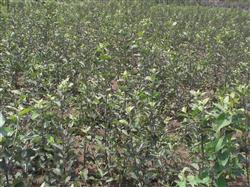
How to prune vigorous apple trees? These methods you need to master
How to prune vigorous apple trees? Please explain the methods. Vigorous apple trees are mostly young trees up to the early fruiting stage. To moderate tree vigor and promote flowering and fruit set, pruning should be done as follows: 1. Open the angle of the scaffold branches. Use propping, pulling, pressing and other methods to open the angle of the scaffold branches. For perennial and strongly vigorous scaffold branches, the multiple-saw method can be used to force the angle open and moderate tree vigor.
条件筛选