How to choose tomato seeds? Master these selection tips
How to choose tomato seeds? How should seeds be handled properly? Please explain and guide. For methods of selecting tomato seeds, you can refer to the following: 1. The selection of seeds should be based on the growing season, cultivation method and market demand to choose a suitable tomato variety. Excellent tomato varieties should have characteristics such as disease resistance, high yield and good quality. ...
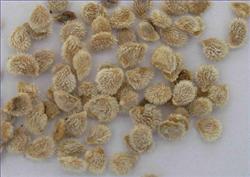
How to choose tomato seeds? How should seeds be handled properly? Please explain and guide
For methods of selecting tomato seeds, you can refer to the following:
1. Selection of seeds
Choose a suitable tomato variety according to the growing season, cultivation method and market demand. Excellent tomato varieties should have characteristics such as disease resistance, high yield and good quality. At the same time, also check indicators such as seed maturity, plumpness, mechanical damage, germination rate and germination vigor. Qualified tomato seeds should have a seed purity higher than 98%, pure seed color with no mildew, a purity higher than 95%, a germination rate higher than 88%, and a moisture content lower than 8%. For this reason, seeds should be purchased from research institutions or seed departments with high reputation, and strictly guard against buying counterfeit or inferior seeds that cause economic losses.
The 1000-grain weight of seeds is the main indicator of seed plumpness. If the 1000-grain weight is lower than the lower limit figure, it is not suitable for production use. Generally, the 1000-grain weight of large-fruited tomato seeds is about 3.2 grams.
In order to increase the number of years tomato seeds can be used in production, good conditions should be created as much as possible during seed storage to extend seed life. During seed storage, the seeds should be fully dried, the relative humidity of the air in the storage warehouse should be reduced as much as possible, and the temperature should generally be below 5°C. Generally, the life span of tomato seeds is 3 to 6 years, and the number of years they can be used in production is 2 to 3 years.
2. Seed treatment
Pre-sowing seed treatment can reduce seed-borne pathogens in tomato seeds, improve seed vigor, promote uniform emergence and enhance seedling resistance.
(1) Soaking seeds
This is to allow tomato seeds, under temperature conditions favorable for water absorption, to absorb enough water in a short time for the process from seed germination to emergence. Clean clay pots, porcelain pots or plastic pots can be used as soaking containers; do not use metal containers or containers with oil stains. The usual soaking method is to soak tomato seeds in clean water at 22 to 28°C. The water should submerge the seeds, and they should be stirred continuously to remove the shriveled seeds floating on the water surface. Rub and wash the seeds with your hands to remove the pulp, skin and mucus adhering to the seeds, then change to clean warm water of the same temperature and soak for 6 to 8 hours, so that the seeds can fully absorb water. This soaking method is simple and safe, but it has no disinfection or sterilization effect on the seeds. In recent years, with the continuous improvement of cultivation techniques, the following methods are often used to treat seeds:
Trace element treatment
The specific method is to first prepare a solution of multiple trace elements in a certain proportion. The formula is 5000 kg of boiled cold water, plus 2 g of copper sulfate, 2 g of boric acid, 2 g of zinc sulfate, 1.5 g of manganese sulfate and 0.1 g of ammonium sulfate. Then wrap the tomato seeds in gauze, immerse them in this solution for 24 hours, take them out, dry them slightly in the shade and then soak them again for 12 hours. This can promote early maturity of tomatoes and increase yield.
Gibberellin treatment
Soaking seeds in a 5% to 10% gibberellin solution can promote germination and seedling growth, but the concentration must not be too high, otherwise it will cause excessive seedling growth.
In addition, seeds can also be soaked in a 1% sodium bicarbonate solution for 24 hours, which can promote plant development and early maturity.
(2) Seed disinfection
There are many diseases spread by tomato seeds, such as damping-off, leaf mold, viral disease, early blight, Fusarium wilt, Septoria leaf spot, bacterial canker and so on. Therefore, seeds must be disinfected before sowing. There are many methods of seed disinfection, and any one can be chosen according to local conditions.
Hot water soaking
Soak tomato seeds in cold water for 10 minutes, then place them in hot water at 50°C, stirring continuously and quickly so that the seeds are heated evenly, and add hot water at any time. Use a rod thermometer to measure the water temperature and keep it stable at 50 to 52°C. After 20 to 30 minutes, remove them and put them in cold water to dissipate the residual heat, then soak the seeds in warm water at 25 to 30°C for 4 to 6 hours. This method is simple, low-cost and strongly sterilizing, and is a commonly used disinfection method.
High temperature treatment
Place dry seeds in a 70°C constant-temperature incubator and treat for 72 hours, then soak the seeds, promote germination and sow. This has a certain control effect on tomato viral disease.
Chemical soaking of seeds
Treat seeds with fungicides to disinfect pathogens attached to the seed surface. The main commonly used chemicals are:
A. Formalin. First soak the seeds in clean water for 4 to 5 hours, then place them in a 1% formalin solution (that is, 1 part of 40% formaldehyde solution mixed with 99 parts of water). After soaking for 15 to 20 minutes, take them out, wrap them in a wet cloth, place them in a sealed container and keep them closed for 2 to 3 hours for fumigation disinfection, then rinse them repeatedly with clean water. This can reduce and control tomato early blight and Fusarium wilt.
B. Kangkuening. Use each tube (2 ml) of Kangkuening added to 10 to 15 kg of water, soak the seeds for 4 to 5 hours, then wash the seeds repeatedly with clean water, dry them slightly, and it has a control effect on Fusarium wilt and other diseases.
C. Potassium permanganate. First soak the seeds in warm water at 40°C for 3 to 4 hours, then place them in a 1% potassium permanganate solution and soak for 10 to 15 minutes, using the strong oxidizing effect to kill pathogens on the seed surface. After taking the seeds out, rinse them clean with clean water, which can reduce the harm of bacterial canker and tobacco mosaic virus disease.
D. Ridomil. Disinfect with a 25% Ridomil 1000-fold solution to prevent late blight and cottony leak pathogens on the seed surface.
E. Hydrochloric acid. Soak the seeds in a 0.5% dilute hydrochloric acid solution for 3 hours, which can eliminate pathogens attached to the seed surface.
F. Chemical seed dressing. Dress seeds with 70% dexon powder at an amount of 0.3% of the seed weight; dress seeds with 50% dichlone wettable powder at an amount of 0.2% of the seed weight. This has a significant effect on preventing tomato seedling damping-off. When dressing seeds, the amount of chemical used should be accurate, and it should be mixed evenly with the seeds. The seeds to be dressed should be dry, and operators should wear masks and gloves to ensure safety.
(3) Germination promotion
After the seeds are soaked and disinfected, germination is promoted to encourage rapid development of the young embryo. During the germination process, suitable temperature, moisture and air conditions should be provided. The suitable temperature for tomato seed germination is 25 to 30°C, and the relative humidity is above 90%. During germination, the seeds should be checked and turned frequently, and the seeds should be rinsed 1 to 2 times a day on time with warm water at about 30°C. Shake off the surface water of the seeds or let them dry slightly before continuing germination, so as to maintain humidity, renew air and promote uniform germination of all seeds. Under suitable conditions, tomato seeds can germinate after 2 to 3 days. The commonly used germination methods include the following:
Clay pot germination method
Wash the soaked and disinfected seeds, wrap them in clean wet gauze, and place them in a clay pot lined with rice straw to avoid water accumulation at the bottom causing the seeds to mold and rot. Cover the top with a damp burlap bag or towel to maintain humidity, then place the clay pot on a heated flue, a warm kang surface or in a germination box to promote germination.
Sand-mixing germination method
Mix the soaked, disinfected and washed seeds evenly with clean river sand at a ratio of 1:1.5, put them into a clay pot, cover with wet sand or a wet cloth, then place in a suitable temperature location to promote germination.
Electric heating temperature-controlled germination method
Control the temperature by installing an electronic temperature controller in the germination box, and maintain suitable air humidity.
For control of the germination temperature, it should be slightly lower at the beginning, then gradually increased, and lowered again when the radicle is about to break through the seed coat (down to 20 to 24°C), to promote a thick and strong radicle. When about 70% of the seeds have radicles showing white, the seeds should be wrapped in a wet towel and placed in a refrigerator at about 5°C while maintaining suitable humidity, and sown when conditions are good.
Click to get more tomato growing techniques
Click to get more vegetable growing techniques