Detailed Guide to Edible Aloe Cultivation: Mastering the Key Points of Planting and Management
Section 1 Overview
Aloe is a perennial succulent herbaceous plant of the genus Aloe in the Liliaceae family. It originated in and is mainly distributed across the African continent, and wild resources exist in Yuanjiang, Yunnan Province, China.
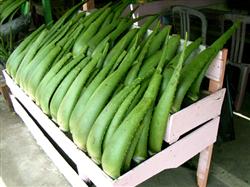
The edible part of aloe is the juicy, fleshy leaf. The leaf contains abundant nutrients, mainly including relatively large amounts of B vitamins, cellulose, healing hormones, 11 free amino acids, 21 organic acids, 18 trace elements such as molybdenum, zinc, germanium and boron, chlorophyll, antioxidant enzymes and other physiologically active and enzymatic substances, as well as fruit acids, polysaccharides and monosaccharides, and it also contains antibacterial and anti-ulcer medicinal components such as aloin, aloe-emodin and aloesin. It has a 4,000-year history of use as a folk medicine. In recent years, using aloe as a vegetable has become a trend. In some countries, high-end dishes made with aloe, such as aloe salad, braised beef with aloe, stir-fried tomato with squid and aloe, and aloe sandwiches, have become popular items in some famous restaurants. The United States is currently the country that grows and uses the most aloe; there are even American aloe cultivation bases on Hainan Island in China, and their products have entered markets across both northern and southern China at high prices.
Section 2 Requirements for Environmental Conditions
Aloe originated in the tropics and prefers high-temperature, dry environmental conditions.
1. Temperature
Aloe prefers warmth and can tolerate high temperatures of 40°C; it is not cold-tolerant and suffers freeze damage when the temperature reaches 0°C. Its low-temperature tolerance varies by variety, among which Aloe arborescens is relatively cold-tolerant.
2. Moisture
Aloe has strong drought tolerance and fears waterlogging. In moist soil it easily suffers root rot and dies, and excessive watering that leaves the soil without air exchange also easily causes root rot and death.
3. Light
Aloe prefers light, but excessive exposure to strong sun can put aloe into a semi-dormant state or stop its growth. Especially during the seedling stage, exposure to strong sun can turn the leaves purple or make them dry and wrinkled.
4. Soil
Aloe is not strict about soil and tolerates poor soil, but in poor soil and in heavy clay soil, the root system is underdeveloped, growth is slow, and the plants are small. In loose, fertile sandy soil that drains and irrigates well and is rich in organic matter, it grows quickly, the leaves are thick, the color is deep green and glossy, and yields are good. The most suitable pH is 6-6.5.
5. Adaptability of Different Varieties to Environmental Conditions
Chinese aloe has the strongest tolerance to drought, dry heat and poor soil, and has a high tillering rate. Aloe arborescens has the strongest cold tolerance, and variegated aloe has strong disease resistance.
Section 3 Cultivation Techniques
1. Preparation of Seedlings
(1) Seed propagation and seedling raising. After planting, aloe can send up flower stems and bloom in 2-5 years, but it is not easy to obtain seeds through self-pollination and fruiting. Artificial pollination is needed to obtain more seeds. Seedlings grown from seeds grow slowly, and it takes about 3 years from seedling to mature plant, so seed propagation is rarely used in production; it is used when breeding excellent new varieties.
Sowing time: under protected cultivation, sowing can be done in both spring and autumn.
Sowing method: raise seedlings in seedling pots or seedbeds. Use clean river sand for the bed soil, or thoroughly mix 1 part each of vermiculite, peat and perlite and put it into seedling pots or level it on the seedbed. After watering thoroughly, sow by dibbling or drilling, then cover with plastic film to keep warm.
Seedling-stage management: from sowing to emergence, if the temperature is 15-30°C, seedlings emerge after about 30 days. After the seedlings emerge uniformly, remove the covering promptly. Water or spray thoroughly only after the seedling pot or bed soil has dried, and do not water again until it dries again. When the young seedlings are about 2 cm tall, spray a 0.1% potassium dihydrogen phosphate aqueous solution, applying a small amount according to the growth vigor of the seedlings. When raising seedlings in a seedbed, the seedlings need to be separated: divide out the overly dense plants and plant them separately. Separation is carried out when the seedlings are about 3-5 cm tall, or thin them to a spacing of 6-8 cm square. When thinning, dig them up with the roots and divide them into another temporary planting bed, temporarily planting them at 6-8 cm square. When the seedlings are about 10 cm tall and have 6 leaves and 1 heart leaf, they can be transplanted into small flower pots or planted in the ground in a greenhouse.