-
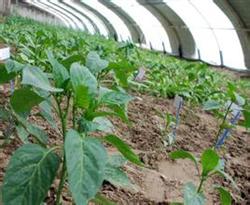
Detailed Explanation of Pepper Seedling Transplanting Methods, Master All Key Technical Points
1. Transplanting and irrigation. Transplanting can be done after the disastrous weather in early April, generally from April 15 to 25. When transplanting, pepper seedlings are required to be 16-17 cm tall, with 8 true leaves, and a seedling age of 50-60 days. Two plants per hole, irrigate promptly after planting to ensure the survival rate of planted seedlings. One week after transplanting, replenish water promptly according to soil moisture conditions. 2. Intertillage...
-
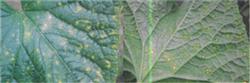
How to prevent pumpkin leaf spot? Mastering these methods is key
Pumpkin leaf spot mainly damages leaves and flower stalks. The pathogen overwinters in the soil with diseased plant debris. In spring, the pathogen spreads via splashing rainwater. In the early stage of the disease, leaf spots are round to nearly round or irregular in shape. The leaf margins are dark brown, and the junction between diseased and healthy tissue appears water-soaked. When humidity is high, dense small black dots form on the spot surface, and in severe cases the leaf spots merge, causing the leaves to partially...
-
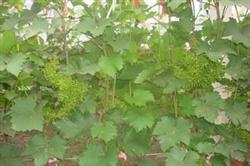
How to care for grapes during the flowering and fruiting period? Master these key points
1. Strengthen fertilizer and water management. In production, fertilizer and water management must be carried out according to the phenological stages of grape growth and development. In addition to deep plowing, fertilizing and improving the soil when planting grapes, fertilization and irrigation should also be carried out at each growth stage according to the needs of grape growth and development. 1. After the grapevines are uncovered...
-

How to fertilize napa cabbage? Master the fertilization patterns and methods
Fertilization patterns and methods for napa cabbage
-

How to manage Chinese cabbage during the head-forming stage? Mastering these key points is essential
How should Chinese cabbage be managed during the head-forming stage?
-
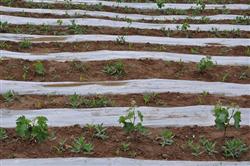
How to manage newly planted grapevines? These technical points need to be mastered
For grapes planted in the same year to bear fruit early and produce a high yield, the following measures should be carried out well in cultivation and management: Fertilization should be frequent and light. During the grape growing season, fertilization should be done frequently and lightly to reduce fertilizer burn and waste, thereby promoting good growth and development of new shoots and laying a solid foundation for early shaping, early fruiting, and high yield...
-
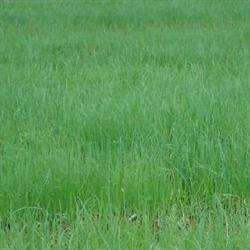
Five key points for raising onion seedlings: master the technique to grow strong seedlings
1. Choose superior varieties. In production, purple-skinned varieties such as Ziyu No. 1, Ziyu No. 2, Zixing, and Shuanghuanhong can be selected. These varieties have the characteristics of strong pungency, high yield, excellent quality, and suitability for export. These varieties generally yield about 5000 kg per mu, and high-yielding plots can reach 7500 kg per mu. 2...
-
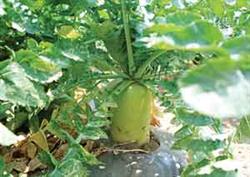
How to fertilize Chinese cabbage and radish? Master the nutrient requirements and fertilization methods
Chinese cabbage is an important leafy vegetable. Chinese cabbage has a very high yield, reaching over 5000 kg per mu, so it has relatively high fertilizer requirements. The ratio of the three is 1:0.4:1.1. Therefore, like other leafy vegetables, Chinese cabbage requires adequate nitrogen nutrition during the vegetative growth period, which is particularly important for promoting the formation of large leaves and increasing the photosynthetic rate...
-
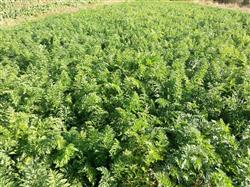
How to Breed Carrot Seeds? Master These Practical Tips
1. Symptoms: Carrot tops grow excessively, with long internodes and enlarged leaves; the carrot's fleshy root does not develop, the root system is small, fiber increases, and the root shape becomes abnormal, etc. In some plots, adverse phenomena such as relatively severe disease occurrence appear. 2. Causes: Carrots are mainly grown for harvesting the underground root, and their requirements for soil...
-
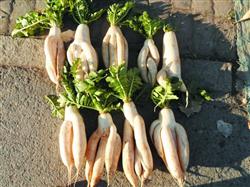
How to avoid forked radishes? These prevention methods you need to master
1. Soil and cultivation aspects: The soil is plowed too shallow, and the subsoil is too hard. At the same time, during deep plowing, hard objects such as stones, tree roots, tiles, and plastic are not removed. With the subsoil too hard and hard objects obstructing it, the main root is inevitably hindered, which promotes the development of lateral roots. Once the substances produced by photosynthesis accumulate, the main root and lateral roots...
条件筛选