How to care for grapes during the flowering and fruiting period? Master these key points
1. Strengthen fertilizer and water management. In production, fertilizer and water management must be carried out according to the phenological stages of grape growth and development. In addition to deep plowing, fertilizing and improving the soil when planting grapes, fertilization and irrigation should also be carried out at each growth stage according to the needs of grape growth and development. 1. After the grapevines are uncovered...
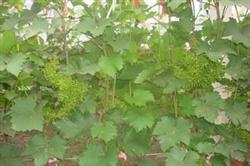
I. Strengthen fertilizer and water management.
In production, fertilizer and water management must be carried out according to the phenological stages of grape growth and development. In addition to deep plowing, fertilizing and improving the soil when planting grapes, fertilization and irrigation should also be carried out at each growth stage according to the needs of grape growth and development.
1. After the grapevines are uncovered and before bud break, apply quick-acting fertilizers such as urea and decomposed human manure and urine, and irrigate to promote bud break.
2. During the new shoot and leaf growth period, apply a compound fertilizer of nitrogen, phosphorus and potassium and irrigate to promote shoot growth. During the growth period, foliar topdressing should also be carried out; this is a good method with quick results, little loss, and savings in labor and fertilizer. Generally, 3~5 days after foliar spraying, new shoots and leaves can turn dark green, improving photosynthetic efficiency. The concentrations used for foliar topdressing are 0.2%~0.3% for urea, 1%~3% for superphosphate extract, 0.3%~0.5% for monopotassium phosphate and potassium sulfate, and 0.1%~0.3% for borax, zinc sulfate, magnesium sulfate and manganese sulfate, etc. Except for superphosphate, all the above fertilizers can be mixed with Bordeaux mixture for spraying.
3. After natural physiological fruit drop, when the berries enter the enlargement stage, more fertilizer and water are needed. Decomposed human manure and urine should be applied to the roots, and monopotassium phosphate quick-acting fertilizer should be mixed into foliar sprays combined with disease prevention, along with irrigation.
4. During the fruit coloring stage, when preventing and controlling white rot, downy mildew and powdery mildew and spraying thiophanate-methyl, urea and monopotassium phosphate should be mixed in; during this period, grapes need more water, and irrigation should be noted in the north.
II. Thinning fruit clusters and berries.
In production, grape yield and fruit quality are negatively correlated. Generally, when grape yield is lower, fruit quality is better; when yield is too high, quality declines. Grape yield is made up of fruit clusters and berries, that is, it is related to cluster size and berry size. Therefore, yield should be further adjusted through thinning fruit clusters and berries to achieve the goal of improving quality and benefits.
1. Timing of thinning fruit clusters and berries. In order to further reduce unnecessary consumption of nutrients, cluster thinning should be carried out after natural physiological fruit drop, when the number of inflorescences or fruit clusters to be retained per square meter of trellis surface can be estimated. Generally, 4~5 fruit clusters are retained per square meter on a pergola trellis surface, and 5~6 fruit clusters per square meter on a vertical trellis surface. For berry thinning, the first thinning is mostly carried out when the berries grow to the size of a soybean (4574,16.00,0.35%) seed; the second thinning can be carried out when the berries enter the pit-hardening stage and berry size can be seen. Thinning should remove overly dense, overly small and deformed berries.
2. Methods of thinning fruit clusters and berries. On the basis of thinning excess inflorescences, the yield on the trellis surface should also be checked. If the load is excessive, excess fruit clusters or berries must be thinned as early as possible. According to production experience, for every 1 kg of fruit produced, there must be 1.5~2.5 sq m of leaf area to ensure excellent berry quality and bring the fruit sugar content to 16~17 degrees. This is because fruit quality and yield are greatly correlated with leaf area size. Usually, when leaf area is large, yield is high and quality is good.
III. Spray boron fertilizer to promote increased yield.
Boron is a natural mineral substance and one of the trace elements required for plant growth and development. It is an important component of the grapevine body and is most abundant in floral organs. Boron can promote the transport of carbohydrates, stimulate pollen germination and pollen tube elongation, facilitate the smooth progress of pollination and fertilization and the formation of berries, thereby increasing the fruit-setting rate, etc. Boron can also increase the content of vitamins and sugar in the fruit, improve quality; increase the intensity of photosynthesis, increase chlorophyll content, promote the growth of the phloem and xylem of new shoots, increase the number of vessels, and accelerate shoot maturity. Therefore, about 10 days before grape flowering and during the flowering period, a 0.2%~0.3% borax solution should be sprayed on the leaves; when spraying carbendazim, chlorothalonil and other agents to control black pox, gray mold and rachis blight, add boron fertilizer and monopotassium phosphate. In this way, the grape fruit-setting rate can be significantly increased.
IV. Spray rare earth and hormones.
① Spraying rare earth. Foliar spraying of rare earth solution not only has a significant yield-increasing effect, but can also increase the sugar content of the fruit. The method is: spray a 0.05% rare earth nitrate solution during the berry softening stage, for 2 consecutive sprays. After spraying, exposure to strong sunlight or washing off by rain should be prevented, so as not to reduce the efficacy.
② Spraying hormones. When grape berries begin to soften, spraying hormones such as Tiaojielin and chlormequat can increase the grape sugar degree of the fruit. The optimal spraying concentrations are: 600×10-6 for Tiaojielin; 1200×10-6 for chlormequat.
V. Promote coloring and early ripening.
① Control shoots. For vigorous fruiting shoots, twist the shoot above the inflorescence before flowering, or pinch the tip after leaving 5~6 large leaves, which can increase the fruit-setting rate.
② Thin shoots. When the berries begin to color, remove old leaves at the base of new shoots and thin out ineffective new shoots that shade the fruit clusters, improve ventilation and light conditions, and promote berry coloring.
③ Pinch off tendrils. Tendrils not only consume nutrients within the plant, but also often twine around branches and fruit, hindering plant growth and development, so they should be pinched off at 1 cm while still young and tender.
④ Girdling. Before berry coloring, girdling at the base of the fruiting mother branch or the base of the fruiting branch can promote berry coloring and advance ripening by 7~10 days.
⑤ Bagging fruit clusters. In areas with lower temperatures, after the inflorescence extends, cover the inflorescence with a special grape plastic film bag; by the young fruit drop period, tear open the bottom of the bag, turning the "bag" into a "tube." This method can make grapes mature 15 days earlier and can prevent fruit cracking.