How to manage newly planted grapevines? These technical points need to be mastered
For grapes planted in the same year to bear fruit early and produce a high yield, the following measures should be carried out well in cultivation and management: Fertilization should be frequent and light. During the grape growing season, fertilization should be done frequently and lightly to reduce fertilizer burn and waste, thereby promoting good growth and development of new shoots and laying a solid foundation for early shaping, early fruiting, and high yield...
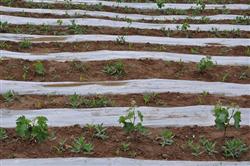
For grapes planted in the same year to bear fruit early and produce a high yield, the following measures should be carried out well in cultivation and management:
Fertilization should be frequent and light. During the grape growing season, fertilization should be done frequently and lightly to reduce fertilizer burn and waste, thereby promoting good growth and development of new shoots and laying a solid foundation for early shaping, early fruiting, and high yield. Technically, from after grape bud break to late August, fertilizer should be applied once a month, with each application of 5 kg of human and livestock manure and urine water fertilizer plus 50 g of nitrogen fertilizer per plant, applied in holes. If July to August is dry with little rain, weeds should be used to cover around the grape plants, and soil should be mounded for drought resistance and irrigation should be carried out.
Setting up supports and summer pruning. Grapes are vining climbing plants and must be supported to achieve high yields. Therefore, in the year of planting, trellises should be set up early. Plants that cannot be supported with trellises should still have half-supports to tie and guide new shoots, increasing their polar growth. However, by winter, trellises must be set up, otherwise growth in the following year will be affected. After grape bud break, when new shoots grow to a certain length (about 20 cm), one thick and strong new shoot can be selected and retained as the main branch, and the remaining tender shoots should be removed. Under good fertilizer and water management conditions, grape annual growth can reach 4 to 5 m. To promote secondary shoots for shaping, pinching should be done when new shoots grow to the height of the trellis surface, while also paying attention to removing tendrils. In production, removing tendrils is often neglected by many fruit growers, and this is one of the important factors affecting early fruiting and high yield, because under good fertilizer and water management conditions, if environmental conditions are suitable, tendril buds can differentiate into flower buds. During winter pruning, secondary shoots can then be used as framework branches to advance plant shaping.
Keep the soil in the orchard loose year-round. Due to increased frequency of fertilization and rain soaking, the soil in the orchard easily becomes compacted, which is very unfavorable for the growth and development of the plant root system (grapes have a fibrous root system, and growth and development in the same year are not strong). If the soil in the orchard can be kept loose year-round, the growth of technical shoots can increase by 15% to 30% compared with general management, and the harm and occurrence of diseases and insect pests can be reduced.
Pay attention to preventing and controlling diseases and insect pests. Generally, grapes planted in the same year have relatively mild diseases, but for plants planted last winter, because they were transferred from elsewhere over long distances without quarantine and disinfection treatment, some grapes may show signs of disease, such as black pox and powdery mildew, and should be sprayed with pesticide in time for control. For powdery mildew, a 1000-fold solution of thiophanate or Bordeaux copper with 500 g each of quicklime can be sprayed, about once every two weeks. To control other diseases, omethoate 1000-fold, isocarbophos 800-fold, and formaldehyde 1605 emulsion 1000-fold can be selected to ensure robust plant growth and development and lay the foundation for early fruiting.