How to avoid forked radishes? These prevention methods you need to master
1. Soil and cultivation aspects: The soil is plowed too shallow, and the subsoil is too hard. At the same time, during deep plowing, hard objects such as stones, tree roots, tiles, and plastic are not removed. With the subsoil too hard and hard objects obstructing it, the main root is inevitably hindered, which promotes the development of lateral roots. Once the substances produced by photosynthesis accumulate, the main root and lateral roots...
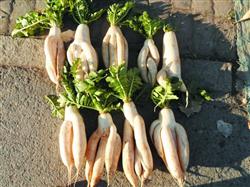
1. Soil and cultivation aspects: The soil is plowed too shallow, and the subsoil is too hard. At the same time, during deep plowing, hard objects such as stones, tree roots, tiles, and plastic are not removed. With the subsoil too hard and hard objects obstructing it, the main root is inevitably hindered, which promotes the development of lateral roots. Once the substances produced by photosynthesis accumulate, the main root and lateral roots become enlarged at the same time. In addition, if the soil is not turned and dried enough, and there are too many pests such as earthworms, white grubs, and mole crickets, the main root is damaged and lateral roots naturally form. Forking will also appear later.
2. Manure not fully decomposed: Manure that is not fully decomposed contains a large amount of uric acid, which both burns the main root and stimulates lateral roots to grow. If base fertilizer is applied unevenly and not turned deep into the soil layer, it likewise hinders the elongation of the main root and produces lateral roots. Once substances accumulate, the lateral roots enlarge and form forks.
3. Planting density too high: When sowing and thinning radishes, if the spacing is too wide, summer and autumn radishes fork less, while autumn-winter or winter-spring radishes fork more. The reason is that the weather in autumn, winter, and spring is especially favorable for radish growth, and photosynthesis accumulates abundant substances. If the planting density is too sparse, the plants grow especially vigorously, and the leaves produce especially many photosynthetic products, so the forking phenomenon naturally appears more often.
Now that the causes of forking have been found, there are naturally ways to avoid it. Carefully carry out deep plowing and meticulous cultivation of the soil to keep it loose. Apply fully decomposed organic fertilizer, and spread these fertilizers evenly into the soil layer. According to the requirements of each variety, plant at a reasonable density. By doing these three things well, the forking phenomenon in radishes will naturally be overcome.