Detailed Explanation of Pepper Seedling Transplanting Methods, Master All Key Technical Points
1. Transplanting and irrigation. Transplanting can be done after the disastrous weather in early April, generally from April 15 to 25. When transplanting, pepper seedlings are required to be 16-17 cm tall, with 8 true leaves, and a seedling age of 50-60 days. Two plants per hole, irrigate promptly after planting to ensure the survival rate of planted seedlings. One week after transplanting, replenish water promptly according to soil moisture conditions. 2. Intertillage...
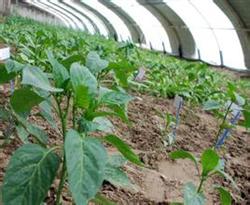
1. Transplanting and irrigation. Transplanting can be done after the disastrous weather in early April, generally from April 15 to 25. When transplanting, pepper seedlings are required to be 16-17 cm tall, with 8 true leaves, and a seedling age of 50-60 days. Two plants per hole, irrigate promptly after planting to ensure the survival rate of planted seedlings. One week after transplanting, replenish water promptly according to soil moisture conditions.
2. Intertillage, irrigation, and fertilization. Carry out the 1st intertillage when machinery can enter the field, with 3 intertillages throughout the period. When peppers enter the peak period of flowering and fruit setting, they need more water and should be irrigated promptly, otherwise it will cause flower and pepper drop. Watering should be done in small amounts and multiple times, not flood irrigation, to prevent disease occurrence. In the middle and late stages, irrigation should keep the field moist. Combine the 3 intertillages with topdressing, applying 5 kg urea, 10.2 kg Sacchafu, 10 kg diammonium phosphate, and 5.2 kg potash fertilizer per 667 sq m, with a total fertilizer input of 65 kg for the whole period.
3. Pest and disease control and foliar fertilizer spraying. There are many pests and diseases of peppers, and the main ones causing serious damage in our region are two diseases and two pests, namely Phytophthora blight, viral disease, cotton bollworm, and aphids. Viral disease generally occurs during the flowering and fruit-setting period, with high incidence when there is drought and little rain and a large aphid population. When there is abundant rain, improper irrigation, flood irrigation, or heavy rain, continuous cloudy days lead to major outbreaks of Phytophthora blight. In the control process, prevention should be the main approach with integrated control. In the early stage of viral disease occurrence, use 20% Virus A wettable powder at 400 times dilution, spray once every 7 days, spraying 2-3 times consecutively. Use 58% metalaxyl mancozeb at 500 times dilution, thiophanate-methyl at 500 times dilution, spray once every 7-10 days, spraying 2-3 times consecutively to control Phytophthora blight. To control cotton bollworm, use 15-20 mL Kungfu, 25-30 mL beta-cypermethrin per 667 sq m, spray on leaves in late July, 2-3 times consecutively. To control aphids, use 2500 times dilution of acetamiprid or 20-30 g of 10% imidacloprid per 667 sq m, used alternately. If fertilizer deficiency occurs in the middle and late stages of pepper growth, spray potassium dihydrogen phosphate and urea and other micro-fertilizers combined with pesticide spraying, to achieve the purpose of nourishing roots and protecting leaves, preventing premature aging, and increasing yield.