What are the common fertilizer application mistakes for greenhouse vegetables?
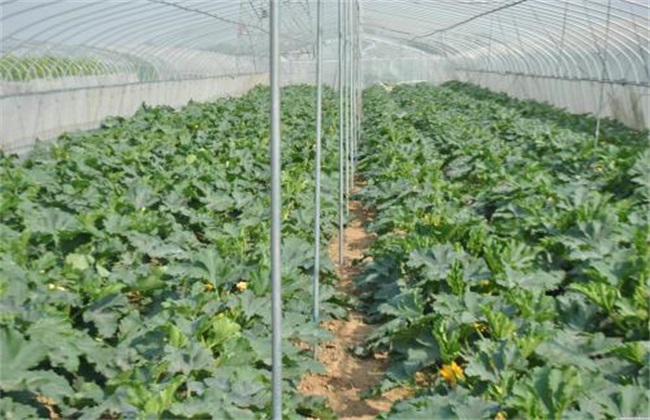
Most vegetable cultivation today is mainly done in greenhouses. Although the input for greenhouse vegetables is higher than for open-field cultivation, the output is also very high. This is why it is favored by many growers. When producing greenhouse vegetables, fertilizer application is very important. However, many vegetable farmers actually make many mistakes when applying fertilizer. So what exactly are these mistakes? Let's take a look together below!
1. Using trace elements as base fertilizer
When planting greenhouse vegetables, many vegetable farmers, in order to save trouble, add trace elements when applying base fertilizer. Although some trace elements can be used as base fertilizer, there are also some elements that are difficult to transform and oxidize, ultimately losing their fertilizing effect. For example, ferrous sulfate easily forms ferric iron in the soil, thereby losing its original value. Therefore, trace elements are best applied mainly as foliar fertilizer, which allows vegetables to absorb them quickly and produces more obvious results.
2. Ammonium sulfate and ammonium bicarbonate
When planting, some growers, in order to promote plant growth, apply nitrogen fertilizer without control, and ammonium bicarbonate and ammonium sulfate are common fertilizers among them. After ammonium bicarbonate is applied to the soil, it very easily produces a large amount of ammonia gas. If the greenhouse has poor ventilation, it is very prone to scorching roots and leaves, causing fertilizer damage to the plants. Ammonium sulfate is an acidic fertilizer and easily causes the soil to become too acidic. Therefore, when fertilizing, attention should be paid to controlling the amount of fertilizers such as ammonium sulfate and ammonium bicarbonate. Reasonably applying base fertilizer can ensure sufficient nitrogen.
3. Base fertilizer containing a large amount of diammonium phosphate
The main components of diammonium phosphate are nitrogen and phosphorus pentoxide, and it contains no potassium at all. However, in vegetable cultivation, potassium fertilizer is very important. Therefore, when applying base fertilizer, attention should be paid to controlling the content of diammonium phosphate to prevent excessive available phosphorus in the soil and avoid inhibiting the absorption of potassium by vegetables. Moreover, phosphorus easily reacts chemically with substances such as calcium, iron, and aluminum, thereby affecting utilization efficiency. Therefore, everyone should pay attention to the rational use of diammonium phosphate.
4. Using undecomposed farmyard manure
As a natural fertilizer, farmyard manure is very beneficial to vegetable growth. However, when applying farmyard manure, care must be taken to ensure it is fully decomposed. If it is not decomposed, farmyard manure will produce a large amount of ammonia gas. Plants are also very prone to root burn, triggering various pests and diseases and seriously affecting vegetable growth. Therefore, when applying farmyard manure, everyone must pay attention to fully decomposing it. Also, pay attention to using more potassium fertilizer, as potassium is an indispensable element for vegetables to flower and bear fruit. Many people also make the mistake of applying too little potassium fertilizer when planting, so everyone should pay close attention to this as well.
The above is a brief introduction to the fertilizer application mistakes for greenhouse vegetables. That's all for today's introduction. This article is for reference only, and I hope it can help everyone!