-
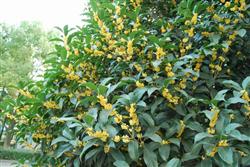
Why won't the osmanthus bloom? An analysis of common causes
①Poor seedling selection. There is a type of purple osmanthus that can only bloom after it grows into a large tree. If purple osmanthus is mistakenly propagated as a seedling from cuttings, it will be very difficult to make it bloom. Osmanthus planting stock should be grafted seedlings using mature branches of a superior variety as scions, or seedlings obtained by air layering at the base of flower-bearing branches; these are not only good in quality but also easy to bloom once established. ②Improper cultivation...
-
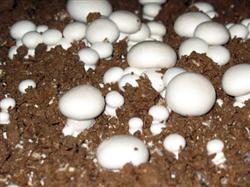
What are the common problems during the mycelial growth stage of button mushrooms? Analysis of causes and control measures
Contaminant fungi and their control methods. The ink cap mushroom, commonly known as the wild mushroom, has these morphological characteristics: the cap is initially bullet-shaped or oval, jade white, grayish white or yellowish white, with most of the surface covered in scales, and a slender, hollow stem. When mature, the cap expands, the gills gradually turn from white to black, and finally autolyze together with the cap into an ink-like liquid. Control method: properly compost the growing substrate...
-
A Complete Analysis of the Wonderful Uses and Cultivation Techniques of Goji Berry
Key technical measures for high-yield cultivation include timely topdressing and foliar fertilization, with reasonable watering (irrigation) according to different growth stages. Carry out shaping and pruning of young trees well to cultivate a high-yielding tree form; prune mature trees at the right time to promote the formation of more fruiting branches and fruit development. Strengthen pest and disease control. Harvesting: in the 4th year after planting goji berries, they begin to...
-

Introduction to Banana Water Needs: A Full Analysis of Banana Growth Water Requirements
Bananas are a crop with a very high water content. At harvest, 90% of a plant with a fresh weight of 200 kg is water. For every 1 gram of dry matter assimilated, more than 600 grams of water are consumed, showing that bananas have very high water requirements. When water is lacking, the leaves lose their green color and become thinner, the fingers become shorter, the pseudostem is shorter, growth is delayed, and harvest is postponed by more than 20 days, resulting in reduced yield...
-
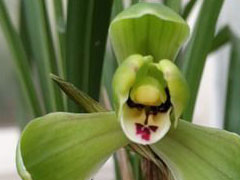
Why Are Orchid Leaves Turning Yellow? An Analysis of 12 Types of Yellowing Leaves
For novice orchid growers, encountering yellowing orchid leaves is not uncommon, but many hobbyists cannot figure out the cause of the yellowing. This article is a summary by an orchid grower of 12 types of yellowing leaves in orchids, and it is hoped it will be helpful to fellow orchid growers....
-
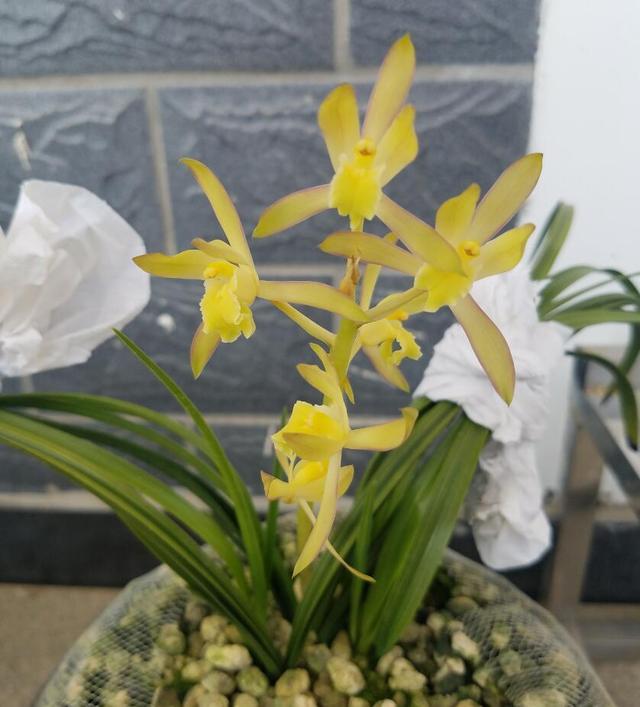
A complete analysis of orchid temperature and humidity, explained most thoroughly in this article
I. The best growing environment for orchids The optimal temperature for orchid growth is 15 °C -25 °C. When the temperature is above 30°C, growth will slow or stop. Orchids grow well when the relative air humidity is 60-70%. Too dry or too wet can easily cause...
-
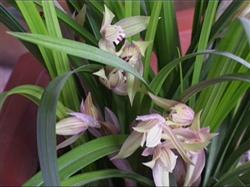
A Complete Analysis of the Characteristics and Cultivation Key Points of Orchids
1. Introductory Notes. Orchids have a long history of cultivation in China, spanning several thousand years. They are grown in every part of China, especially flourishing in the southwest and in Taiwan, China. They enjoy the honored reputation of "the finest fragrance under heaven" and "the fragrant beauty." Orchid blooms are pure and unadorned, soft and elegant, with a delightful fragrance, making them a uniquely personified flower in the world. In ancient times there was "...
-
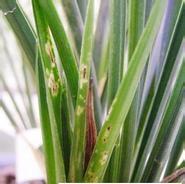
Common Types of Orchid Viruses and Analysis of Their Transmission Routes
I. Common Orchid Viruses 1. Cymbidium Mosaic Virus (CyMV) (1) Symptoms Orchid plants infected with Cymbidium Mosaic Virus often tend to develop necrotic symptoms, such as black necrotic spots, necrotic streaks, etc. In addition to necrosis on the leaves and stems, infected plants also develop necrosis on the flowers, which is a symptom unique to Cymbidium Mosaic Virus. Orchid varieties susceptible to infection include Cymbidium sinense, Cattleya, Oncidium, Cymbidium hookerianum, Vanda, and Phalaenopsis. Necrotic spots sometimes appear only on the lower surface of leaves and not on the upper surface; this phenomenon occurs in Oncidium, Dendrobium, Vanda, and Phalaenopsis, and is therefore often mistaken by growers as being caused by fungal infection. Some Cymbidium plants infected with Cymbidium Mosaic Virus, such as Cymbidium hookerianum, Cymbidium sinense, Oncidium, and Phalaenopsis, also produce yellow-green mottled mosaic or yellow chlorotic streak symptoms. In addition, some orchid species show no recognizable symptoms after infection.
-

How Many Times a Year Does a Phalaenopsis Bloom? A Full Analysis of Its Flowering Cycle
Generally speaking, a Phalaenopsis blooms only once a year. However, if it is grown at home, as long as it is properly pruned after flowering and given a suitable growing environment, it can bloom again. It mainly begins to bloom around the Chinese New Year each year, and the flowering period can last about 2-3 months.
-
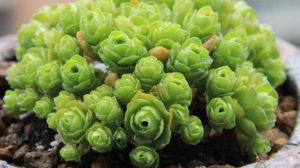
A Complete Analysis of the Meanings and Symbolism of Succulent Plants
There are many varieties of succulents, and the meanings of different varieties are all different. For example, the meaning of the mountain rose (Greenovia aurea) is "the rose that never withers is my heart," symbolizing love; the meaning of the bear's paw (Cotyledon tomentosa) is delicate elegance, small and exquisite; and the meaning of the string of coins (Crassula perforata) is prosperity in wealth, able to bring wealth to its owner.
条件筛选