-

How many levels of protection does the black-faced spoonbill have? An analysis of its habitat in Zhuanghe and its migration route
Do you know the black-faced spoonbill? Its numbers are extremely small. How many levels of protection does the black-faced spoonbill have? It is a Class II protected wild animal. So we must take good care of it. Xingrentuo on Shicheng Island and Yuanbaotuo in Wangjia Town of Zhuanghe City are the black-faced spoonbill's only breeding site in China
-
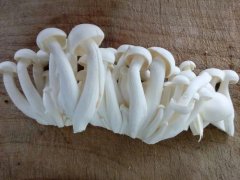
How to Grow White Hypsizygus marmoreus? Cultivation Techniques and Profit Analysis
The fruit body of the white Hypsizygus marmoreus is pure white and bright, fine and smooth in texture, with an excellent mouthfeel. It is characterized by high protein, low calorie and low fat, and is an edible mushroom product favored by domestic and international markets that also has health benefits. The white Hypsizygus marmoreus is a mushroom that sells well today. In terms of cultivation cost
-
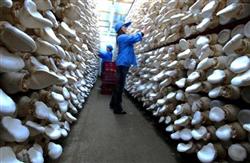
Why should Bailing mushrooms be thinned? An analysis of the reasons
Why should Bailing mushrooms be thinned? How are Bailing mushrooms thinned? We would also like netizens with experience in cultivating Bailing mushrooms to help explain. Thinning Bailing mushrooms is mainly to reduce nutrient consumption and ensure the yield and quality of Bailing mushrooms, so thinning should be carried out during the fruiting stage of Bailing mushrooms. However, many mushroom growers are not very familiar with the operation of thinning Bailing mushrooms...
-
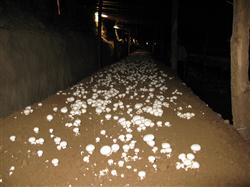
How to Grow Agaricus bisporus Well? A Full Analysis of the Key Cultivation Techniques
How to grow Agaricus bisporus well? An introduction to Agaricus bisporus, also known as the button mushroom or cultivated mushroom, the world's largest edible fungus by volume. Its nutritional value is extremely high, and it is currently developing very rapidly, growing at 15%-20% per year. Agaricus bisporus is a straw-decay fungus, a medium-to-low temperature mushroom; in northern regions, rice straw and wheat...
-
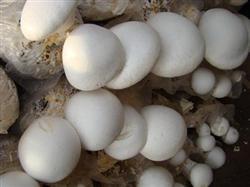
Analysis of Six Major Characteristics of Pest and Disease Occurrence in King Oyster Mushroom (Pleurotus eryngii var. nebrodensis)
1. The culture substrate carries multiple sources of pests and diseases. The hosts of the vast majority of pathogenic bacteria and harmful insects are organic matter. For example, rice straw, cottonseed hulls, and poultry and livestock manure themselves carry large amounts of fungal spores, mycelia, mites, and eggs of mosquitoes and flies. Before use, the culture substrate needs to be sterilized or fermented to eliminate or reduce...
-
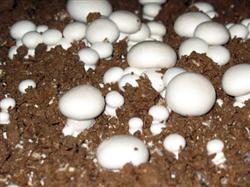
What are the common problems during the mycelial growth stage of button mushrooms? Analysis of causes and control measures
Contaminant fungi and their control methods. The ink cap mushroom, commonly known as the wild mushroom, has these morphological characteristics: the cap is initially bullet-shaped or oval, jade white, grayish white or yellowish white, with most of the surface covered in scales, and a slender, hollow stem. When mature, the cap expands, the gills gradually turn from white to black, and finally autolyze together with the cap into an ink-like liquid. Control method: properly compost the growing substrate...
-
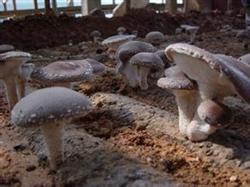
Analysis of the Concept of Disease- and Pest-Free Substitute-Material Shiitake and New Cultivation Techniques
The large-cup mushroom, also known as pig-stomach mushroom, has fruiting bodies that grow in clusters, cup-shaped or shallow funnel-shaped, pale yellow, with thick flesh and a thick stalk, crisp and tender and delicious, and rich in nutrients. Under natural conditions, the fruiting bodies appear from May to October, and it has the characteristics of both wood-rotting and soil-borne growth. Its cultivation essentials are briefly introduced as follows: 1. Seasonal arrangement: large-cup mushroom fruiting...
-
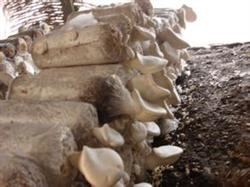
A Full Analysis of the Key Technical Points for Cultivating White King Oyster Mushroom (Pleurotus nebrodensis)
Making and Culturing the Fruiting Mushroom Logs. Formula for fruiting mushroom logs: (1) 92% cottonseed hulls, 3% cornmeal, 5% wheat bran, 65% moisture content. (2) 70% cottonseed hulls, 3% cornmeal, 20% sawdust, 7% wheat bran, 2% gypsum, 5% quicklime, 65% moisture content. Preparation before production: in Jixian County, bagging generally starts in mid-to-late August when the average temperature is 20°C...
-
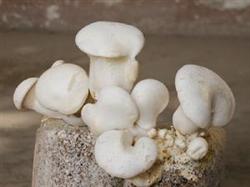
How to prevent deformed mushrooms in white king oyster mushrooms? Cause analysis and solutions
1. Unreasonable room and shed structure. White king oyster mushroom cultivation sites are divided into indoor mushroom rooms and outdoor mushroom sheds. Because of unreasonable design, air often does not circulate and severe oxygen deficiency occurs, causing the aerobic white king oyster mushroom to develop deformities. An ideal mushroom shed should face south from the north or face east from the west. The room or shed should not be too large. Generally, a rectangular shed room should hold 300... per shed.
-
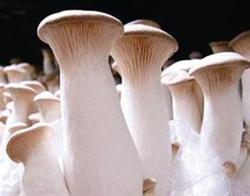
Analysis of Key Points of the New Technology of Bag Cultivation with Soil Casing for King Oyster Mushroom
King oyster mushroom, also known as Pleurotus eryngii, is one of the rare edible fungi. Its flesh is thick and plump, crisp and tender, milky white in color, delicious in taste, and rich in nutrients, and it is hailed as "the meat among vegetables." By adopting the following new technology of indoor fruiting and outdoor soil casing cultivation, the biological conversion rate can reach 100%-120%, and the mushroom bodies have good commercial quality. Compared with cultivation without soil casing...
条件筛选