-
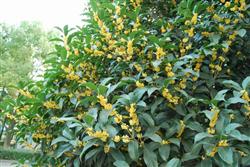
Why won't the osmanthus bloom? An analysis of common causes
①Poor seedling selection. There is a type of purple osmanthus that can only bloom after it grows into a large tree. If purple osmanthus is mistakenly propagated as a seedling from cuttings, it will be very difficult to make it bloom. Osmanthus planting stock should be grafted seedlings using mature branches of a superior variety as scions, or seedlings obtained by air layering at the base of flower-bearing branches; these are not only good in quality but also easy to bloom once established. ②Improper cultivation...
-
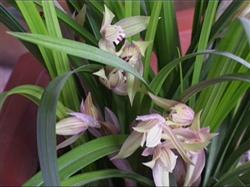
A Complete Analysis of the Characteristics and Cultivation Key Points of Orchids
1. Introductory Notes. Orchids have a long history of cultivation in China, spanning several thousand years. They are grown in every part of China, especially flourishing in the southwest and in Taiwan, China. They enjoy the honored reputation of "the finest fragrance under heaven" and "the fragrant beauty." Orchid blooms are pure and unadorned, soft and elegant, with a delightful fragrance, making them a uniquely personified flower in the world. In ancient times there was "...
-
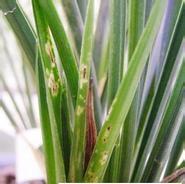
Common Types of Orchid Viruses and Analysis of Their Transmission Routes
I. Common Orchid Viruses 1. Cymbidium Mosaic Virus (CyMV) (1) Symptoms Orchid plants infected with Cymbidium Mosaic Virus often tend to develop necrotic symptoms, such as black necrotic spots, necrotic streaks, etc. In addition to necrosis on the leaves and stems, infected plants also develop necrosis on the flowers, which is a symptom unique to Cymbidium Mosaic Virus. Orchid varieties susceptible to infection include Cymbidium sinense, Cattleya, Oncidium, Cymbidium hookerianum, Vanda, and Phalaenopsis. Necrotic spots sometimes appear only on the lower surface of leaves and not on the upper surface; this phenomenon occurs in Oncidium, Dendrobium, Vanda, and Phalaenopsis, and is therefore often mistaken by growers as being caused by fungal infection. Some Cymbidium plants infected with Cymbidium Mosaic Virus, such as Cymbidium hookerianum, Cymbidium sinense, Oncidium, and Phalaenopsis, also produce yellow-green mottled mosaic or yellow chlorotic streak symptoms. In addition, some orchid species show no recognizable symptoms after infection.
-

What to do when Monstera deliciosa leaves turn yellow? Cause analysis and solutions
Causes of yellowing leaves on Monstera deliciosa and solutions
-

What to Do About Root Rot in Solomon's Seal? Cause Analysis and Prevention Methods
Causes of Root Rot in Solomon's Seal and How to Prevent It
-

-

Camellia Leaves Developing Black Spots: Cause Analysis and Prevention Methods
What to Do When Camellia Leaves Develop Black Spots
-

What to Do When Water Lily Leaves Dry Out? Cause Analysis and Remedies
What to Do When Water Lily Leaves Dry Out
-

What to Do About Leggy Growth in Crassula 'Pagoda Village'? Cause Analysis and Solutions
What to Do About Leggy Growth in Crassula 'Pagoda Village'
-

What to Do When a Money Tree Loses Its Leaves? Cause Analysis and Solutions
What to Do When a Money Tree Loses Its Leaves
条件筛选