A Complete Analysis of the Wonderful Uses and Cultivation Techniques of Goji Berry
Key technical measures for high-yield cultivation include timely topdressing and foliar fertilization, with reasonable watering (irrigation) according to different growth stages. Carry out shaping and pruning of young trees well to cultivate a high-yielding tree form; prune mature trees at the right time to promote the formation of more fruiting branches and fruit development. Strengthen pest and disease control. Harvesting: in the 4th year after planting goji berries, they begin to...
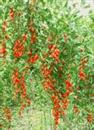 Goji berry is well known as a famous tonic, strengthening and anti-aging medicine. Goji berry not only has high medicinal value, but also edible and ornamental value.
1. High medicinal and edible value. The berries of goji berry are used as medicine, containing carotene, vitamins (A, B1, B2, C), betaine, amino acids, fats, proteins and sugars, etc.
Pharmacological tests have proved that it can enhance human immunity, inhibit the growth of cancer cells and increase blood production. The root bark of goji berry (Digupi) is used as medicine and can cool the blood, clear the lungs and reduce internal heat.
The seedlings (Tianjing) or tender stems of goji berry are a wild vegetable in early spring. They can be stir-fried or blanched and then served cold; they are fragrant, slightly bitter and tasty, and also have the effects of relieving restlessness, benefiting the mind, strengthening the heart and promoting qi, and clearing heat and detoxifying. Dried goji berry leaves can be used as a tea substitute, clearing heat, promoting urination and strengthening the stomach. There is a folk dietary remedy for eye diseases: 150 grams of fresh goji berry leaves and 150 grams of glutinous rice, cooked into porridge and eaten.
2. A good tree species for courtyard beautification. Goji berry, as a flower grown for its fruit, has entered the ranks of ornamental plants. Its fruiting period lasts 6-11 months, and after flowering the branches are full of bright red, translucent fruits. If potted, its fruits remain as bright red as ever even in winter. Goji berry can also be grown into a tree: first set up a support, keep one thick stem, cut off all the rest, and prune it regularly to encourage upward growth. After several years, it can become a courtyard tree more than 2 m tall. It can also be planted on rockeries, letting it grow twistingly over rocks and through holes.
3. Wide adaptability and easy to plant. Goji berry has strong sprouting ability. Every year from April to August, while many new branches are produced, suckering shoots also grow from the roots. It is highly cold-resistant, likes light, and tolerates salinity and alkalinity. Its propagation is divided into two types: sexual propagation and asexual propagation. For sexual propagation, soak the fruits in water for 1-2 days, and after they soften, wash out the seeds and dry them. Sow in late March, cover with 1 cm of soil, tread it down and spray water immediately. Seedlings emerge 7 days after sowing; thin the seedlings after emergence and transplant in spring of the second year. For asexual propagation, both cuttings and division can be used. Propagation is fast and fruiting is early, and cutting propagation is relatively common. Collect from superior mother trees 1-year-old lignified branches with a thickness of more than 0.3 cm, cut them into 18-20 cm long cuttings, insert them obliquely into the seedbed, and keep them moist. The survival rate is high, and they can bloom in the second year. Transplanting is carried out in April and they are very easy to survive. They are suitable for planting in well-drained calcareous loam and avoid clay. During the growth period, give them more sunlight and control watering; if it is too shady and humid, growth will be poor. During the flowering and fruiting period, sufficient water must be ensured; after each picking of a flush of fruit, irrigate once. In summer, goji berry is prone to rust disease, so Bordeaux mixture should be sprayed once every 10 days in spring for control. The fruits mature successively from June to November and should be harvested in time and dried in the sun or by heat for later use.