A complete analysis of orchid temperature and humidity, explained most thoroughly in this article
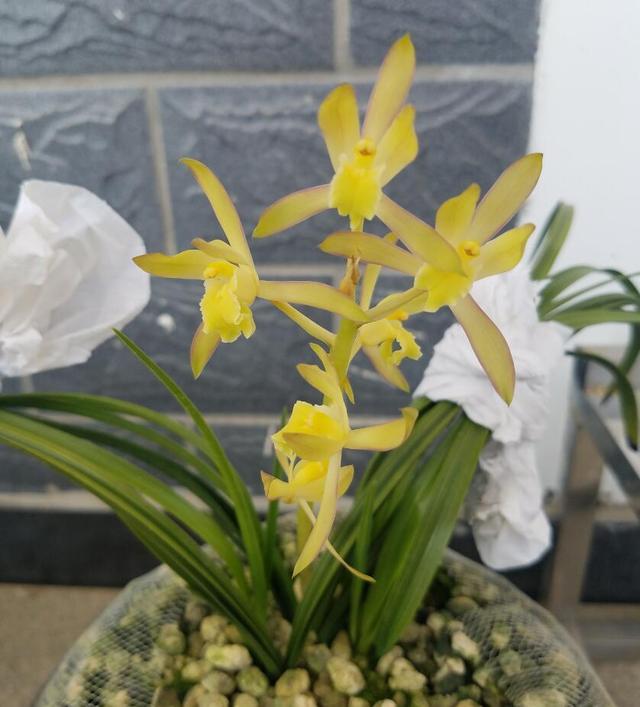
I. The best growing environment for orchids
The optimal temperature for orchid growth is 15 °C -25 °C. When the temperature is above 30°C, growth will slow or stop. Orchids grow well when the relative air humidity is 60-70%. Too dry or too wet can easily lead to orchid diseases. During the summer growing period, the humidity requirement is not lower than 70%. Orchids' humidity requirements follow a certain pattern: humidity demand increases during the growing period and decreases during the dormant period; humidity demand increases during the day and decreases at night!
II. What effect does temperature have on orchid growth?
1. Orchids can only grow within a certain temperature range. The effect of temperature on orchid growth is comprehensive. It can affect orchid growth by influencing metabolic processes such as photosynthesis, respiration, and transpiration, and by influencing metabolic processes such as the synthesis and transport of organic matter. It can also directly affect soil temperature and air temperature, and affect orchid growth by influencing the absorption and transport of water and fertilizer.
2. Because the activity of enzymes involved in metabolic activities performs differently at different temperatures, the effect of temperature on orchid growth has three cardinal points: minimum, optimum, and maximum temperature. Orchids can only grow within the range between the minimum temperature and the maximum temperature. Although the optimum temperature for growth refers to the temperature at which growth is fastest, this is not the temperature at which orchids grow most robustly, because at the optimum temperature, organic matter in the orchid is consumed excessively, and the plant instead grows slender and weak. Therefore, in cultivation practice, to produce robust plants, a temperature lower than the optimum temperature is often required; this temperature is called the coordinated optimum temperature. In addition, the three cardinal temperatures for orchids also vary with organ and growth stage. Generally, the three cardinal temperatures for root growth are lower than those for buds!
3. Experimental data from phytotrons proves that orchids grow best vegetatively in a cyclical change with higher daytime temperatures and lower nighttime temperatures. Under natural conditions, there is also a cyclical change with higher daytime temperatures and lower nighttime temperatures. The response of orchids to this cyclical day-night temperature change is called the growth thermoperiodic phenomenon of orchids.
4. The main reason that higher daytime temperatures and lower nighttime temperatures promote vegetative growth in orchids is that higher daytime temperatures under strong light help increase the photosynthetic rate, providing sufficient material for orchid growth; lower nighttime temperatures can reduce the consumption of organic matter by respiration. In addition, lower nighttime temperatures are beneficial to root growth and cytokinin synthesis, thereby also increasing the growth rate of the whole orchid plant. In greenhouse or shed cultivation, attention should be paid to changing the day-night temperature so that orchids under natural conditions... The effects of water, light, temperature, and other factors on orchid growth are cross-cutting and comprehensive. First, the environmental factors influence one another. For example, cloudy and rainy days, dim light, falling temperatures, increased soil moisture, and poor soil aeration occur in a chain reaction, affecting orchid growth. Second, when various environmental factors act on the orchid plant, they are also closely related to life activities, and they also influence one another. For example, light promotes photosynthesis, photosynthesis affects transpiration, and transpiration affects water supply. They both promote and constrain one another. In orchid cultivation, attention should be paid to the special role of various environmental conditions in individual physiological activities of growth, and a dialectical view should be used to grasp the main contradiction and take reasonable measures, so as to appropriately promote and inhibit orchid growth and achieve the purpose of cultivation.
III. What effect does air humidity have on orchid growth?
1. Air humidity affects transpiration in orchids. Transpiration is not only the driving force for water absorption, but also the driving force for nutrient transport in orchids. When air humidity is high, transpiration is weak, and the orchid's ability to transport nutrients declines. Transpiration can also regulate leaf temperature. If the temperature is high, air humidity is high, and transpiration is weak, the leaves may be scorched. The effect on transpiration will indirectly affect the alternating wet and dry conditions of the potting medium, which is unfavorable for fertilizer and water management; if air humidity is too low for a long time, it will cause necrosis at leaf edges and leaf tips. The main reason is that the difference between the water vapor pressure inside the leaf air spaces and the external water vapor pressure is too large, causing insufficient water vapor supply inside the leaf and resulting in necrosis.
2. The level of air humidity affects the opening and closing of stomata in orchid leaves. If air humidity is too high or too low, stomata will close. When orchid stomata close, carbon dioxide cannot enter the mesophyll cells, and photosynthesis slows or even stops.
3. Excessive air humidity is favorable to the reproduction of pathogens. The germination of most fungal spores and the development of hyphae require relatively high humidity. Too low humidity is favorable to the occurrence of pests. For example, mites such as red spider mites generally occur in high-temperature, low-humidity environments.
4. High humidity will cause water to condense on the leaf surface, causing leaf surface cells to rupture and making the plant weak.
I cannot find specific relevant data on the three cardinal temperatures for orchids. Personally, referring to Dendrobium and other plants, I provide the following data for everyone's reference: minimum temperature 6-15°C, optimum temperature 15-30°C, maximum temperature 30-45°C. I do not know whether it is accurate. There must also be differences among different orchid species. I hope relevant professionals will provide an answer after seeing this! Author: Mei Fei, founder of the Orchid Bar Forum, secretary of the Orchid Association of Jingshan City, Hubei Province, and an internet celebrity in the orchid industry on major self-media platforms! I publish orchid knowledge and pictures every day, taking you to understand orchids in depth and teaching you to easily grow orchids well. If you have any questions about orchids, you can ask me at any time or leave a message below. If you like it, you can follow me or bookmark and forward it to help others!