-

The dace is an aquatic improved species with relatively high economic value for farming.
Dace is also known as river fish and slippery fish. There are more than 20 species of dace worldwide, distributed only in China, Japan, Korea and the eastern part of the former Soviet Union. China has about 10 species of dace, mainly distributed in the waters of northern China. The species vary by region; those with mature farming technology and relatively high economic value include: 1. Baikal dace. Mainly distributed in the **Burqin area of China. This fish is a small to medium-sized precious fish, weighing 100-200 grams, with excellent flesh flavor, strong reproductive capacity and high population yield. 2. Northeast dace. Most are distributed
-
How do you make braised fish with dried bean curd sticks and glass noodles so that it tastes really good?
[Ingredients] 500 g large fish belly, 250 g dried bean curd sticks, 150 g glass noodles; a little each of scallion, ginger, and garlic; a little salt and sugar. [Method] 1. Wash the dried bean curd sticks and glass noodles, cut the dried bean curd sticks into sections, and soak in water. 2. Wash the fish, rub with salt and marinate for about 15 minutes, then let it dry. 3. Heat oil in a pan and fry the fish over low heat until golden brown. 4. Remove the fish and set aside. Pass the dried bean curd sticks through hot oil and remove them; then heat oil with ginger slices and garlic slices in the pan, put the fish and dried bean curd sticks into the pan, then add water until it just covers the dried bean curd sticks and fish.
-
How are common diseases of Silkie chickens diagnosed? With a detailed explanation of rearing methods
1. Newcastle disease (fowl pest) [Diagnosis] Sick chickens are listless, have reduced appetite, elevated body temperature, tremors, head tilted backward, opisthotonus, and circular movement, etc. Difficulty breathing, drooping wings, greenish watery droppings, death after 2 to 3 days, with a relatively high mortality rate. [Treatment] At 7 to 8 days of age, chicks are given Newcastle disease strain II vaccine by nasal or eye drops; at 28 days of age, the vaccine is administered once more; at 50 to 60 days of age, Newcastle disease strain I vaccine is injected intramuscularly. If the disease breaks out suddenly, Newcastle disease strain I vaccine should immediately be injected intramuscularly.
-
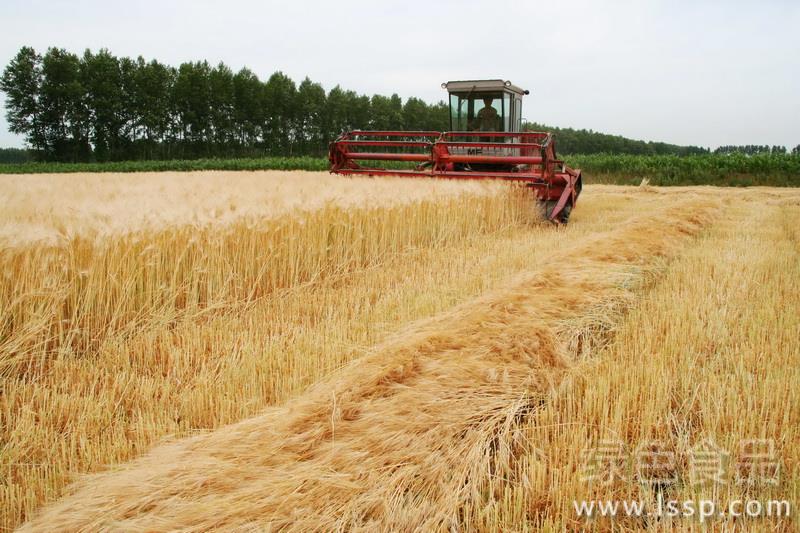
High-yield cultivation techniques for barley with drought resistance, cold tolerance and wide adaptability
High-yield cultivation techniques for barley with drought resistance, cold tolerance and wide adaptability
-
Detailed Explanation of the Technical Regulations for High-Yield Cultivation of Soybean with Sparse Planting
Technical Regulations for High-Yield Cultivation of Soybean with Sparse Planting: 1. Selection of dedicated varieties: Choose branching-type varieties with tall and luxuriant plants, strong stalks that do not lodge, a long flowering period, large flower clusters, a high pod-setting rate, tolerance to high fertilizer and water levels, and medium or medium-late maturity. 2. Land selection, tillage and fertilization: Choose flatland plots with high soil organic matter content and good moisture conditions, plots with a previous crop, and plots of equal fertility; the best previous crop is corn stubble, and organic fertilizer should be applied in increased amounts. 3. Sowing: Carefully select seeds. Seeds should be free of pests and diseases, uniform in size and plump. The sowing period is generally when the 5 cm soil temperature steadily
-
Schisandra cultivation offers considerable economic benefits, with promising prospects
In recent years, the price of Schisandra, a genuine medicinal herb from Northeast China, has been rising year after year. From just over ten yuan per 1 kg, it rose to 100 yuan per 1 kg this autumn. And there is still an upward trend in the coming years. Schisandra cultivation experience: Seed selection. In late September, when the fruit is fully ripe, select fresh fruit with large clusters and tight berries, soak in clean water, rub off the shriveled grains, drain, mix with 2-3 times the volume of wet sand, and before the ground freezes, bury it outdoors in a high, dry spot. Site selection. For the seedling nursery, loose, fertile, well-drained sandy loam soil is best, preferably with irrigation available. Sowing
-
Organic phosphorus poisoning in pigs can be treated with a mung bean and licorice decoction
(1) Cause. When pig farms and pig raisers use organic phosphorus preparations such as trichlorfon or dichlorvos to expel internal and external parasites from pigs, improper dosage, or consumption of vegetable and fruit scraps and contaminated grass that were recently sprayed with pesticides, can cause poisoning. (2) Clinical symptoms. Within 30 minutes after pigs consume organic phosphorus pesticides, poisoning symptoms appear. Affected pigs show cholinergic nerve excitation, excessive salivation, foaming at the mouth, restlessness, some have nasal discharge and tears, severe congestion of the conjunctiva, constricted pupils
-
What to do when mushrooms are infected with cottony mold
Cottony mold is also known as powdery mildew and variable powdery mildew (Oospora variabilis). This fungus is mainly introduced into the mushroom house by manure clumps in the compost. In the early stage it mostly spreads between the soil particles and quickly grows to the surface of the soil layer; its hyphae are short and fine, growing in clusters, appearing like individual cotton balls or layers of rotten cotton wadding, a vast expanse of white, and later gradually turning orange-red. In the affected area, mushroom mycelium grows very poorly, and the young mushrooms and primordia produced wither and die in large numbers. Control measures: the compost must be fermented thoroughly. When this fungus grows to the surface of the soil layer, spray 1:500 carbendazim at
-
Causes of and Preventive Measures for Soybean Pods Without Seeds
I. Causes of Pods Without Seeds 1. Improper selection of variety or planting system. Generally speaking, late-maturing varieties with poor resistance are affected by relatively low temperatures during grain filling, which seriously affects the filling rate and thus induces the formation of pods without seeds. Continuous and alternate-year soybean planting causes a sharp decrease in the boron content of soil nutrients. Since boron is an important trace element that promotes the formation and growth of soybean pods, its deficiency induces soybean pods without seeds. At the same time, continuous and alternate-year soybean planting leads to more severe soybean diseases and pests, thereby inducing pods without seeds.
-
Key Techniques for High-Efficiency Cultivation of Soybean Intercropped with Melon
Soybean intercropped with melon at a 4:2 ratio, with Chinese cabbage replanted as the following crop after melon harvest, achieves three harvests from one field and an income of more than 15,000 yuan per hectare, making it a new high-yield and high-efficiency planting model. 1. Selecting new varieties 1.1 For the soybean variety, select Jinta soybean, which has strong branching and super-high yield. Jinta soybean has 6 outstanding characteristics: 1) Strong growth vigor. Jinta soybean has a plant height of 70-80 cm, thick and sturdy stems, and high resistance to lodging; 2) Strong branching ability. A single plant has 8-10 branches, with a maximum of 16 branches. The branches grow upward, and the plant takes on a fan shape without breaking branches, overcoming the tendency of strongly branching soybeans to break branches, resulting in an ideal plant type; 3) Dense pod setting. A single plant sets 200-250 pods, with a maximum of 400 pods. The pods are so dense that the stems are hidden, 2-3 times that of other soybeans. Most pods are 3-seeded, with a yield of 75-100 g per plant and a maximum of 400 g; 4) Excellent quality. The beans are golden yellow, large and uniform, with a 100-seed weight of 22-25 g and high oil and protein content; 5) Strong stress resistance. The growth period is 120 days and requires an effective accumulated temperature of 2450°C. It is drought-resistant, moisture-tolerant, and salt-alkali tolerant, and prefers fertilizer and water. It is suitable for planting in Jilin, Liaoning, Heilongjiang, and Inner Mongolia in areas with an effective accumulated temperature above 2450°C; 6) High and stable yield. The yield per hectare is 4000-5000 kg, making it a high-yielding, high-quality soybean variety.
条件筛选