-
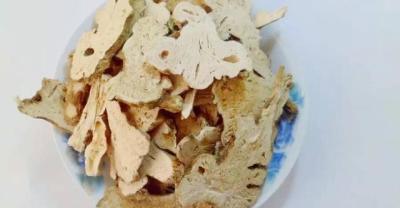
Complete picture guide to brine soup spice ingredients, with the ingredients clear at a glance
Brine spices are the seasonings used to make braised dishes, generally referring to the Chinese medicinal spices used to make brine. Brine spices have a strong fragrant aroma, can remove the fishy and gamy smell of food ingredients, and enhance...
-
What medicinal herbs are profitable to grow in 2017? With medicinal herb prices
As autumn and winter arrive, this is the peak season for buying and selling Chinese medicinal herbs. Not only will domestic pharmaceutical companies increase their input, but export volumes will also rise, and most medicinal herb markets...
-

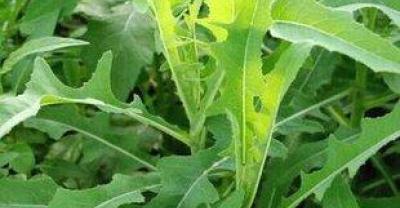
What are the common diseases of chicory? With control methods
Common diseases of chicory and their control methods
-

Detailed Explanation of the Key Technical Points for Cultivating Reishi Mushroom with Corncobs
Reishi mushroom, also known as red reishi, is a traditional precious medicinal material. The average retail market price is 150-200 yuan. For a long time, artificial cultivation has used log segments or sawdust as the main substrate, combined with supplements for large-scale production, while cultivation of reishi mushroom with corncobs has rarely been reported. While developing edible (medicinal) mushroom production, the author conducted experiments on cultivating reishi mushroom using corncobs and achieved good results. The key technical points are introduced as follows: 1. Raw material processing. Select fresh, dry, mold-free corncobs, crush them to the size of soybean grains
-
What are the benefits of intercropping cotton with Pinellia ternata?
Through our trials, intercropping Pinellia ternata in cotton fields shows no "conflict" between the two, neither crop's yield decreases, and an additional 80-100 kg of dried Pinellia ternata medicinal material can be harvested per mu, increasing income. The benefits of intercropping Pinellia ternata in cotton fields are mainly shown in the following aspects: 1. Clever use of the time difference. According to the characteristics of Pinellia ternata, it grows well from March to June without shade, and from July to September Pinellia ternata must grow under shaded conditions, and at this time cotton enters a rapid growth stage with luxuriant branches and leaves, creating a good microclimate for the normal growth of Pinellia ternata
-
Angelica sinensis with shade net coverage: high yield increase and quality improvement benefits
The shade cultivation technique for Angelica sinensis starts from the three-leaf stage of its growth (that is, from mid-May to early August after summer begins, when temperatures are high and light is intense). A shade net with a 50% shading rate is timely placed over Angelica sinensis, providing a suitable micro-environment of moderate temperature, weak light, and moisture that mimics its original ecological growing conditions. By lowering temperature, increasing humidity, and reducing light, it reduces the early bolting rate of Angelica sinensis in dry flatland cultivation to about 30%; moreover, shade cultivation of Angelica sinensis also helps prevent and reduce pest and disease damage, thus improving the quality of Angelica sinensis.
-
Method for treating livestock spontaneous sweating with Danggui Liuhuang Tang
Treatment principle: nourish yin and clear heat, astringe yin and stop sweating, and secure the exterior. Formula: Angelica sinensis (dong quai) and Rehmannia glutinosa (prepared rehmannia) 50g each, Scutellaria baicalensis (skullcap) and Phellodendron amurense (Amur corktree) 40g each, Coptis chinensis (goldthread) 30g, Astragalus membranaceus (milkvetch) 100g, fossilized bone (dragon bone) and oyster shell 70g each, Ephedra root and floating wheat 80g each, 1 dose per day; after 1 oral dose, sweating was greatly reduced, and it was cured after 3 doses.
-
How to cultivate green-haired turtles? Cultivation method with Angelica and Pine Needle Solution
When using the yellow-margined box turtle (Mauremys mutica) or other aquatic turtles to cultivate green-haired turtles, whether using the green water method, direct method, grafting method, or spore water method, it takes at least 40-50 days before the sprouting tips of Basicladia chelonum (turtle-shell basicladia algae) can be seen emerging on the turtle shell. Only the Angelica and Pine Needle Solution method achieves the fastest sprouting of Basicladia chelonum and the best results. The formula for Angelica and Pine Needle Solution (calculated for cultivating 100 green-haired turtles): Angelica 200 g, fresh pine needles 200 g, brown sugar 100 g, calcium tablets 40 tablets, vitamin B12 20 vials. First
-
Schisandra cultivation offers considerable economic benefits, with promising prospects
In recent years, the price of Schisandra, a genuine medicinal herb from Northeast China, has been rising year after year. From just over ten yuan per 1 kg, it rose to 100 yuan per 1 kg this autumn. And there is still an upward trend in the coming years. Schisandra cultivation experience: Seed selection. In late September, when the fruit is fully ripe, select fresh fruit with large clusters and tight berries, soak in clean water, rub off the shriveled grains, drain, mix with 2-3 times the volume of wet sand, and before the ground freezes, bury it outdoors in a high, dry spot. Site selection. For the seedling nursery, loose, fertile, well-drained sandy loam soil is best, preferably with irrigation available. Sowing
-
Organic phosphorus poisoning in pigs can be treated with a mung bean and licorice decoction
(1) Cause. When pig farms and pig raisers use organic phosphorus preparations such as trichlorfon or dichlorvos to expel internal and external parasites from pigs, improper dosage, or consumption of vegetable and fruit scraps and contaminated grass that were recently sprayed with pesticides, can cause poisoning. (2) Clinical symptoms. Within 30 minutes after pigs consume organic phosphorus pesticides, poisoning symptoms appear. Affected pigs show cholinergic nerve excitation, excessive salivation, foaming at the mouth, restlessness, some have nasal discharge and tears, severe congestion of the conjunctiva, constricted pupils
条件筛选