High-yield cultivation techniques for barley with drought resistance, cold tolerance and wide adaptability
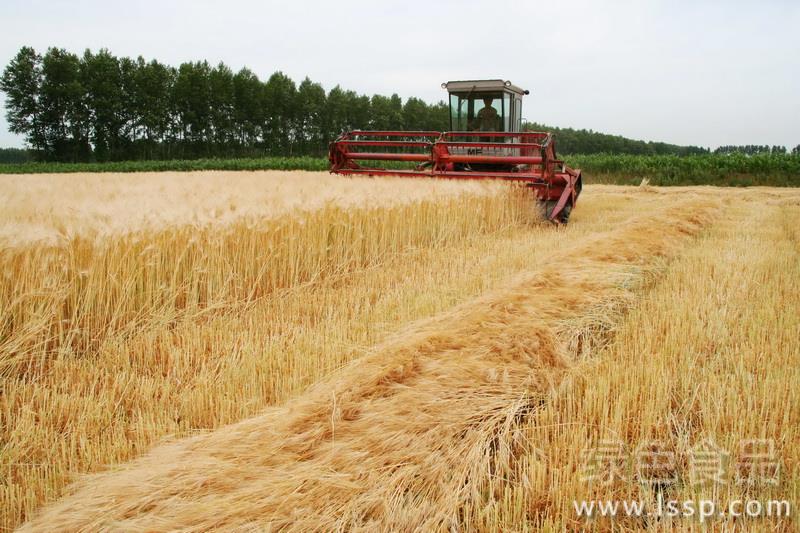
Barley
Barley has the biological characteristics of early maturity, wide adaptability, drought resistance, cold tolerance, high and stable yield, and relatively strong resistance to pests and diseases. It is both a high-quality raw material for brewing and a high-quality feed for livestock, so it should be actively planted and promoted.
1. Selection of improved varieties
For malting barley, Fengdamai No. 6 and No. 7 can be selected, with yields reaching 500—600 kg/mu. For feed barley, Damai No. 5 can be selected, with yields reaching 400—500 kg/mu.
2. Cultivation techniques
2.1 Land preparation: High-yield fields for planting barley require loose, deep soil with good physical and chemical properties. The root system of barley is weaker than that of wheat, distributed shallowly, and its moisture tolerance is relatively poor, so fields with good drainage and irrigation and medium-to-upper fertility should be selected for planting. No-till cultivation can be adopted, with manual furrow opening and drilling or broadcasting on stubble-bearing fields, and appropriate covering with ditch mud to prevent rotten tillage and rotten seeding.
2.2 Timely sowing: Barley has a weak response to light and temperature, and its sowing period range is wider than that of wheat. However, if sown too early, the growth period of barley is short, jointing and booting occur early, and it is vulnerable to low-temperature frost damage; if sown too late, the tillering rate per plant is low, the number of effective spikes is small, the 1000-grain weight is low, and yield declines. Sowing at the appropriate time can increase effective spikes, provide suitable temperatures during the grain-filling period, prolong the filling period, ensure sufficient light during filling, accumulate more starch, increase the 1000-grain weight, achieve high yield, improve the commercial value of the grain, and thereby increase production and income. According to the climate resource characteristics of Dali City, field barley is best sown in early to mid-November. Upland barley should seize the favorable opportunity before the rainy season has ended, when the soil is moist and soil moisture is good, generally in early to mid-October. Sun the seeds for 1—2 days before sowing, ensure uniform seed distribution, appropriate depth, consistent depth, and uniform seed fertilizer, so as to ensure neat, full, uniform and strong seedlings, laying the foundation for high and stable yield.
2.3 Reasonable close planting: For medium-to-high fertility land with a yield of more than 400 kg per mu, the basic seedling number for malting barley varieties is 150,000—180,000 seedlings, and for feed barley varieties is 180,000—200,000 seedlings.
2.4 Scientifically optimized fertilization: Barley has a short growth period, rapid leaf emergence and tillering, early young ear differentiation, strong rooting ability after emergence, and rapid nutrient uptake. From emergence to tillering, the uptake of nitrogen and potassium accounts for about 50% of the total uptake, and phosphorus accounts for 35%. By the heading stage, more than two-thirds of the total amount has been absorbed. Therefore, promoting strong seedlings and early development of barley is the key to increasing yield, and the fertilization principle is promotion at the early stage, stability at the middle stage, and supplementation at the late stage. Apply sufficient base fertilizer and seed fertilizer to promote early seedling development, use strong seedlings to promote tillering, apply tillering fertilizer well to promote rapid and robust tillering, obtain an appropriate number of spikes, stabilize the number of grains per spike, and supplement fertilizer at the late stage according to seedling conditions to increase the 1000-grain weight. The amount of nitrogen fertilizer used and the proportion applied at the late stage are the determining factors for the protein content of malting barley grains, and the protein content directly affects many malting quality traits. In medium-to-upper fertility fields, to produce more than 400 kg per mu of high-quality malting barley, apply 25—30 kg of urea, 30—40 kg of ordinary calcium superphosphate, and 5—10 kg of potassium sulfate. Phosphate and potassium fertilizers are applied once as base fertilizer, nitrogen fertilizer is 60% as base fertilizer and 40% as tillering fertilizer. For feed barley varieties and no-till planted barley, 5—10 kg of urea can be supplementarily applied as jointing and booting fertilizer according to seedling conditions.
2.5 Water requirement characteristics and irrigation: Barley can adapt to arid or dry and hot climates. Its water requirement pattern shows a gradual increase from emergence to jointing; from jointing to heading, with the rapid growth of various organs, dry matter accumulation reaches its peak at the booting stage, and water requirement is also greatest; from heading to grain filling and maturity, it gradually decreases. Therefore, according to the water requirement pattern of barley at different stages, combined with climate and soil moisture, irrigation should be timely carried out for emergence, jointing, booting, heading and grain filling. Barley has relatively poor moisture tolerance, so light irrigation should be used, and drainage should be carried out promptly after irrigation.
2.6 Weed, disease and pest control: At the 2.5-leaf stage of seedlings, use 250 g of chlorotoluron per mu or 8—10 of 10% maicao yici jing, diluted with 60 kg of water, for chemical weeding. For rust, use triadimefon for control; for aphids, use dimethoate, pirimicarb, and baiyajing for control.
2.7 Harvest at the appropriate time: Harvesting barley from the late dough stage to the full ripe stage gives good grain appearance quality, bright color, a fresh fragrance, slightly lower protein content, and excellent brewing quality. Harvest when more than 75% of the plant stems and leaves have turned yellow and the grains have the normal size and color of the variety.