What are the key measures for raising watermelon seedlings in winter?
Improve the heat preservation and heating measures of the seedling shed. Replace polyethylene film with polyvinyl cyanide drip-free film. Heat preservation and drip-free performance are greatly improved, and the shed temperature can be increased by 1-2 degrees. Temporary heating equipment such as a fire wall or heating stove should be installed in the shed. Carry out artificial heating when necessary. 1. Subject watermelon and rootstock seeds to low-temperature treatment, ...
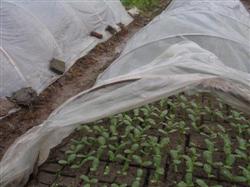
Improve the heat preservation and heating measures of the seedling shed. Replace polyethylene film with polyvinyl cyanide drip-free film. Heat preservation and drip-free performance are greatly improved, and the shed temperature can be increased by 1-2 degrees. Temporary heating equipment such as a fire wall or heating stove should be installed in the shed. Carry out artificial heating when necessary.
1. Subject watermelon and rootstock seeds to low-temperature treatment to enhance the cold resistance of the seedlings. Place the seeds that are about to be germinated after soaking in a freezing environment of about 0 degrees for 24 hours, then place them under suitable temperature conditions for germination. When the seeds begin to sprout white, treat them at -1 degree for 12-18 hours each day. Then transfer them to 18 degrees for 12-6 hours, for a total of 3-5 days, and then germinate them again under suitable temperature conditions.
2. Strengthen management after grafting: within 1 week after grafting is the wound healing stage, keep the shed temperature at 20-30 degrees. When the nighttime temperature is below 18 degrees, carry out artificial heating. The grafted seedling bed should be strictly sealed for 3-6 days to maintain a relative humidity of 100% in the bed. In the first 3 days, it must be completely shaded, with only weak scattered light allowed through. On the 4th day, gradually expose it to light. After 6 days, gradually ventilate. After 7 days, remove the shading material and increase ventilation. Make the grafted seedlings adapt to the normal seedbed environment.
3. Strengthen management during severe weather: management during continuous overcast, rain and snow, strong cold waves, and other severe weather is an important part of the success or failure of seedling raising. Pay attention to listening to weather forecasts and take heat preservation and heating measures before a cold wave. During rain and snow, a second layer of film must be placed over the straw mat. During continuous overcast days, increase light as much as possible on the premise of not causing freezing damage. If the bed temperature drops after uncovering the straw mat, uncover the straw mat, and cover it before 3 p.m. If the bed temperature drops only slightly, it can be uncovered and covered as needed. Do not leave the straw mat uncovered for several days. During rain and snow, uncover and cover the straw mat as needed during breaks in the rain and snow. If light is insufficient for a long time, use fluorescent lamps for artificial supplemental lighting. After a long period of overcast weather suddenly turns clear, uncover the straw mat slowly, otherwise it is easy to cause seedling scorching or even seedling collapse. If the seedlings are found to be wilting, immediately cover them for shade, and uncover again after the melon seedlings return to normal. Repeat this several times until they no longer wilt. Then uncover all the straw mats, and afterward enter normal management.
4. 7-10 days before planting, increase ventilation and harden the seedlings by lowering the temperature: 15-20 degrees during the day. Within the limit of the melon seedlings not suffering freezing damage, lower the nighttime temperature as much as possible, and it can be lowered to 8-10 degrees, so that the melon seedlings adapt to the environmental conditions after planting.
5. In overwintering cultivation, prices are highest before New Year's Day and before the Spring Festival. Therefore, harvesting should be concentrated as much as possible at these two times, but attention should also be paid to timely harvesting. Never harvest too late, as the pods will age and the product quality will be reduced.