-
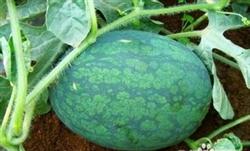
What to Do About Stunted Watermelons in Spring? Cause Analysis and Control Measures
1. Over-vigorous vine growth: the nutrients produced are mostly consumed by stem and leaf growth and cannot meet the needs of fruit enlargement, resulting in a rampant growth state. Strong seedlings should be raised to lay a good foundation for normal fruit development. Before and after fruit set, the amount and timing of the fruit-swelling fertilizer should be adjusted according to the size of new leaves, the thickness of the vines, the length of the internodes, and the length from the vine tip to the node of the opened female flower...
-
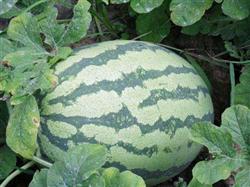
What are the control methods for stiff fruit in spring watermelons?
The causes of stiff fruit fall into the following categories: 1. Dry soil and insufficient fertilizer and water: if fertilizer and water are insufficient during the fruit enlargement period, stiff fruit is easily formed. Therefore, the melon field should be irrigated, with the amount of water increasing from small to large, and the water should not cover the bed surface. The water should not remain in the field for too long, and irrigation should be done in the evening or at night to avoid burning the roots at high temperatures...
-
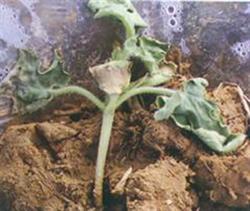
What to Do About Abnormal Watermelon and Melon Seedlings in Spring? A Full Breakdown of Solutions
1. Uneven emergence is mainly caused by uneven ground temperature and humidity in the seedbed. When laying heating wires, a spacing of 3-4 cm at the front edge of the greenhouse and 7-8 cm at the rear edge is advisable, so that the bed temperature is uniform; when large and small seedlings appear, move the large seedlings to the lower-temperature area at the front edge of the greenhouse, so that the young...
-
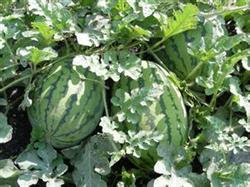
How to Grow Spring Watermelons for High Yields? Key Cultivation Techniques Explained
1. Choose disease-resistant, high-yielding, high-quality varieties: For medium-to-large fruited watermelons, choose Xinong No. 8, Japanese Jubao Wang, Qingbao Wang, Hei Juguan, Gannong No. 8; for small watermelons, choose Black Beauty mini watermelon; for seedless watermelons, choose Heimi No. 1 and No. 2. 2. Choose a good planting site: It is best to choose land with a certain slope, convenient drainage and irrigation...
-
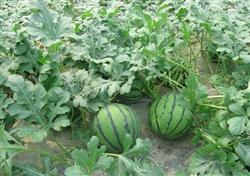
Detailed Explanation of Key Techniques for High-Yield Spring Watermelon Cultivation
1. Select disease-resistant, high-yield, high-quality improved varieties: For medium-to-large fruit watermelons, you can choose Xinong No. 8, Japanese Jubao Wang, Qingbao Wang, Heiju Guan, Gannong No. 8; for small watermelons, you can choose Heimeiren small watermelon; for seedless watermelons, Heimi No. 1 and No. 2. 2. Choose a good planting site: It is advisable to choose a site with a certain slope, convenient drainage and irrigation...
-
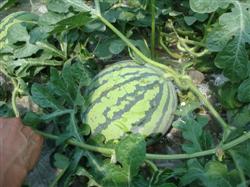
How can spring open-field watermelons be grown for high yields?
Currently it is the season for sowing and raising seedlings of open-field watermelons. In order to do a good job of watermelon cultivation and increase farmers' income, the key points of spring open-field watermelon cultivation techniques are introduced as follows: 1. Choosing varieties. Varieties should be selected according to market demand, choosing varieties with good quality, high yield and strong disease resistance, such as Qinghongbao...
-
Key Technical Points for High-Yield Open-Field Watermelon Cultivation in Spring
It is currently the season for sowing and raising seedlings of open-field watermelons. To do a good job of watermelon cultivation and increase farmers' income, the key technical points for spring open-field watermelon cultivation are introduced as follows: 1. Variety selection. Varieties should be chosen according to market demand, selecting those that are well-suited to the market, with good quality, high yield and strong disease resistance, such as Qinghong...
-
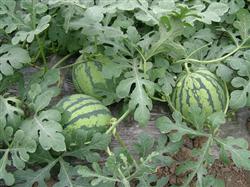
Five scientific measures for spring cultivation of mini watermelons
Cultivating mini watermelons in early spring has become a planting project favored by many melon growers, but due to climate and other reasons, the cultivation of mini watermelons still requires very scientific methods. Below, we explain 5 measures for scientifically cultivating mini watermelons: 1. Temperature management. Because the natural temperature in early spring is low, after transplanting the focus should be on keeping warm, keeping the greenhouse film tightly closed...
-
What are the common physiological disorders of watermelons and melons?
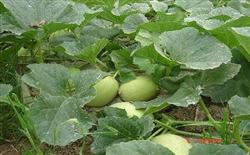
I. Causes of gourd-shaped fruit: 1. The fruit is set too far out, water and fertilizer conditions are poor, nutrients cannot be supplied and the fruit cannot swell; 2. The plant's vegetative growth is too vigorous, nutrients all go to the vines, and the small fruits that set are all gourd-shaped; 3. Pollination quality is low, the amount of pollen is insufficient and uneven, the front end of the fruit has many seeds while the base has...
-
Detailed Explanation of Key Cultivation Techniques for Watermelon in Early Spring Greenhouses
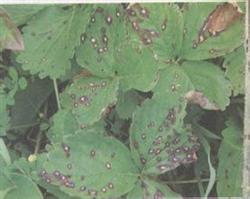
Strawberry snake-eye disease, also known as leaf spot disease, is a common disease of strawberries and occurs widely. When the disease is mild, it has no obvious effect on production; when severe, the incidence rate reaches 60%, and some leaves become necrotic and dry, significantly affecting strawberry yield. Symptom identification: it mainly damages leaves, petioles, fruit stalks, tender stems and seeds. On the leaves it forms small dark purple spots...
条件筛选