-
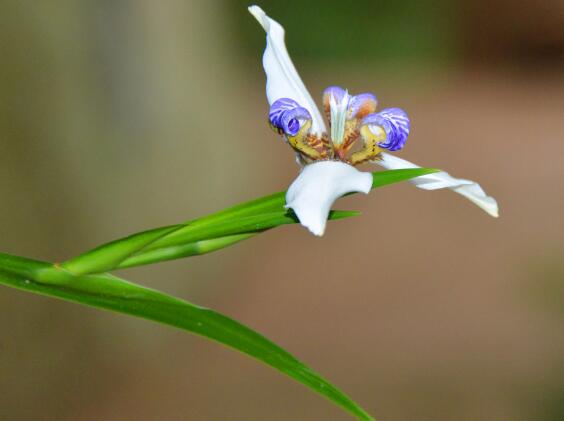
What to Do When Irises Get Pests? 2 Types of Pests and 3 Types of Diseases and How to Control Them
The iris is a plant with high ornamental value, and many people choose to grow one at home. However, problems during cultivation can lead to pests and diseases. What should you do when irises get pests, and how should pest and disease control for irises be carried out? Let's take a look below.
-

Propagation methods for potted poinsettias: 3 types of cuttings to turn one pot into many
Looking at the fiery red color of poinsettias for a long time, do you find it a bit tiresome? You might as well get a few pots of poinsettias in other colors, as the effect will look better that way. And this requires propagation, so what are the propagation methods for potted poinsettias? Propagation methods such as layering, cuttings, division, and sowing are not suitable for poinsettias
-
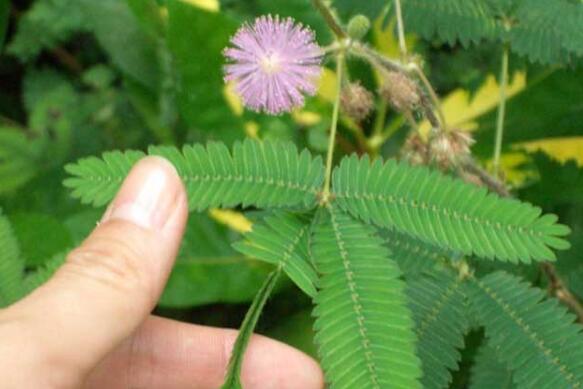
Will Mimosa pudica die if touched repeatedly? Full picture gallery of types
Everyone is certainly familiar with Mimosa pudica; it is a very magical plant. As soon as a person touches it, its leaves immediately fold up, which looks very interesting. Because of this characteristic of Mimosa pudica, many people touch it, and quite a few mimosas die as a result.
-
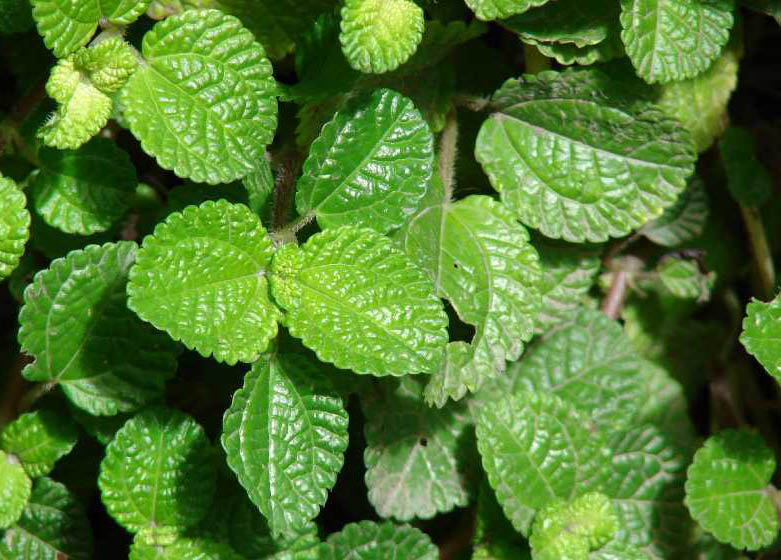
What are the common types of foliage plants
Foliage plants refer to a category of plants grown for the ornamental value of their leaves. They are usually divided into colorful-leaf types, variegated-leaf types and odd-leaf types. Colorful-leaf plants have colored leaves, such as coleus, caladium, croton, and maranta species; variegated-leaf plants often bear white, yellow and other colored markings and stripes on green leaves
-
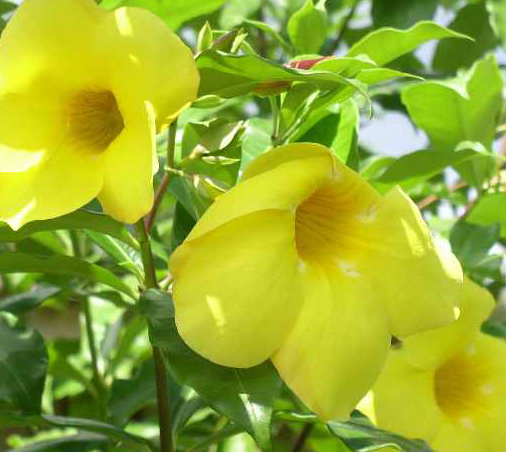
What types of yellow allamanda are there? A detailed introduction to common yellow allamanda varieties
Yellow allamanda belongs to the genus Allamanda in the family Apocynaceae. This genus has 15 species, distributed in tropical America. The common species and cultivated species introduced and grown in China include: yellow allamanda, willow-leaved allamanda, double-flowered willow-leaved allamanda, small-leaved willow-leaved allamanda, white allamanda, and purple allamanda. Yellow allamanda is an evergreen shrub. Leaves are 3-5 in whorls, ovate-lanceolate, with entire margins
-
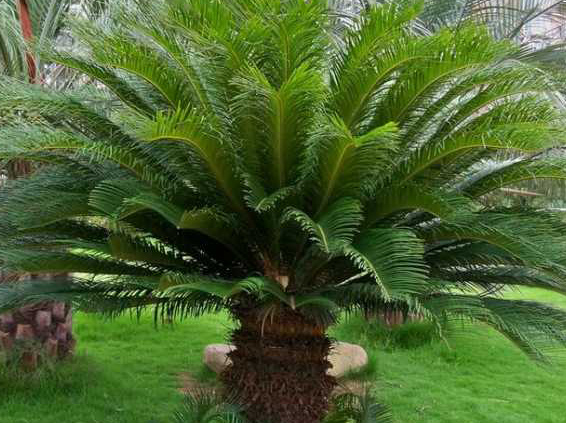
What Types of Cycads Are There? Introduction to Common Varieties
Cycads are a rare plant group in the world, with 24 extant species. Those commonly seen in gardens include: Cycas rumphii, Cycas szechuanensis, Cycas panzhihuaensis, Cycas micholitzii, Cycas multipinnata, Zamia cycads, and others
-
These types of feed can easily cause pig poisoning
1. Sprouted potatoes and their stems and leaves. Because the embryo buds contain large amounts of solanine, they can cause poisoning and paralysis. 2. Tender young sorghum seedlings, corn seedlings, and fresh flaxseed. They often cause hydrocyanic acid poisoning due to high levels of cyanogenic glycosides. 3. Moldy and deteriorated compound feed, mixed feed, grains, bran, beans, tubers, and moldy oilseed cakes, etc. They cause poisoning because they contain various molds and toxins such as Aspergillus flavus, Fusarium, rust fungi, and others. 4. Undetoxified cottonseed cake, tea seed cake, etc. After pigs eat them, digestive enzymes, microorganisms, or water act on them
-
Which types of feed cannot be used alone to feed rabbits?
1. White radish leaves: White radish leaves contain very high levels of chlorophyll and a lot of water. If rabbits eat too much, they are prone to bloating, diarrhea, indigestion, and similar problems. Therefore, when feeding white radish leaves to rabbits, they should be mixed with other forage grasses, vegetable leaves, and so on. 2. Peanut vines: Peanut vines are rich in nutrients, and rabbits love to eat them, but because they contain a lot of crude fiber and water, excessive intake by rabbits can easily cause big belly disease, loose stools, indigestion, and similar problems, so they should not be fed alone in large amounts. In addition, when using peanut vines to feed rabbits, combining them with feeding the rabbits some onions, garlic heads
-
What varieties and types of Pinellia ternata are there? Detailed introduction
Pinellia ternata commercial products are subglobose, some slightly flattened and oblique, 1-1.5 cm in diameter. The surface is white or pale yellow, the top has a sunken stem scar, surrounded by densely distributed pitted root scars commonly called "brown eyes," and the lower part is bluntly rounded and relatively smooth. The texture is solid, the cross-section is pure white and kidney-shaped, rich in farinaceous character, odorless, pungent in taste, numbing to the tongue and irritating to the throat, and sticky when chewed. In the past, commercial Pinellia ternata was divided into many commodity types according to production area; Xufuzi: the adjacent areas of Sichuan and Yunnan, especially that produced in Zhaotong, Yunnan, is the most famous and has the reputation of "Pearl Pinellia." Nearby Leibo,
-
How to prevent and treat deformed mushrooms? First, identify the common types
Deformed mushrooms take many forms. The main ones commonly seen in production are: landmine mushrooms, hollow mushrooms, big-bottom mushrooms, hard cap opening and early cap opening, red roots, and water rust spots. Landmine mushrooms. The main cause is that the casing soil material is too coarse, the soil is rather hard, the casing layer is thick, the surface of the casing layer contains relatively little water, while the temperature and humidity conditions of the lower part and the substrate are suitable for fruiting body formation and growth, so fruiting bodies are easily differentiated and formed on the surface of the substrate or in the middle and lower layers of the casing soil, and then push out through the soil surface. Solution: choose high-quality humus soil, preferably peat soil, and mix in a certain amount of rotted cow manure or wheat bran, etc. in proportion; when collecting and sun-drying the soil, it should be sieved so that most soil particles remain comparable in size to @#@245@#@ particles, with the largest about 1/2 the size of a corn kernel, accompanied by some soil particles; casing is generally about 3 cm, and if conditions permit, first apply a layer of coarse soil 1-1.5 cm thick, then fine soil, and pay attention to maintaining uniform moisture content.
条件筛选