What are the common types of foliage plants
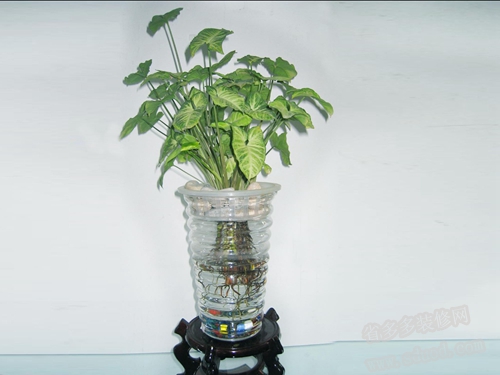
Foliage plants refer to a category of plants grown for the ornamental value of their leaves. They are usually divided into colorful-leaf types, variegated-leaf types and odd-leaf types. Colorful-leaf plants have colored leaves, such as coleus, caladium, croton, and maranta species; variegated-leaf plants often bear white, yellow and other colored markings and stripes on green leaves, such as dumb cane, arrowhead plant, pothos, peperomia, aluminum plant, and English ivy; odd-leaf plants have strangely shaped leaves, some with larger leaves, such as the fiddle-leaf fig; some with lobed leaves, or with round holes in the leaves, such as philodendron and Swiss cheese plant.
At present, foliage plants commonly cultivated in China include asparagus fern, spider plant, Aspidistra, aluminum plant, dumb cane, Dieffenbachia, Aglaonema, coleus, caladium, pothos, English ivy, croton, Swiss cheese plant, rubber tree, and ornamental ferns, ornamental bromeliads, ornamental begonias, nerve plants, peperomia species, arrowhead plant species, maranta species, philodendron species, dracaena species, palms, ornamental small bamboos, as well as pines, cypresses, and firs.
Liliaceae, Asparagus genus, a perennial evergreen herbaceous flower. Stems slender and weak, branches fine and leaf-like, spreading horizontally. Flowers small, white. Berries spherical, black. After the fruit ripens, it presents a scene of dots of red amid dense green, elegant and lovely. The plant is highly shade-tolerant, and placed on a bedside table or desk it is elegant and dignified, making it a very good indoor flower. Asparagus fern is also an ideal material for complementing cut flowers. In recent years, hydroponically grown asparagus fern has been successfully developed, and placed indoors it is even more elegant.
What are some hydroponic plants - hyacinth
Also known as Dutch hyacinth, belonging to Liliaceae, Hyacinthus genus, a perennial herb, bulb spherical or flattened spherical, covered with a skin ranging from purplish blue to white, leaves basal, thick and fleshy, strap-shaped lanceolate. The flower stem emerges from the center of the leaf stem, a raceme, with delicate, colorful, dazzlingly beautiful flowers and a pleasant fragrance. It likes a sunny, cool and moist environment, and is suitable both for potting and for water culture. When grown in water, its bulb is placed in a hydroponic nutrient solution; its appearance is clean and its ornamental value is high!
What are some hydroponic plants - Dieffenbachia
A Liliaceae plant, basal leaves thick and leathery, oblanceolate, broadly lanceolate or broadly strap-shaped, apex acute, base narrowed and elongated, with fibrous roots at the nodes. Varieties are rich, with many types such as green-leaved and variegated-leaved. It likes shady and humid environments, and in summer should be placed in shade to avoid strong light. It is an ornamental flower variety with strong adaptability, usually grown as a potted ornamental, and in recent years hydroponic varieties have become more and more numerous, not only highly ornamental but also effective at cleaning indoor air pollution.
Related articles
Foliage plant cultivation techniques
Foliage plants generally refer to plants with beautiful leaf shapes and leaf colors, native to hot and humid tropical rainforests, requiring less light such as maranta species and ferns. Most woody plants belong to shrubs or shrub-like plants, such as weeping fig, Schefflera, and Polyscias. They are further divided into herbaceous plants and woody plants; herbaceous plants mostly belong to perennial herbaceous plants such as peperomia species. Seed sowing and cultivationWhat is discussed here is sexual propagation technology, not involving pollination and fertilization, and only introduces technical knowledge related to seed collection, storage and treatment, as well as sowing and post-sowing management in the production and cultivation of flowers and plants.
1. Seed collection and purchase: Sowing and cultivation first require seeds of excellent quality. There are two sources of seeds: collecting seeds yourself and buying seeds:
(1) Seed collection: The quality of seeds directly affects the germination rate, and also relates to the growth and development after becoming seedlings as well as flowering and fruiting. In order to obtain seeds of excellent quality, it is necessary to cultivate good mother plants for seed production and to do the work of purifying the line to maintain stable traits. At the beginning of the flowering period, select plants that are robust, free of pests and diseases, and able to reflect the typical excellent characteristics of the variety as mother plants for seed production, and carefully maintain them separately. To avoid possible mechanical and biological mixing of varieties, mother plants of different varieties should be cultivated in isolation. Prevent mixing. When collecting seeds, seeds with plump grains, high purity, no pests or diseases, and high quality indicators must be collected. The time and method of seed collection vary depending on the type of flower. Generally, seeds are collected after they are fully mature, but some flowers have fruits that crack easily, such as pods and siliques, and should be collected in advance before they mature and crack, in the early morning when air humidity is relatively high. The seeds of many flowers mature successively, and should be collected as they mature. After collecting seeds, promptly record the flower variety name, seed collection time and place, and variety characteristics, etc., to avoid confusion.
(2) Seed purchase: In the past, because flower seeds were relatively difficult to obtain, most flower growers were accustomed to saving their own seeds. In this way, after years of cultivation and propagation, the seeds underwent repeated inbreeding, and the original excellent traits became segregated or degraded, thereby seriously affecting the cultivation quality of the offspring and often failing to reach the grower's expected goal. Therefore, when conditions permit, the traditional way of saving one's own seeds should be abandoned, and instead hybrid first-generation (F1) flower seeds or seedlings should be purchased from professional seed companies. Seeds produced by formal seed companies are improved varieties bred by breeding experts. They have the genetic advantage of hybrids, with stable and consistent trait performance. Moreover, there are many kinds, which can meet different needs, and are especially suitable for large-scale commercial production.
2. Post-harvest treatment and storage: After seeds are collected, they must be cleaned. Those pulled up whole should be dried and threshed. Those collected together with the fruit should have the fruit skin, flesh and various attachments removed. Those that need drying must be dried together with the fruit shell, avoiding direct exposure of the seeds to sunlight, otherwise the vitality of the seeds will be affected, or even lost. After collection and treatment, the seeds of annual and biennial herbaceous foliage plants are generally stored under dry, sealed, low-temperature (2-5°C) conditions. Usually, to prevent the seeds from absorbing moisture, the seeds are first put into soft metal bags or small plastic bags, and then placed inside ordinary paper seed bags. The outside of the seed bag should correctly indicate the name of the seeds, as well as the date of collection or the period of use. Tin boxes, wooden boxes, or colored glass bottles can also be chosen as containers for storing seeds. During storage, rat damage must be strictly prevented. Since seeds are alive and also have a lifespan, the strength of their vitality and the length of time they can last are closely related to storage conditions. Seeds under warm, humid, and well-ventilated conditions have strong life activities, the nutrients in the seeds are quickly consumed, and the lifespan of the seeds is short. Seeds under low-temperature, dry, and slowly ventilated conditions have slow life activities, and the lifespan of the seeds is longer. Therefore, seeds should be stored under low-temperature, dry, and relatively sealed conditions. Even so, the lifespan of seeds is still limited. Seeds that have already lost their vitality cannot be used for sowing and raising seedlings.
(1) Sowing time: It can be determined according to local climatic conditions, the characteristics of the foliage plant itself, and the required flowering time. The sowing time of annual and biennial open-field foliage plants includes spring sowing and autumn sowing. Annual foliage plants are mostly sown in spring. Sowing is about from late March to early May; in the south it can be slightly earlier, and in the north it should be slightly later. Biennial foliage plants are generally sown in autumn, mostly from late August to early October; in southern regions it can be slightly later, and in northern regions it should be slightly earlier. For the need to control the flowering period, spring sowing can also be advanced or autumn sowing delayed, sowing and raising seedlings in advance in cold frames, hotbeds or greenhouses.
(2) Sowing methods: The sowing methods of annual and biennial herbaceous foliage plants include open-field sowing, cold-frame sowing and greenhouse sowing.
① Open-field sowing: It is further divided into open-field seedbed sowing and direct sowing. Before sowing in an open-field seedbed, choose a place with high and dry terrain, flat, sheltered from the wind, and facing the sun to set up the seedbed. The seedbed soil should be loose and fertile, conducive to drainage and with a certain water-holding capacity. It needs to be plowed 30 cm deep, harrowed fine, and cleared of debris, then made into beds. In southern regions the groundwater level is high, so raised beds are suitable. In northern regions where water is scarce, low beds are suitable. The bed width is about 1.2 m, the bed height about 0.3 m, and the bed surface should be level, with the upper layer covered with 10-15 cm of sieved culture soil. Among annual and biennial herbaceous foliage plants, species with a taproot system and intolerance to transplanting, such as corn poppy, are suitable for open-field direct sowing or raising seedlings in nutrient pots.
① Cold-frame and hotbed sowing: Mainly used for autumn sowing and seedling raising in cold northern regions. Before sowing, the bed soil must be strictly disinfected to kill insects and sterilize. After sowing, the amount of watering must be controlled. Cold-frame sowing should be watered less, fermentation hotbeds should not be watered, using only moist soil cover to preserve moisture, while electric heating hotbeds should be watered more.
③ Greenhouse sowing: Suitable for raising seedlings of greenhouse herbaceous flowers and for species with small and few seeds. Shallow sowing boxes or shallow seedling pots are mostly used as sowing utensils. The specifications of the sowing box are generally length:width:height = 60 cm:40 cm:10 cm. Sowing pots should be shallow pots with a diameter of 30 cm, a height of 10 cm, and many holes at the bottom. After laying broken tiles at the bottom of the box or pot, fill in 1/3-1/2 coarse-grained soil to facilitate drainage, then fill with culture soil and press lightly. Moisten the soil before sowing. After sowing, cover with culture soil to a thickness of 1/3-1/2 of the seed diameter, and watering should use the soaking method.
4. Sowing methods and post-sowing management:
(1) Sowing methods: There are three kinds: broadcasting, drilling and dibbling (also called hole sowing).
① Broadcasting: This is evenly scattering seeds on the already prepared sowing soil surface. This method is mostly suitable for seedbed seedling raising or pot sowing. For those tiny seeds, it is difficult to sow evenly, so it is best to mix them with fine sand or plant ash and broadcast together. Broadcasting has the advantage of a large propagation quantity and many seedlings produced, but because the seedlings are numerous and crowded, they are also prone to leggy growth and pests and diseases, so after emergence attention must be paid to timely thinning.
② Drilling: This is sowing seeds in rows on the sowing soil surface at a certain row spacing. This method is mostly used for seeds of medium particle size. Because there is a certain distance between the rows, light and ventilation are better, and weeding and fertilizing are convenient, so the seedlings also grow more robustly.
③ Dibbling: This is opening holes according to a certain plant and row spacing, sowing the seeds into the holes, placing 2-3 seeds per hole, then covering with soil to a thickness of about twice the seed diameter. This method is mostly used for large seeds, precious foliage plants, and some herbaceous foliage plants intolerant to transplanting. After emergence, keep 1-2 strong seedlings per hole, and pull out the excess seedlings or move them to fill gaps where seedlings are missing.
(2) Post-sowing management: After sowing and covering with soil, cover the bed surface with straw or a screen to prevent the surface soil from drying and crusting, maintain relatively stable bed soil moisture, and avoid watering and rain impacting the seeds. Plastic film can also be used for covering, but attention must be paid to ventilation. After the seeds germinate and the seedlings emerge, the covering should be removed immediately so that the young seedlings receive light, and the air humidity among the seedlings should be reduced to prevent the seedlings from becoming weak and leggy. If the seedlings grow too densely, thin them in time, and water after thinning. When the seedlings have grown 4-5 true leaves, transplant them and enlarge the plant and row spacing.
For indoor pot sowing and seedling raising, add a glass plate over the pot opening to preserve moisture. To facilitate ventilation, prop up one side of the glass plate to form a slope. After the seedlings emerge, remove the covering glass plate so that the seedlings see light and undergo hardening, then transplant into shallow pots.
The key to post-sowing management is water control. Be careful not to let the seedbed become too dry or too wet, and do not let it alternate between dry and wet. Be sure to keep the soil evenly moist. If too dry, the seeds will not emerge; if too wet, the seeds are prone to mold and rot; if alternately dry and wet, the newly sprouted seedlings will wither and die. In the early stage of sowing, the humidity of the seedbed should be somewhat greater, because seeds absorb a large amount of water when germinating; in the later stage, the soil humidity should be appropriately reduced to induce the germinating root system to grow deeper.
Cutting propagation
Cutting propagation is the process of using the regenerative capacity of the vegetative organs of foliage plants, cutting off a part of the root, stem or leaf, inserting it into a cutting bed, and giving suitable conditions so that they develop adventitious roots and thus grow into a new plant. The asexual propagation of foliage plants mainly uses the cutting method.
1. Cutting time Foliage plants are mainly propagated by cuttings during the growing season, generally in spring, summer and autumn; under greenhouse conditions, it can be done throughout the year.
2. Cutting bed preparation Before cutting, first set up the cutting bed well. The cutting bed can be set up in the open field or in a greenhouse, and pots or boxes can also be used for cuttings. The cutting bed substrate should be loose, moisture-retaining, free of pathogens, and have good drainage and aeration. Commonly used substrates include river sand, vermiculite, perlite, peat and culture soil, etc. The specific substrate chosen depends on the type of flower being cut. For foliage plants, a mixed layered substrate of culture soil with river sand, perlite, etc. is generally ideal, that is, the bottom layer of the cutting bed is spread with 2-3 cm of coarse stone particles as a drainage layer, on top of which 3-4 cm of culture soil is spread as a nutrient layer, and finally 5-6 cm of river sand, perlite and other substrate is spread. A support frame is usually set up at the top of the cutting bed, and plastic film can be covered according to management needs to increase temperature and preserve moisture, or a net screen can be spread in summer for shade. Before cutting, the substrate must be strictly disinfected.
3. Cutting methods Cutting methods are divided into stem cuttings, leaf cuttings and root cuttings. Foliage plants are mainly propagated by stem cuttings, and a few also by leaf cuttings, such as wax begonia. When taking stem cuttings of foliage plants, generally cut off the current-year non-lignified young shoots as cuttings, with a cut length of 5-10 cm, keeping 3-4 nodes, cutting at the lower part between nodes, removing the lower leaves, and keeping 1-2 small leaves at the upper end. The cuttings of annual and biennial herbaceous flowers must retain a portion of leaves, otherwise it is difficult for them to root, so whether the freshness of the cutting leaves can be maintained is very important for the survival of the cutting. It is best to insert immediately after cutting; if they cannot be inserted at that time, the cuttings must be placed in a cool place or the cut ends wrapped with a wet cloth. Pay attention to preserving freshness to avoid water loss affecting survival. Before cutting, first water to moisten the cutting bed substrate, then use a stick slightly thicker than the cutting to make insertion holes, and then insert the cuttings, trying to avoid scraping the cut end of the cutting, so as not to affect the formation of callus tissue. The insertion depth should not exceed 1/3 of the length of the cutting; generally, when summer temperatures are high, shallow insertion is suitable, and when spring temperatures are low, deep insertion is suitable. After cutting, water thoroughly the first time, so that the cutting substrate and the cuttings are closely combined.
4. Post-cutting management The central link in post-cutting management is doing a good job of water regulation and light control. Water regulation mainly involves mastering the amount of watering and creating a high-humidity air environment. The cutting bed should be watered neither too much nor too little; it is enough to always keep the substrate slightly moist but not dry. The moisture content of the substrate is generally controlled at 60%-70%, which is more suitable. Too much watering will inevitably affect the air circulation of the substrate, easily causing the wound to rot; too little watering cannot maintain the dynamic balance of transpiration, often causing the cuttings to dry up before they have rooted. Therefore, improper watering is one of the most common causes of cutting failure. Usually, before callus tissue forms, water slightly more; after callus tissue forms, appropriately reduce the frequency of watering; after new roots appear, reduce watering further. Before the cuttings root, their ability to absorb water from the substrate is weak, and relying only on watering is not enough. Only by maintaining relatively high air humidity can transpiration be reduced, wilting prevented, and the branches and leaves kept upright and fresh, allowing photosynthesis to continue and promoting rooting. The relative air humidity of the cutting bed should preferably be kept above 85%. In the early stage of cutting, avoid excessive air circulation and keep the air humidity as high as possible, but once callus tissue has formed and rooting has begun, pay attention to ventilation to promote root growth. Softwood cuttings cannot do without light, but the light must not be too strong. The leaves of the cuttings can still carry out photosynthesis in the sun, continuing to produce assimilated nutrients, which helps promote rooting. But if the light is too strong, the evaporation of the cuttings will be too great, which will affect the survival of the cuttings. Generally, control under semi-shade conditions is more ideal.
The post-cutting management of cuttings in greenhouses, pot cuttings and leaf cuttings is largely the same as open-field cuttings, and can be carried out by referring to the above measures.