-
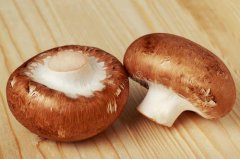
What Are the Mushroom-Processed Foods? An Introduction to Common Types of Mushroom Products
Mushrooms are now a common dish on the market, but did you know that besides being sold directly for eating, they can also be made into what kinds of goods for sale? What price range do they fall within? Let's take a look together. Shiitake stem meat floss, mushroom sauce, mushroom soy sauce
-
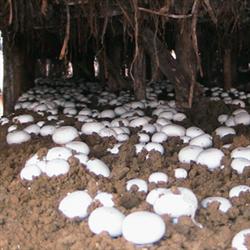
What Are the Types of Mushrooms? Introduction to Common Varieties
What types of mushrooms are there? Please introduce them. What is commonly called a mushroom is a type of fungus, namely the fruiting body of a basidiomycete. The fruiting body is the above-ground part that the basidiomycete sends up from the ground, looking much like an umbrella stuck into the soil. Below ground there is also a white, thread-like mycelium that spreads everywhere; this is the vegetative part of the basidiomycete,...
-
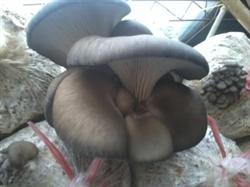
What types of deformed oyster mushrooms are there? Detailed explanation of prevention and control methods
Deformed mushrooms are a relatively common physiological disorder in oyster mushroom production, seriously affecting the yield and quality of oyster mushrooms, and even causing them to completely lose their commercial value. This disorder is mainly caused by improper management, and in a few cases by spawn degeneration, mutation, or viral infection. The main types of deformed mushrooms include: 1. Tall-stemmed mushroom, with a small cap...
-
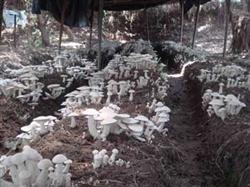
Fertilization Methods and Techniques for 4 Types of Mushrooms
1. Mushroom root soup. Boil the mushroom stems cut off during harvesting in water for 5 minutes, let it settle, then add 10 times the amount of clear water and spray to promote the growth of young mushrooms. 2. Substrate soak solution. Boil sun-dried fermented substrate in water, filter and take the liquid, add 10 times the amount of clear water and 10% calcium carbonate and spray to extend the fruiting time of the mushroom bed....
-

How to prevent and treat deformed mushrooms? First, identify the common types
Deformed mushrooms take many forms. The main ones commonly seen in production are: landmine mushrooms, hollow mushrooms, big-bottom mushrooms, hard cap opening and early cap opening, red roots, and water rust spots. Landmine mushrooms. The main cause is that the casing soil material is too coarse, the soil is rather hard, the casing layer is thick, the surface of the casing layer contains relatively little water, while the temperature and humidity conditions of the lower part and the substrate are suitable for fruiting body formation and growth, so fruiting bodies are easily differentiated and formed on the surface of the substrate or in the middle and lower layers of the casing soil, and then push out through the soil surface. Solution: choose high-quality humus soil, preferably peat soil, and mix in a certain amount of rotted cow manure or wheat bran, etc. in proportion; when collecting and sun-drying the soil, it should be sieved so that most soil particles remain comparable in size to @#@245@#@ particles, with the largest about 1/2 the size of a corn kernel, accompanied by some soil particles; casing is generally about 3 cm, and if conditions permit, first apply a layer of coarse soil 1-1.5 cm thick, then fine soil, and pay attention to maintaining uniform moisture content.
-
What are the control methods for the 4 types of edible mushroom diseases?
1. Brown rot. Also known as bubble disease and wet bubble disease. It mainly harms button mushrooms, straw mushrooms, oyster mushrooms, etc. The disease is caused by the pathogen Mycogone perniciosa. Main characteristics: the conidia and chlamydospores of Mycogone perniciosa only infect the fruiting body, not the mycelium. When the fruiting body is lightly infected, the stipe swells into a bubble-like deformity, hence the name wet bubble disease. However, at different stages of fruiting body development, the symptoms also differ. If infection occurs before the fruiting body differentiates, there is an irregular mass of tissue resembling a hard-skinned puffball, covered with white cottony mycelium, which gradually turns dark
-
Detailed Explanation of Harvesting and Processing Techniques for Three Types of Edible Fungi
1. Black wood ear (Auricularia heimuer): Under normal management for about 30 days, the ear pieces have fully expanded and reached physiological maturity, which means they are ready to harvest. When harvesting, all the wood ear on a single fungus bag should be picked at once, the base should be cleaned thoroughly, and the pieces should be spread on a raised sand net or straw curtain to dry in the sun. If the temperature is still around 20°C after the first harvest, manage it according to the first management method, and a second harvest can be expected. 2. Lingzhi (Ganoderma lucidum): The fruiting body of lingzhi is initially white when growing, then turns yellow, and after 2 to 3 months becomes purple, brown, or red. When the
-
What varieties and types of alkali-tolerant edible fungi are there?
New alkali-tolerant edible fungus strains and new techniques for spawn production and cultivation. The latest technique for cultivating oyster mushrooms. A reasonable formula (with the anti-mold agent formulated by this institute added), the optimal raw material treatment method, a new-style spawning method for cultivation bags, plus a simple management approach, can make the success rate of large-bag raw material cultivation of oyster mushrooms exceed 95%, making it an effective way to improve the economic benefits of oyster mushroom cultivation. Patented technology. Name: Method for making wheat grain spawn. Patent application number: 9811975.1. This invention proposes a wheat grain
-
Control Methods for Four Types of Diseases in Edible Fungi
1. Brown rot, also known as bubble disease, wet bubble disease, etc. It mainly affects button mushrooms, straw mushrooms, oyster mushrooms, etc. The disease is caused by a fungus called Mycogone perniciosa. The main characteristics are: the conidia and chlamydospores of Mycogone perniciosa only infect the fruiting bodies, not the mycelium. When the fruiting body is lightly infected, the stipe swells into a bubbly deformity, hence the name wet bubble disease. However, at different stages of fruiting body development, the symptoms also differ. When the fruiting body is infected before differentiation, an irregular mass of tissue resembling a hard-skinned puffball appears, covered with a layer of white cottony mycelium, and gradually
-
What types of common pests and diseases affect mushrooms?
1. Spot type: mainly brown spot disease, where the surface of the fruiting body has white hair-like mycelium along with small brown spots; affected by it, the mushroom caps shrink, and some mushroom caps crack and dry out; there is also a type mainly characterized by rust spots, with rust-colored spots appearing on the mushroom stipes and caps, mainly caused by excessive humidity and poor ventilation in the shed. 2. Deformed type: mainly manifested as slender mushroom stipes and a well-developed, thick and strong root system, with an external form resembling coral in the sea, mainly caused by a lack of oxygen or poor ventilation in the greenhouse. 3. Spindly growth
条件筛选