-
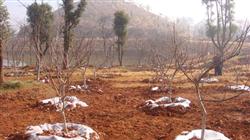
What are the methods for planting and managing persimmon trees?
How do you plant and manage persimmon trees? Please give an introduction. The methods for planting and managing persimmon trees can refer to the following methods: 1. Planting persimmon trees. 1. Choose the site and build the persimmon orchard. Choose a leeward, shady site with deep soil, fertile and loose soil, and a low groundwater table. 2. Dig holes and apply base fertilizer. Follow the mountain contour to cut horizontal terraces, and build them into mountain orchards with a front ridge and back ditch, reverse-sloping terrace surfaces, or a "fish-scale pit" style. Plant at a row spacing of 6 x 5.5 m, with 20 trees or 50 trees (close planting) per mu. The hole surface width, bottom width, and depth of the planting hole should reach 1 m, 0.8 m, and 0.6 m respectively. First allow weathering, then backfill the planting hole with weeds and topsoil to 80% full, and at the same time backfill a corresponding amount of organic fertilizer as base fertilizer, with the hole position 20 cm above the terrace surface. When planting, spread 1-1.5 kg of calcium magnesium phosphate fertilizer in each hole to improve planting quality and growth.
-
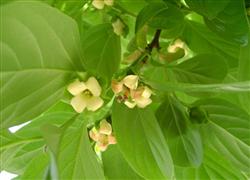
How to improve the fruit set rate of persimmon trees? Sharing practical methods
How to improve the fruit set rate of persimmon trees? Please give an introduction to the methods. To improve the fruit set rate of persimmon trees, you can refer to the following methods: 1. Control the persimmon fruit borer. 7 to 8 days after the persimmon tree begins to bloom (based on 1 flower blooming in the persimmon orchard), you can choose 2.5% fenpropathrin 2500x solution, 21% fenvalerate 2500x solution, 10% duo...
-
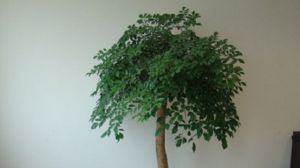
How to save a Happiness Tree that is dropping leaves? Teach you the correct remedies
There are many reasons a Happiness Tree (Radermachera sinica) drops its leaves: if it is caused by unsuitable lighting, it needs to be kept in a bright and well-ventilated environment, and given more light in winter. If it is caused by temperatures that are too high or too low, it should be kept in a cool place in summer and moved indoors promptly in winter. If it is caused by improper watering, you need to control the amount of water and keep the potting soil moist.
-

Correct watering method for the money tree (Pachira aquatica): should you water at the roots?
You can water the money tree at the roots, but there must be no standing water in the potting soil. Watering at the roots should not be too frequent; once a week is enough. When humidity is low, you can mist appropriately to increase humidity. In addition, in summer, avoid watering at noon; do it in the morning or evening. In winter, when temperatures are low, water at noon to avoid damaging the roots.
-
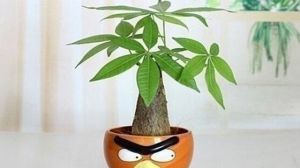
How to Care for a Money Tree in Summer? A Full Guide to Summer Care Techniques
Light: It needs plenty of light, with the leaf surface facing the sun, and should not be kept in a shady environment for long periods. Water: In spring and autumn, water once every 2-3 days; in summer, you can water every day. Temperature: The temperature should not be higher than 30°C; when it is too high, keep it in a cool place or spray water to lower the temperature. Fertilizing: In summer, fertilize regularly, applying a fully decomposed liquid fertilizer once every half month.
-
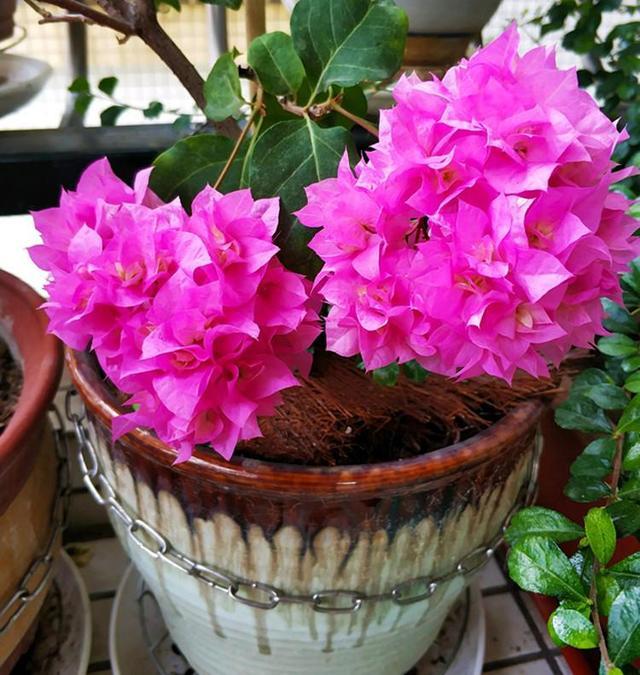
When this flower blooms, it displays a rich variety of colors, with flowers covering the entire tree
Bougainvillea, with strong vitality, offers both beautiful flowers and foliage, and comes in rich colors including red, yellow, and purple, with red being the most common. It has a long blooming period, with flowers covering the branches, making it an excellent potted plant. Moreover, there are many varieties of bougainvillea, and with good mastery of techniques, you can make it bloom profusely.
-
What are the key technical points for summer management of persimmon trees?
How should persimmon trees be managed in summer? Please provide guidance. The summer management methods for persimmon trees can refer to the following points: 1. Fruit thinning. For astringent persimmons, from mid-May to early June; for sweet persimmons, from early June to early July. After the physiological fruit drop ends, select and keep healthy young fruits free of pests and diseases at a ratio of 20-25 leaves to one fruit. What should be removed are deformed fruits, pest- and disease-damaged fruits, fruits set on branches less than 15 cm long or with fewer than 5 leaves, and fruits on the base and tips of bearing branches.
-
How to Fertilize a Persimmon Tree Well? A Detailed Guide to Scientific Fertilization Methods
How to fertilize a persimmon tree well? Please give guidance. The persimmon tree is a fruit tree that is widely cultivated, easy to manage, long-lived and high-yielding. It originated in our country, and is also cultivated in Japan, Korea and other countries. The persimmon tree is a deciduous tree, with a tree height of more than 10 m, a crown spread of about 16 m, and a lifespan of several hundred years. I. Root nutrition of the persimmon tree...
-
What causes physiological fruit drop in persimmon trees?
What is physiological fruit drop in persimmon trees? Please provide an introduction on how to prevent it. The causes of physiological fruit drop in persimmon trees and prevention and control methods are as follows: 1. Factors behind physiological fruit drop in persimmon trees. Due to improper management, persimmon trees drop a large amount of fruit 1 month after the flowers fade, with the peak fruit drop period occurring about 20 days after full bloom, and then another minor fruit drop in August...
-
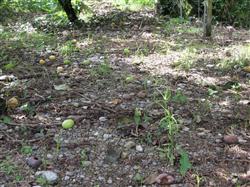
What are the main causes of fruit drop in persimmon trees?
Why do persimmon trees drop their fruit? How should it be prevented and controlled? Please give an introduction. There are two causes of fruit drop in persimmon trees: one is physiological fruit drop caused by the tree's own physiological imbalance; the other is fruit drop caused by pests and diseases. Either cause can lead to serious economic losses in certain years. 1. Physiological fruit...
条件筛选