What are the main causes of fruit drop in persimmon trees?
Why do persimmon trees drop their fruit? How should it be prevented and controlled? Please give an introduction. There are two causes of fruit drop in persimmon trees: one is physiological fruit drop caused by the tree's own physiological imbalance; the other is fruit drop caused by pests and diseases. Either cause can lead to serious economic losses in certain years. 1. Physiological fruit...
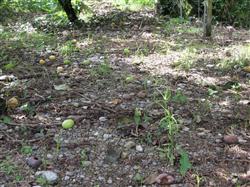
Why do persimmon trees drop their fruit? How should it be prevented and controlled? Please give an introduction
There are two causes of fruit drop in persimmon trees: one is physiological fruit drop caused by the tree's own physiological imbalance; the other is fruit drop caused by pests and diseases. Either cause can lead to serious economic losses in certain years.
1. Causes of physiological fruit drop. (1) Poor nutrition and nutrient imbalance. During the fruit drop period, new shoots continue to grow, and nutrients are consumed by new shoot growth, which promotes fruit drop. Incomplete flower bud differentiation causes early fruit drop.
(2) Poor pollination. Some cultivars do not need pollination, such as Damopan (Large Millstone), and cultivars with this characteristic are not prone to physiological fruit drop. Some cultivars, especially most sweet persimmon cultivars in Japan, must have pollinizer trees planted, otherwise the fruit cannot develop and early fruit drop is severe. If the flowering period meets continuous overcast and rainy weather that affects pollination, fruit drop is also likely.
(3) Unreasonable tree structure. A tall tree with overly dense branches and poor ventilation and light penetration affects the accumulation of organic nutrients in the branches, causing the branches to grow thin and weak, so the fruit on such branches is prone to dropping.
(4) Insufficient fertilizer and water. Long-term dry soil and poor, infertile soil make it difficult to absorb fertilizer and water, causing more fruit drop; when soil moisture is high, the absorption capacity of the roots decreases, and even if more fertilizer is applied, the tree has difficulty absorbing and utilizing it, and fruit drop also occurs due to insufficient nutrient supply.
(5) Effect of rainfall. Early fruit drop in persimmon is related to rainfall; more rainfall means more fruit drop. This is because rainfall leads to insufficient sunshine, weakening photosynthesis, so some fruit in nutritionally unfavorable positions fail to obtain sufficient nutrients and drop.
2. Fruit drop caused by pests and diseases. (1) Severe damage by the persimmon fruit borer. The persimmon fruit borer is a pest that specifically damages persimmon fruit, generally boring into and damaging the fruit around wheat harvest, causing the persimmon fruit to soften and drop, affecting growers' yields. (2) Damage by persimmon scale insects. Also called tree lice, they harm persimmon trees severely and often cause serious fruit drop. (3) Damage by anthracnose. It generally breaks out in large amounts in September, causing fruit drop.
3. Measures to prevent persimmon fruit drop
(1) Strengthen fertilizer and water management to maintain healthy tree growth, enhance the assimilation capacity of the leaves, thereby regulating the distribution of nutrients within the branches and easing the conflict between growth and fruiting in competing for nutrients.
\ (2) Prune appropriately, especially strengthening summer pruning, removing useless and excess branches, promoting ventilation and light penetration, ensuring sufficient light conditions, draining accumulated water promptly in the rainy season, and irrigating promptly in the dry season, so as to keep the tree growing vigorously and the fruit developing well.
(3) Properly interplant pollinizer cultivars. Most persimmon cultivars have only female flowers. Although cultivars with male flowers are interplanted, they are only a minority after all. In order to make effective use of the male flowers produced by these pollinizer trees, artificial pollination should be carried out. Because of differences in environment and climate, persimmon flowers open at different times, so artificial pollination should be carried out in 3-4 separate rounds for reliable pollination, which can effectively prevent and control physiological fruit drop.
(4) Girdling during the flowering period. Girdling the trunk or main branches of vigorous trees can not only promote flower bud differentiation and earlier fruiting, but also reduce physiological fruit drop and advance the fruit ripening period. The suitable time for girdling is generally when half of the persimmon flowers are open. If the time is too late or the girdling width is too large, the wound will heal with difficulty, leading to weakened tree vigor and even the death of the whole branch or the entire tree. The girdling width should be limited to 1.5 cm, and the depth should reach the cambium. Although girdling has many advantages, it should not be done every year, otherwise it tends to weaken tree vigor further and even shorten the lifespan. In addition, strengthen fertilizer and water supply after girdling.
(5) Prevent and control pests and diseases. For anthracnose, spray 4-5 degrees Baume lime sulfur mixture before bud break, and spray Bordeaux mixture once each in early to mid-June and early to mid-August. For the persimmon fruit borer, scrape the bark in winter, remove the persimmon calyxes left on the tree, and destroy them centrally. In mid-to-late June and mid-to-late August, remove the fruits damaged by larvae thoroughly and at the right time, and pick up all fallen ones and bury them deeply together, which can reduce the damage of the next generation or the following year. During the flower bud swelling stage of persimmon trees, use 48% chlorpyrifos 1000-1500 times dilution; 10 days after flower drop, use 1.8% abamectin 4000-5000 times dilution, which can effectively control scale insects and increase the fruit setting rate.
(6) Apply regulators and foliar fertilizers. Spraying 500 ppm gibberellin at the flowering stage or young fruit stage, either alone or with 1% urea added, is effective in preventing fruit drop.
Click to get more persimmon tree cultivation techniques
Click to get more fruit cultivation techniques