-
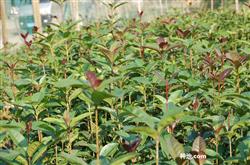
Detailed Explanation of Seed Sowing and Seedling Raising Methods and Technical Points for Osmanthus Trees
How to sow seeds and raise seedlings of osmanthus trees? Please advise. Osmanthus is generally propagated by cuttings, while single-trunk osmanthus is mostly propagated by sowing. The following is an introduction: 1. Seed collection. Osmanthus flowers from September to October, and the fruit matures from late March to late April of the following year. When the fruit enters the maturity stage and the peel gradually changes from green to purple-black, it can be collected...
-
Detailed Explanation of Osmanthus Tree Cutting Propagation Methods and Techniques
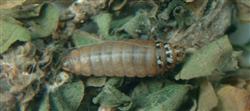
The larvae spin silk to bind leaves and bark fragments together to build a protective case, feed on the leaf mesophyll, and leave the veins behind. Damaged leaves become perforated; in severe cases, all the leaves on the entire tree are eaten bare, and the bark can also be gnawed. This severely affects the growth vigor of the osmanthus tree. Control methods: remove the protective cases to reduce the pest source and eliminate overwintering larvae. Protect natural enemies such as the umbrella-skirt tachinid fly...
-
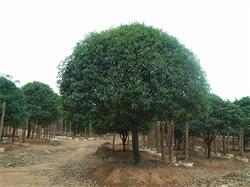
In what ways is the value of the osmanthus tree reflected?
Question: What is the planting value of the osmanthus tree? Answer: Landscape use. The osmanthus is evergreen all year round, with luxuriant branches and leaves, blooming in autumn and filling the air with fragrance, so it can be described as "dominating the three autumn months and outshining all other flowers." It is widely used in landscaping, often as a garden feature tree, planted singly, in pairs, or in clumps and groves. In Chinese classical gardens...
-
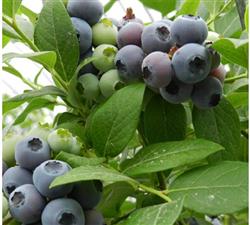
How does blueberry fertilization differ from that of ordinary fruit trees?
What is the difference between the fertilization methods for growing blueberries and ordinary fruit trees? Please explain. The differences between the fertilization methods for growing blueberries and ordinary fruit trees are as follows: First, in terms of nutritional characteristics, blueberries are a typical calcifuge plant, with a strong ability to rapidly absorb and accumulate calcium. Analyzed from the overall nutritional level of the tree, blueberries...
-
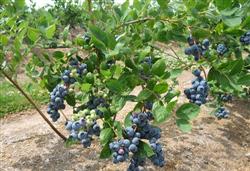
How should young blueberry trees be pruned to be scientific and reasonable?
How should young blueberry trees be pruned? Please give guidance. After planting, young trees develop flower buds in the first and second years, and flowering and fruiting will inhibit vegetative growth. The main purpose of the young tree stage is to promote root development, expand the canopy and increase branches, therefore pruning at the young tree stage focuses mainly on removing flower buds. In the spring of the second and third years after planting...
-
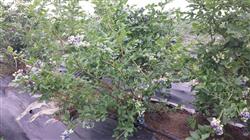
How to prune mature blueberry trees? Pruning methods and technical key points
How to prune mature blueberry trees? Please give an introduction. After strawberry plants reach maturity, the inner canopy tends to become congested and the crown is relatively tall, so pruning at this time is mainly to control tree height and improve light conditions; pruning is mainly thinning out branches, removing overly dense branches, thin and weak branches, diseased and pest-infested branches, and suckers produced by the root system. For trees with a more spreading growth habit, when thinning branches remove weak branches and keep strong ones; for upright varieties, remove the central leader and open up the top, and keep moderate branches. The best fruiting age for large branches is 5 to 6 years, and beyond that they should be renewed by cutting back. Weak small branches can be pruned by the method of removing flower buds to make them grow stronger.
-
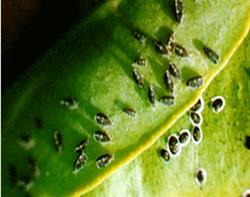
How to Control Whiteflies on Osmanthus Trees? Detailed Practical Methods
Adults and larvae insert their stylets from the underside of leaves to suck the sap of flower plant leaves. This causes leaves to turn yellow and drop. Adults can secrete "honeydew," which nourishes sooty mold pathogens, leading to sooty mold disease, contaminating leaves and branches, disrupting photosynthesis and respiration, causing poor growth of flower plants, yellowing leaves, weakened tree vigor, or death of the whole plant...
-
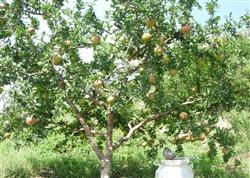
What is the reason for summer pruning of pomegranate trees?
Why should pomegranate trees be pruned in summer? Please give an introduction. Summer pruning of pomegranate trees is the refinement, continuation and supplement of winter pruning. Through summer pruning, the tree structure after winter pruning can be adjusted to the optimal state, the effective leaf area can be maximized, more photosynthetic products can be formed, and a foundation can be laid for better fruiting...
-
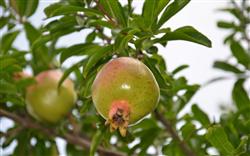
What are the key points of pomegranate tree summer management techniques
How to manage pomegranate trees in summer? Please give an introduction. Pomegranate tree summer management mainly consists of the following three major points: Fertilization. For young pomegranate trees that have not yet reached full growth, apply fertilizer once after 2/3 of the flowers have dropped and once about 1 month before the fruit ripens; for mature, high-yielding large trees, in addition to the above two fertilizations, at the early stage of bud break and flower bud appearance, also...
-
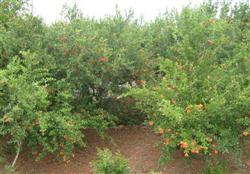
How to prune a pomegranate tree correctly in summer?
How should a pomegranate tree be pruned in summer? An introduction: Summer pruning of pomegranate trees can be based on the growth characteristics of pomegranate branches. For young trees, during shaping, excessively vigorous new shoots growing from the main branches should be promptly bent, pinched, and removed to maintain the absolute dominance of the main branches' growth. For trees in the fruiting stage, excessive buds should be promptly removed, and suckers should be thinned out. In particular, suckers near pruning and saw cuts and at underground root crowns should be repeatedly removed multiple times. When removing underground suckers, be careful not to damage the bark. Vigorously growing new shoots should be promptly pulled down to adjust their angle or heavily pinched to develop fruiting branch groups. Pomegranates often have many secondary, tertiary, and even quaternary branches, so pinching should be repeated to control excessive growth. For young, vigorous trees with low fruit set rates, ringing can be done on vigorous branches during the flowering period, preferably with two ring cuts spaced 10 cm apart.
条件筛选