-
-
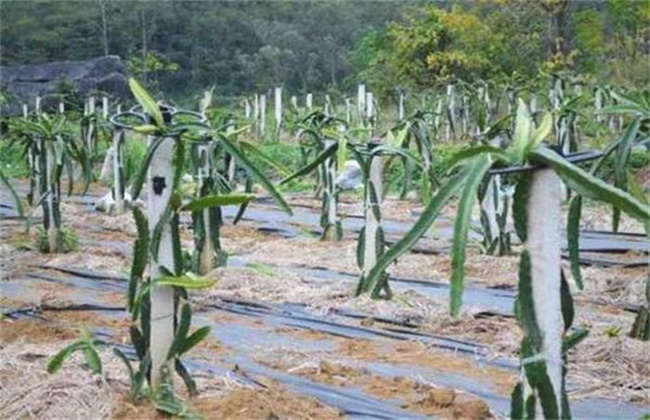
Detailed Explanation of the Three Main Pitaya Propagation Techniques
The Three Main Pitaya Propagation Techniques
-
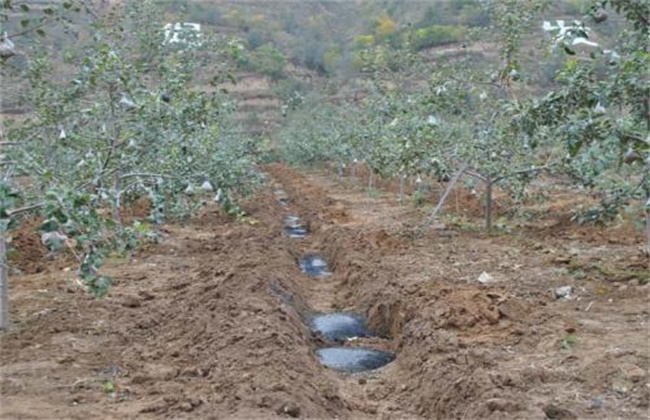
Three principles to master for autumn orchard fertilization
Three principles of autumn orchard fertilization
-
What are three kinds of melons and fruits suitable for people with diabetes to eat
The water content in melon vegetables is very abundant. According to data, the water content in general melon vegetables is above 90%. Melon vegetables have the effect of protecting blood vessels...
-

High-yield cultivation technique for three successive crops intercropped in jujube orchards
The jujube tree (Ziziphus jujuba) has relatively strong growth adaptability and is a tree species that prefers warmth and light. When the spring temperature reaches 13-15°C, it begins to sprout branches; when the monthly average temperature is above 17°C, flower buds begin to differentiate; when it is above 2O°C, it flowers; the suitable temperature for fruit ripening is 18-22°C; when the temperature drops to 15°C, it begins to shed leaves. Because of its characteristics of late sprouting, early leaf fall, and little shading, it is suitable for intercropping with grain, cotton, and vegetables, and the economic benefits are very considerable. The following introduces the high-yield technique for interplanting three successive crops in one year in a jujube orchard. 1. Key points of jujube cultivation techniques
-
Introduction to Apricot-Plum Varieties: Three High-Quality, High-Efficiency New Cultivars
1. Tezao Maiqian Apricot. A bud sport variety from China, it is an extremely early-maturing, high-yielding excellent cultivar with strong tree vigor and vigorous growth. It can bear fruit in the second year after planting. The average single fruit weight is 85 g, with a maximum of 125 g. The fruit is orange-yellow with a red blush on the sunny side. It matures extremely early, about 1 week earlier than Jintaiyang, and can mature in southern Shandong by May 18. It has the rich aroma and sweet flavor of Chinese apricots, overcomes the shortcomings of low fruit set rate and low yield in Chinese apricot cultivars (Hongfeng, Zaohong, Zaohe), and also has the advantages of early fruiting and high yield of European apricots (Jintaiyang, Kate). It is an excellent apricot cultivar with excellent overall traits.
-
What kind of chicken is the Xinghua Three-Yellow Chicken? An introduction to its breed characteristics
Its characteristic is the "three yellows," which means the chicken's beak is yellow, its feathers are yellow, and the keratin scales on its toes are also yellow. Among them, capons tend toward orange-yellow, while replacement pullets are pale yellow. In other words, the entire body of this chicken is a uniform yellow. Generally speaking, an adult rooster of this breed weighs about 1.5 kg, while a hen weighs only about 1.0 kg, making it a small-bodied chicken. This breed has full, firm, and well-proportioned muscles all over the body, with skin and flesh tightly attached. The Xinghua "Three-Yellow Chicken" has thin and brittle bones, short and slender feet, and a dressed carcass net meat rate of 92%
-
Variety Characteristics and Key Cultivation Techniques of the Three-Season Pear
Variety source: The Three-Season Pear originated in France and is preserved by the Dalian Academy of Agricultural Sciences. Characteristics: The crown of the Three-Season Pear is an inverted cone shape; young trees are relatively strongly upright, while mature trees are semi-spreading. In the Dalian region, flower buds break in late March, bloom from late April to early May, and the fruit is harvested in early August. Generally, trees begin bearing fruit 3-4 years after planting and enter full production at 8-10 years, with a yield of 50-100 kg per tree and 3000 kg per mu. It has moderate resistance to black leaf disease, strong insect resistance, moderate cold resistance, and is relatively wind-resistant. The fruit is large, with an average single fruit weight of
-
How to Store and Preserve Fresh Peaches? Introduction to Three Practical Methods
Cold storage. Peaches are prone to chilling injury during low-temperature storage, and there is a risk of freezing at -1°C. Therefore, the suitable storage temperature for peaches is 0°C, and the suitable relative humidity is 90%-95%. Under these storage conditions, peaches can be stored for 3-4 weeks or longer. However, when peaches are stored at low temperatures for a long time, the flavor gradually becomes bland. Long-term low-temperature cold storage can cause chilling injury to the peaches, with the flesh turning brown. In particular, when the peaches are moved to a high-temperature environment for ripening, the flesh becomes dry, mealy, and soft, and the flesh around the pit turns noticeably brown. In the cold storage
-
Introduction to the Trial Introduction of Three Pear Cultivars in Jishou City
Three pear cultivars were introduced - Huangjinli (Golden Pear), Liuyuexue, and Jinzhuguo Dongli. 1 Phenological periods The budbreak period of each cultivar was basically the same. In terms of flowering period, Jinzhuguo Dongli was the earliest, on March 26; next was Liuyuexue, while Huangjinli and Jinqiuli were relatively later, each differing by 2 days. Liuyuexue had the earliest fruit ripening period, on July 20, about 35 days earlier than the control Jinqiuli (August 26), showing early-maturing characteristics; Jinzhuguo Dongli (November 10) was the latest, about 75 days later than the control, showing very late-maturing characteristics.
条件筛选