Never commit these three major taboos when pruning citrus
Under the natural conditions of various regions in China, citrus needs to sprout and produce new shoots multiple times a year. If it is allowed to grow freely, the branches and leaves will soon become crowded, and because the canopy becomes closed and shaded, light will be insufficient, which will ultimately affect the fruit-setting rate, leading to reduced yield and poor quality. Therefore, it is felt that pruning and training work needs to be done well, but three taboos must also be noted when pruning. Let's take a look together with the editor.
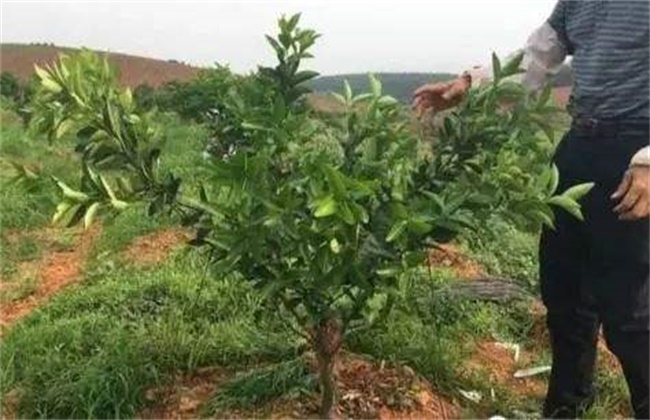
1. Base it on the biological characteristics of the citrus variety
There are many citrus varieties, so growth and fruiting differ somewhat among varieties. If pruning is not carried out according to variety characteristics but is done blindly and haphazardly, the role of pruning cannot be brought into play at all, and it will also damage the trunk, weaken tree vigor, inhibit flowering and fruiting, and cause reduced yield. Because varieties differ, pruning methods will vary somewhat, so before pruning you need to clearly understand the variety characteristics. For closed canopies, pruning can be somewhat more; for those with sparse early branches and strong renewal ability, pruning can be somewhat less; for those with strong shoot-producing ability whose branches and shoots tend to age after fruiting, pruning can be somewhat heavier.
2. Take tree vigor as the premise
Tree vigor is a comprehensive reflection of various factors; for example, soil, fertilizer and water, and frost disasters all affect tree vigor. The strength of tree vigor can generally be judged from the thickness and length of new shoots. Different tree vigor means different flowering, fruiting, and shoot-producing ability. When pruning, for plants with flowers, tree vigor can be used; for plants with weak tree vigor and few flowers, prune somewhat less; for young trees with watering at tree age, try not to prune.
3. Coordinate with other agricultural measures
To increase citrus yield, comprehensive agricultural measures are needed. Using any single technique alone cannot achieve obvious results. Although pruning can regulate the tree's nutrition and improve the contradiction between flowering, fruiting, and shoot production, if pruning is carried out alone without strengthening fertilizer and water management and pest and disease control, high yield still cannot be achieved. Therefore, when pruning, other cultivation measures are also indispensable. It must coordinate with various agricultural measures to bring out the yield-increasing effect of pruning.
The above is an introduction to the three major taboos of citrus pruning. I hope it can help you. To learn more related knowledge, please follow us.