Three principles to master for autumn orchard fertilization
For orchards, autumn fertilization is the most critical, as it not only supplements nutrients for the fruit trees to survive the winter safely, but also lays a solid foundation for high yields the following year. However, the fertilization time and amount differ for different fruit trees and varieties, so we need to learn the "three observations, three selections, three combinations." Let's take a look at the principles of autumn orchard fertilization below.
I. Three observations
1. Observe tree vigor
For fruit trees with weaker vigor, increase the fertilization amount; for plants with nutrient deficiencies, use the corresponding trace elements, or apply Shibeimei, which can promote the absorption of trace elements by the fruit tree roots and effectively prevent and control physiological diseases of fruit trees.
2. Second, observe soil nutrients
The orchard soil should be tested to understand the content of various nutrients in the soil, so as to supplement whatever is lacking and supplement as much as is lacking.
3. Third, observe next year's target yield
In general, if next year's target yield is high, the autumn fertilization amount should be large; conversely, if the target is low, the fertilization amount should be reduced accordingly. As for how to determine next year's target yield, the average yield of the orchard in previous years can be used as the standard, increasing it by about 10%-15%.
II. Three selections
1. First, select the fertilizer variety
According to the levels of nitrogen, phosphorus and potassium in the soil, and based on the principle of balancing supply and demand, choose a compound fertilizer with suitable nitrogen, phosphorus and potassium to balance nutrient supply and ensure safe, efficient crop growth. In addition, pay attention to soil pH and choose a suitable variety.
2. Second, select the proper fertilizer amount
On the basis of soil testing, and according to the fruit trees' fertilizer requirements, control the fertilization amount appropriately.
3. Third, select the fertilization method
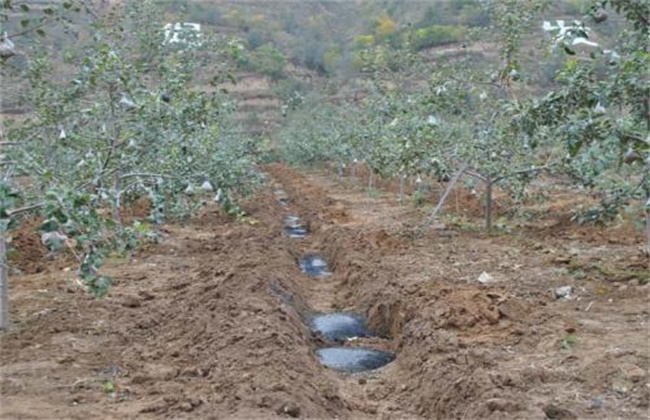
The fertilization method is very important in orchard production management. Common autumn fertilization methods include strip trench application, ring trench application, radial trench application and hole application, etc. Generally, strip trench application and ring trench application are suitable.
III. Three combinations
First, the application of microbial bacterial fertilizer should be combined with the fertilizer applied; second, the application of large amounts of chemical fertilizer should be combined with trace element fertilizers; third, fertilization and watering should be combined, which can not only avoid root damage from concentrated fertilizer, but also improve fertilizer use efficiency, so that the fertilizer can be better absorbed by the roots.
The above is an introduction to the three principles of autumn orchard fertilization. We hope it can help you. To learn more related knowledge, please stay tuned to us.