-
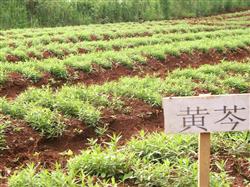
How to fertilize Scutellaria baicalensis (Baikal skullcap) when growing it? Introduction to scientific fertilization methods
How to fertilize when growing Scutellaria baicalensis? Please introduce the fertilization methods. When growing Scutellaria baicalensis, you can fertilize as follows. In the first year, after the seedlings are thinned to a stand, carry out the first fertilization, applying 500 kg of diluted human urine and manure per mu or 3-5 kg of urea, and in June-July topdress with 30 kg of ammonium phosphate. In the 2nd and 3rd years, after green-up, apply 40-50 kg of decomposed cake fertilizer, and in June...
-
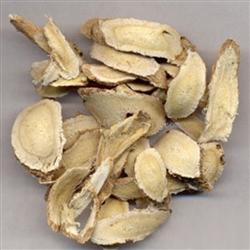
How to grow the medicinal herb Scutellaria baicalensis well? Detailed explanation of the key points of Scutellaria baicalensis cultivation techniques
How to grow the medicinal herb Scutellaria baicalensis well? Please give an introduction. Scutellaria baicalensis prefers warmth and tolerates severe cold; its underground part can withstand a low temperature of -30°C. It is drought-tolerant but afraid of waterlogging. When planted in areas with poor drainage or abundant rain, the growing environment is poor, growth is poor, and root rot is easily caused. For the cultivation methods of Scutellaria baicalensis, you can refer to the following techniques: 1. Cultivation methods...
-
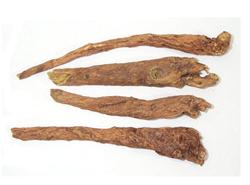
Skullcap (Scutellaria baicalensis) Benefits, Uses and Growing Methods
What is the medicinal herb skullcap used for? How is it grown? Please explain. Skullcap is a commonly used traditional Chinese medicinal herb with effects such as clearing heat, detoxifying and stopping bleeding. It is used to treat upper respiratory tract infections, colds, lung-heat cough, vomiting blood, enteritis, dysentery and other conditions, and is one of the currently popular varieties on the Chinese medicinal herb market. For growing methods, you can refer to the following techniques...
-
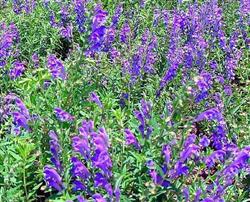
Common Diseases of Scutellaria baicalensis (Chinese Skullcap) and Their Control Methods
What diseases need to be controlled when growing Scutellaria baicalensis? Here is an introduction. The diseases that need to be controlled when growing Scutellaria baicalensis are the following two: 1. Leaf blight. ① Occurrence period and symptoms. It is prone to occur during hot and rainy seasons. It begins with irregular dark brown lesions at the leaf tip or leaf margin, gradually extending inward, causing the leaves to dry up...
-
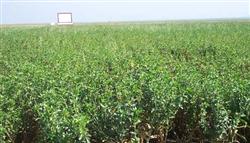
Where is Scutellaria baicalensis suitable for planting?
Where is Scutellaria baicalensis suitable for planting? Please give an introduction. Scutellaria baicalensis prefers a mild climate, tolerates cold, resists drought, and fears waterlogging. It originally grew wild on hillsides, field ridges, and sunny dry places at the edges of forests. It is not strict about soil requirements and is highly adaptable. Well-drained, fertile sandy loam is best, but it can also be planted in poor land in mountainous and hilly areas...
-

What is the difference between Peperomia and Biyu? A quick guide to telling them apart
Peperomia and Biyu are actually the same flower; there is no difference between the two at all. Peperomia is the Chinese name of this plant, and Biyu is its common name. In books, this plant is called Peperomia, while at flower markets or among plant enthusiasts, people like to call it Biyu.
-
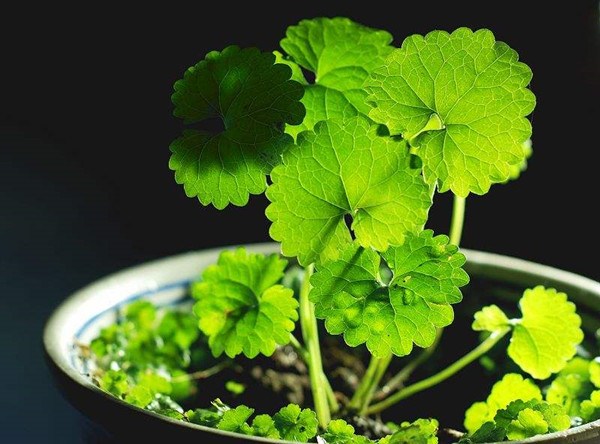
Centella asiatica is both beautiful and useful, and can be called the all-purpose remedy of the beauty and skincare world.
Centella asiatica, also known as wild mint, coin grass, beng da wan, and bian di xiang, is the whole plant of Centella asiatica, a plant in the Apiaceae family. Tao Hongjing explained the name, saying: "This herb is probably named for its cold and cool nature." This is because it mostly grows near streams and water, spreading like a vine, with leaves in opposite pairs...
-

How can you tell whether rice seeds carry disease?
How do you tell whether rice seeds carry disease? Is there a way to identify it? We ask knowledgeable readers to help guide us. The Zhondi website has compiled methods for identifying whether rice seeds carry disease, listed below for readers' reference. Generally, if rice seeds contain diseased grains infected with bakanae disease, these become seedlings; some have a linear stripe at the suture of the outer glume of the grain, while the surface of the grain shows no symptoms.
-
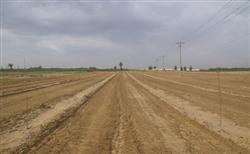
Where can I learn Scutellaria baicalensis (Chinese skullcap) cultivation techniques?
Where can I find Scutellaria baicalensis cultivation techniques? We ask netizens to help introduce them. Zhongdiwang has compiled Scutellaria baicalensis cultivation techniques, listed below for netizens' reference. 1. Conditions suitable for Scutellaria baicalensis growth: Scutellaria baicalensis can grow in areas with an annual average temperature of 4-10°C, an annual accumulated temperature of 2500-4000°C at ≥10°C, and a frost-free period of 120-18...
-
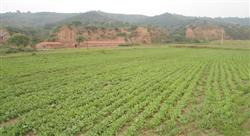
How do you manage skullcap (Scutellaria baicalensis) cultivation? Key technical points explained
How do you manage the cultivation of the medicinal herb skullcap (Scutellaria baicalensis) well? Does any netizen have advice to share? Zhongdiwang has compiled the management methods for the medicinal herb skullcap (Scutellaria baicalensis), listed below for netizens' reference. 1. Thinning and final thinning of skullcap (Scutellaria baicalensis): When the skullcap (Scutellaria baicalensis) seedlings are 5-7 cm tall, carry out thinning, and at the same time stagger the final thinning at a plant spacing of 6-8 cm, leaving...
条件筛选