-
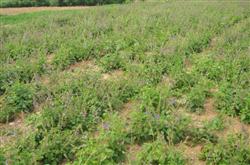
What are the cultivation techniques for Scutellaria baicalensis (Chinese skullcap)? Detailed explanation of key growing points
What are the cultivation techniques for Scutellaria baicalensis? What issues should be noted when growing Scutellaria baicalensis? We ask experienced netizens to help share. Zhongdiwang has compiled the cultivation techniques and management methods for Scutellaria baicalensis, listed below for netizens' reference. Selection and preparation of the cultivation site for Scutellaria baicalensis: when growing Scutellaria baicalensis, choose...
-
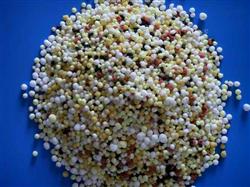
How to tell real fertilizer from fake? Keep these methods in mind
As the saying goes: "Fool the land for a moment, and the land fools you for a year." Once farmers buy and use fake or inferior chemical fertilizers, the losses caused are hard to make up for, which both dampens farmers' enthusiasm and harms farmers' interests. Below are the common methods for identifying real and fake fertilizers: Visual inspection First look at the fertilizer packaging. The fertilizer packaging bag must indicate the product name, nutrient content (grade), trademark, net weight, standard code, factory name and address, contact phone number, production license number and fertilizer registration number, etc. If the above markings are absent or incomplete and the packaging is rather rough, it may be fake or inferior compound fertilizer. Pay special attention to fertilizers whose packaging bag seals show obvious signs of being opened; this phenomenon may indicate adulteration. In addition, pay attention to the production date on the production certificate inside the fertilizer bag. If fertilizer is stored for too long, the total nutrients will be lost. Second, look at the fertilizer's granule size (or crystalline state). High-quality fertilizer has relatively uniform granule size and specific gravity, a smooth surface, and is not prone to absorbing moisture or caking, while fake and inferior fertilizer is exactly the opposite, with uneven granule sizes, a rough surface, high moisture, and easy caking. Third, look at the fertilizer's color. High-quality fertilizer has very uniform color, with no obvious color difference, and the entire granule is uniform from the inside out. Most fake fertilizer, however, is colored on the surface and easily loses its color.
-

What causes flowers to get sick? Practical troubleshooting methods tell you
Plant diseases are generally divided into physiological diseases and biological infection (pathological) diseases. Physiological diseases are not contagious; as long as the cultivation environment is improved in time and corresponding measures suitable for plant growth and development are taken, there is a chance of improvement. Common biological infection diseases
-

What is the difference between yingshanhong and azaleas? A quick guide to telling them apart
Yingshanhong is another name for azaleas, broadly referring to all kinds of red azaleas. During the azalea blooming season, wild azaleas on the mountains bloom in vast patches, dressing the whole mountain in red. When people see this sight, they naturally call the red flowers covering the mountain, that is, the wild azaleas, "yingshanhong" (mountain-reflecting red).
-
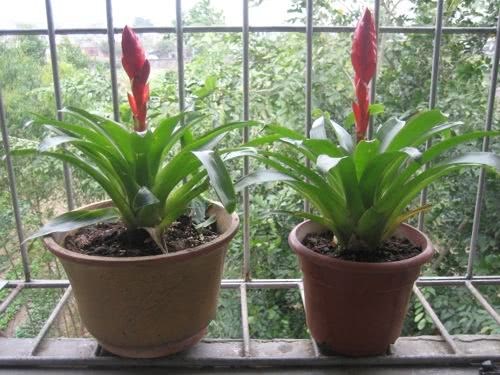
How to Tell If Potted Soil Is Short of Water? Master These 5 Main Ways to Tell
When a flowering plant lacks water, the whole plant looks listless, with new shoots and leaves wilting and drooping, and even withering and yellowing, and the leaf color is not as bright and glossy as usual. Whether the potting soil is short of water is hard to judge...
-
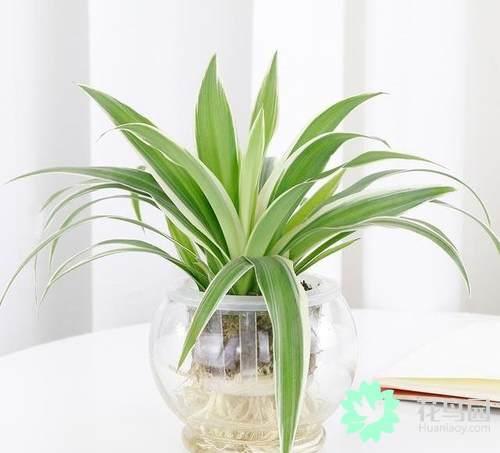
How to grow white-striped grass in water and care for it, and how to tell it apart from spider plant?
White-striped grass, also known as green bamboo or white-striped orchid. It is a perennial foliage plant with somewhat strong drought tolerance, suitable for small potted display. White-striped grass closely resembles variegated spider plant, but it has no runners. The leaves are delicate and soft, with white streaks on the green leaves...
-
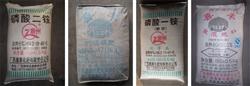
How to tell real phosphate fertilizer from fake? Here are a few practical methods
1. The role of phosphorus: the swelling element (the main nutrient for swelling of crop roots, stems, leaves and fruits), the energy of cell division. Deficiency symptoms: the most direct manifestation is uneven crop sizes in the field, especially obvious in orchards, and now most field crops also show this, with individual plants showing...
-
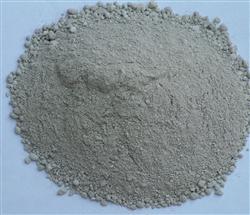
How to tell good phosphate fertilizer from bad? A few practical methods
August to October is the suitable sowing period for autumn crops in the south, such as rapeseed, broad beans, green manure, potatoes and various autumn vegetables, all of which are sown during this period. Experienced farmers know that autumn crops emphasize the application of phosphate fertilizer; this is based on the causal relationship between crops, soil and fertilizer, and is determined by phosphate fertilizer itself...
-
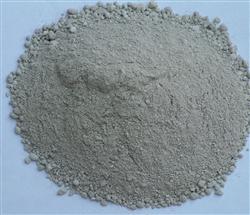
How can you tell good phosphate fertilizer from bad? These methods are simple and practical
The following methods for identifying good and poor phosphate fertilizer are introduced: observe the color and form. Phosphate fertilizer should be grayish white and powdery. If the color is white or yellow, it may be because the acid treatment was incomplete and its phosphorus content is low. Smell the odor. Phosphate fertilizer should have a slight sour odor. If it has no such odor, it means that during production...
-

What are the benefits and effects of Centella asiatica? A quick guide
Hemostasis: Centella asiatica can shorten blood clotting time and can be used for symptoms such as blood in the urine, blood in the stool, gastric bleeding, and bleeding from external injuries. Beauty and skin care: It prevents pigmentation, promotes collagen growth, and increases skin elasticity. Memory improvement: It regulates the human brain's stress hormone cortisol and improves memory ability. Promoting diuresis and harmonizing the spleen: It can treat conditions such as watery diarrhea and dysentery caused by damp-heat.
条件筛选