-
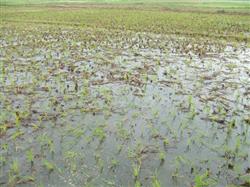
Detailed Explanation of Rice No-Till Dry Direct Seeding Cultivation Technology
(1) Paddy field selection: Select a field where the previous crop was rice and which has not been plowed for no-till dry direct seeding cultivation. Fields with many malignant weeds, heavy clay soil, etc. are not suitable for no-till cultivation. (2) Weed treatment: 4 to 6 days before sowing, choose a sunny or cloudy day with a temperature above 15 degrees, use 10% "Glyphosate" 2 kg + 20% "Gramoxone" 100 ml per mu, diluted in 60 kg of water (four containers of water), and add one tablespoon of laundry detergent to each container of water, then spray to control weeds. If rain occurs within 4 hours after spraying, re-spray, otherwise the weed control effect will be poor.
-
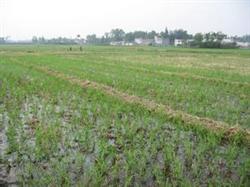
Key Operational Points for No-Till Rice Seedling Broadcasting Cultivation Technology
No-till rice seedling broadcasting refers to a new rice tillage and cultivation technique in which, after harvesting the previous crop, without any plowing or harrowing of the paddy field, herbicide is first applied to kill weed plants and shed-grain seedlings and to wither rice stubble, then the field is irrigated and fertilized for retting, and after the water layer naturally drains or shallow water is released, plastic-tray seedlings or paper-tube seedlings are broadcast-transplanted into the main field...
-
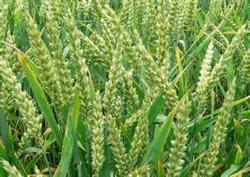
Detailed Explanation of Key Points of Barley Seed Coating Agent Cultivation Technology
1. Establish a seed propagation base and a rational improved-variety breeding system. Use the "three-plot field" established by scientific research breeding units or improved-variety farms; the stock seed plot propagates pre-stock seed and stock seed, or stock seed is propagated directly from breeder seed; improved varieties are produced by specialized seed farms or specialized contract households, and the seed department arranges improved-variety production...
-
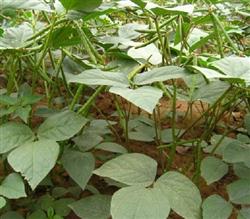
How is the fertilization and stress-response technology for mung beans implemented? A full analysis of the key points
Mung bean is a major crop in our city, with a planting area of more than 1 million mu every year and a yield of more than 110,000 tons, accounting for more than 30% of the country's annual mung bean output. Baicheng mung beans, with their large seeds, plump grains, bright color, fresh green appearance, no off-colors, no pollution, and high protein content, have become a sought-after commodity on the international market...
-
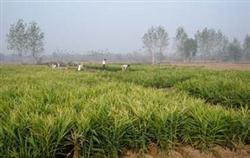
How to fertilize ginger for high yield? Detailed explanation of the key points of formula fertilization technology
Ginger has a long growing period and a high fertilizer requirement. Under medium fertility conditions, to produce general 2500 kg of ginger per mu, 25-40 kg of nitrogen, 10-22 kg of phosphorus (P2O5), and 30-50 kg of potassium (K2O) need to be applied. The absorption ratio of nitrogen, phosphorus, and potassium is 11:1:16 or 1:0.5:2. In addition, calcium, magnesium, boron, zinc, iron, and other medium and trace...
-
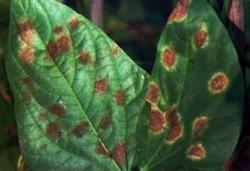
Detailed Explanation of Key Points of Formula Fertilization Technology for Yardlong Beans
1. Symptoms mainly affect leaves, stems and vines, and pods. In the early stage of the disease, purple-brown spots appear on both sides of the leaves, and after expanding they become nearly circular dark brown lesions, 1-2 cm in diameter, with indistinct edges; when humid, the lesion surface is densely covered with sooty mold (especially prominent on the underside of the leaves). In severe cases, it causes early defoliation, leaving only the young leaves at the top, ...
-
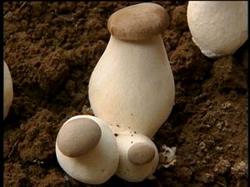
Detailed Explanation of the New Technology of Soil-Covered Cultivation of King Oyster Mushroom
1. Strain selection. For export products, strains with round and neat fruit body shape, uniform thickness from top to bottom of the stipe, white color, relatively dense tissue and good taste should be selected. Through trials, "Xingbao No. 1" introduced from the Fujian Provincial Edible Fungi Strain Station has the characteristics of thick flesh, crisp and tender texture, beautiful appearance and high export qualification rate, and is suitable for...
-
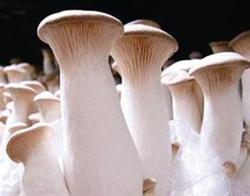
Analysis of Key Points of the New Technology of Bag Cultivation with Soil Casing for King Oyster Mushroom
King oyster mushroom, also known as Pleurotus eryngii, is one of the rare edible fungi. Its flesh is thick and plump, crisp and tender, milky white in color, delicious in taste, and rich in nutrients, and it is hailed as "the meat among vegetables." By adopting the following new technology of indoor fruiting and outdoor soil casing cultivation, the biological conversion rate can reach 100%-120%, and the mushroom bodies have good commercial quality. Compared with cultivation without soil casing...
-
Detailed Explanation of New Technology for Bag Cultivation of White King Oyster Mushroom
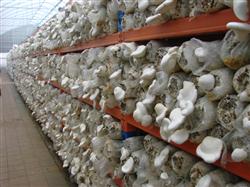
1. Post-ripening cultivation: After the mycelium of the white king oyster mushroom has fully colonized the bag, it cannot be induced to fruit immediately; it needs 50-60 days of physiological maturation before fruiting. During this stage, the temperature should be controlled at 20-25°C. If the temperature is low, the time must be extended further. The relative air humidity should be raised to 75%, and a certain amount of light should be increased. 2. Scratch fruiting: When the mycelium of the white king oyster mushroom is about to reach...
-
Detailed Explanation of Key Points of Mushroom Casing Soil Improvement Technology
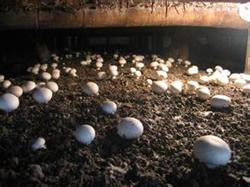
Casing soil is an important step in the mushroom cultivation process. The properties of the casing soil material directly affect the timing of mushroom emergence and the yield. In particular, the water-holding rate and water-retention capacity of the casing soil have a relatively large impact on yield. In recent years, various regions have continuously carried out the selection and improvement of casing soil materials. From simply using vegetable field soil and river mud soil to...
条件筛选