Detailed Explanation of Key Points of Barley Seed Coating Agent Cultivation Technology
1. Establish a seed propagation base and a rational improved-variety breeding system. Use the "three-plot field" established by scientific research breeding units or improved-variety farms; the stock seed plot propagates pre-stock seed and stock seed, or stock seed is propagated directly from breeder seed; improved varieties are produced by specialized seed farms or specialized contract households, and the seed department arranges improved-variety production...
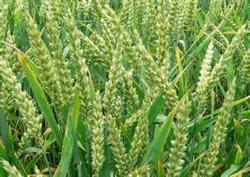 Barley belongs to the grass family (Poaceae). It is divided into malting barley and feed barley. It is an important raw material for making beer, maltose and feed.
When the seed coating agent is used in barley cultivation, attention should be paid to coordinating it with other technological yield-increasing measures, and the following technical points should be mastered:
I. Select improved varieties: choose improved varieties according to use; for example, if feed is the main purpose, V06, V24 and V013 may be selected.
II. Do a good job of pre-sowing seed treatment: ① Sun the seed, spreading it out to dry for 1-2 days before sowing; ② Carefully select the seed; wind selection, screening or muddy-water selection may be used to remove impurities, shriveled grains and diseased grains, and select large, plump seeds free of diseases and insect pests; ③ Disinfect the seed to prevent smut and stripe disease; lime water may be used to soak the seed, or for each kilogram of seed, 2 grams of carbendazim or an equal amount of thiophanate-methyl or similar chemicals may be used for seed soaking or seed dressing; ④ Soak the seed to promote germination; this may be combined with muddy-water seed selection and seed disinfection; the seed may be soaked for 48 hours, then dried and sown.
III. Do a good job of mixing the seed coating agent with the seed: use 10-12 kg of carefully selected seed per mu; after pre-sowing treatment, mix the seed with 1.0-1.5 kg (2-3 bags) of seed coating agent: put the barley seed into a container or plastic bag, pour in the liquid agent and stir thoroughly, then while stirring, sprinkle in the powder so that the powder evenly adheres to the seed surface, and then it can be sown. It should be mixed and sown immediately; sowing the next day after mixing is strictly prohibited.
IV. Rational close planting, improve sowing quality, drill in separate soil-moisture zones, cover soil evenly, and ensure a basic seedling population of 200,000-250,000, an effective spike number of 350,000-400,000, 30-40 filled grains per spike, and a 1000-grain weight of 36-40 grams, which is relatively ideal.
V. Scientific fertilization: actively promote balanced fertilization technology for barley, combining nitrogen, phosphorus, potassium and boron fertilizers: for fields of medium fertility, apply 1000-1500 kg of farmyard manure per mu as base fertilizer; the total urea application per mu should be 20-30 kg, ordinary calcium superphosphate 30 kg, potassium fertilizer 5-10 kg, and borax 1 kg. Phosphorus and boron fertilizers are used as base fertilizer; 1/3 of the urea is used as seed fertilizer, and 2/3 as tillering fertilizer and jointing fertilizer.
VI. Timely drainage and irrigation: barley has a shallow root system, and excessive drought or waterlogging is unfavorable to root growth. Irrigation should be done at the proper times for emergence, tillering, jointing, booting, heading and grain filling, and rapid irrigation and rapid drainage should be achieved.
VII. Strengthen the prevention and control of diseases, insect pests and weeds, do a good job of chemical weeding in wheat fields to reduce weed damage, and pay attention to the prevention and control of smut, stripe disease and wheat aphids.
Through the work in the above aspects, as long as the technology is in place, planting is standardized and management is scientific, high yields can be achieved.