-
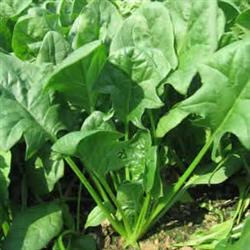
The three-part spinach cultivation guide: master the key growing steps
Sowing: Spinach is mainly broadcast-sown, though it can also be sown in rows. Because germination is slow under high temperatures, seeds sown in early autumn should be soaked and pre-germinated: soak the seeds for 12 hours, then place them in a refrigerator at 4°C for 24 hours, then keep them at 15-25°C to sprout for several days, and once most have germinated, broadcast-sow them. Sowing rate per mu: 10...
-

Five key steps for raising onion seedlings in autumn
Onions have the characteristics of low input, high yield, simple management and high efficiency, making them an ideal vegetable variety for vegetable growers to carry out commercial production and increase income. Early September is the best time for raising onion seedlings. The relevant key technical points for seedling raising are introduced below. Seed selection: In production, purple-skinned varieties such as Ziyu No. 1, Ziyu...
-

Five key steps for raising onion seedlings
Onions have the characteristics of low input, high yield, simple management and high returns, making them an ideal vegetable variety for vegetable growers to carry out commercial production and increase income. Early September is the best time for raising onion seedlings. The relevant key technical points for raising seedlings are introduced below. Seed selection: In production, purple-skinned varieties such as Ziyu No. 1, Ziyu...
-
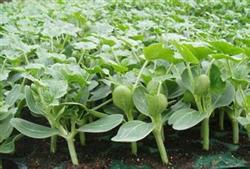
Four key steps to master for raising watermelon seedlings in a heated hotbed
Raising watermelon seedlings in a heated hotbed has the characteristics of fast warming, even temperature, low cost and simple operation. It can cultivate robust watermelon seedlings in January and February when the air temperature is very low, and its seedling-raising effect is similar to that of an electric heating hotbed. 1. Build the seedbed. First dig a bed pool 4.5 m long from east to west, 1.6 m wide from north to south and 0.2 m deep...
-
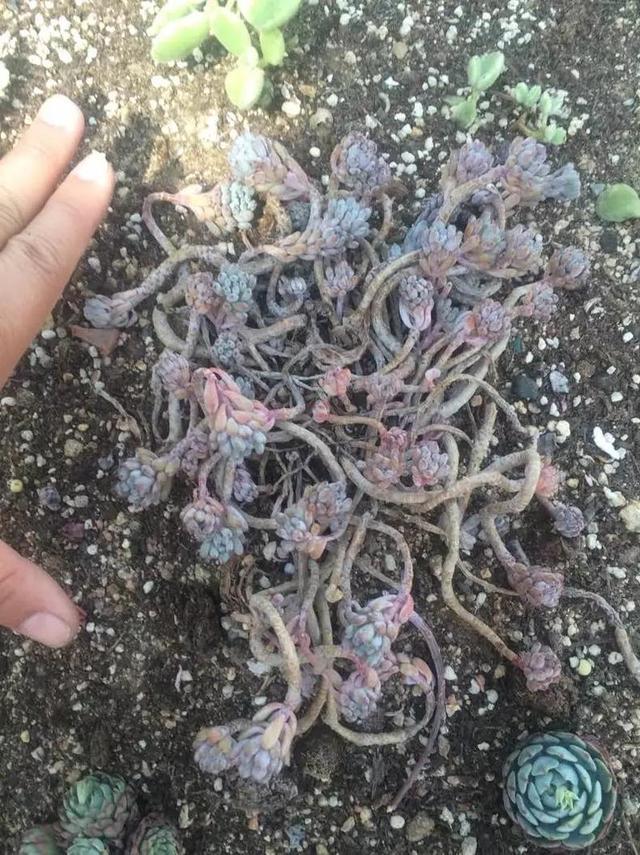
Don't Throw Away a Succulent with Root Rot - 4 Steps to Grow a Brand New Succulent
Many beginner succulent growers don't know what to do when their succulents develop root rot. It feels like a waste to throw them away, but they don't know how to deal with them either. Today I'll teach you 4 steps to get a brand new succulent. First, let's understand...
-
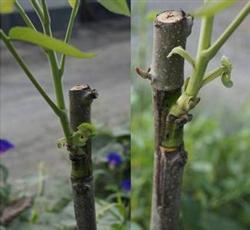
Detailed Explanation of Key Techniques and Operating Steps for Walnut Square Bud Grafting
Walnut square bud grafting gives a high survival rate, is labor-saving and convenient to perform, and the technique is easy to master and promote; it is suitable both for planted young trees and for nursery seedling production. The square bud grafting technique is described below: 1. Grafting time. It can be carried out from late May to mid-July, but the best time is in June, during which...
-

The method for repotting succulents is very simple, and can be completed in just a few easy steps
Text and photos: Qingmeng. When it comes to repotting succulents, gardening enthusiasts frown, fearing that the plant will not survive after repotting. Is it really true that succulents "die after repotting"? As long as the method is used correctly, no matter how many times you repot them, they can grow into a bursting pot! 1. First, loosen the soil in the original pot...
-

Doing a good job of dividing orchids in autumn in 5 steps: no root rot, fast rejuvenation, and lots of new shoots
The love for orchids is something perhaps only orchid growers who have fallen down the rabbit hole can truly understand. The hot summer has just passed, so how many orchid plants are left at home for all you orchid owners? Recently I chatted with an old orchid friend, and even through the phone screen, I could feel his faint...
-

How to cultivate cherry tomatoes for high yield? These six steps are key
1. Throw the seedlings at the right time to give full play to the advantage of early growth and rapid development. Rice seedling trays contain little soil, so on the premise that the seedlings can be picked up without the soil falling apart, the earlier they are thrown, the better. Generally, 15-20 days after sowing for the early crop and 8-10 days for the late crop, when the seedlings have about three leaves, they can be thrown. The shorter the seedlings, the faster they stand and resume growth, and the more fully they can...
-
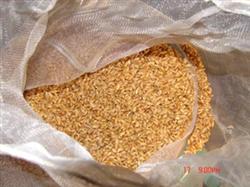
Correct Methods and Operating Steps for Disinfecting Rice Seeds
Rice seedling raising is about to begin, and seed disinfection is the key to raising seedlings. Here are 10 seed disinfection methods. 1. Soak rice seeds in a 500-fold dilution of 50% carbendazim, 50% thiophanate-methyl, or 50% thiram for 48 hours (200 g of the solution mixed evenly with 100 kg of water can soak 60-70 kg of rice seeds), then remove them, sprout them, and sow, ...
条件筛选