Five key steps for raising onion seedlings in autumn
Onions have the characteristics of low input, high yield, simple management and high efficiency, making them an ideal vegetable variety for vegetable growers to carry out commercial production and increase income. Early September is the best time for raising onion seedlings. The relevant key technical points for seedling raising are introduced below. Seed selection: In production, purple-skinned varieties such as Ziyu No. 1, Ziyu...
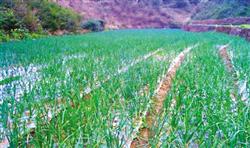
Onions have the characteristics of low input, high yield, simple management and high efficiency, making them an ideal vegetable variety for vegetable growers to carry out commercial production and increase income. Early September is the best time for raising onion seedlings. The relevant key technical points for seedling raising are introduced below.
Seed selection
In production, purple-skinned varieties such as Ziyu No. 1, Ziyu No. 2, Zixing and Shuanghuanhong can be selected. These varieties have the characteristics of strong pungency, high yield, excellent quality and suitability for export. These varieties generally yield about 5,000 kg per mu, and high-yielding plots can reach 7,500 kg per mu.
Seedbed
The seedbed should be selected as a plot with loose, fertile soil and strong water retention capacity, where no onion or garlic vegetables have been grown within 3 years. To raise seedlings for each mu of field, a seedbed area of about 35 sq m is needed, with a seeding rate of 0.5 kg. Before sowing, apply sufficient decomposed farmyard manure, plus 20-30 kg of nitrogen, phosphorus and potassium compound fertilizer, then plough, finely prepare the land, make beds 1.5-2 m wide, water thoroughly, and wait to sow.
Sowing
The timing of sowing directly affects the size of the seedlings, and thus ultimately affects the yield of onions. If sown early, the seedling growth period is prolonged, resulting in too large a nutritional area, and the seedlings are prone to bolting; if sown late, the seedlings are weak and have low cold resistance, and are prone to dying during overwintering. Therefore, to achieve high yield, it is necessary to grasp the optimal sowing time. According to the experience of local vegetable growers, the most suitable sowing time is 3 days around White Dew (early September). Use dry seed broadcasting, and after sowing cover with fine soil, just enough so that the seeds are not visible. After covering with soil, each mu of seedbed can be sprayed with 100 ml of 33% pendimethalin to prevent and control weeds in the seedbed.
Management
After sowing, cover the bed surface with a layer of wheat straw, which helps retain moisture, prevent high temperatures and prevent rain. Keep the soil moist until emergence. When about 60% of the seedlings have emerged on the seedbed, the covering can be removed, and water should be sprinkled promptly according to weather conditions to prevent the seedbed from crusting. Combine with watering and apply a small amount of urea as a top dressing, and cultivate age-appropriate strong seedlings through regulation of fertilizer and water. It is necessary both to prevent the seedlings from growing too large and causing early bolting, and to avoid the seedlings growing thin and weak, which affects overwintering. Generally, when onion seedlings grow to 4 true leaves, with a plant height of 20-25 cm and a leaf sheath diameter of 6-7 mm, they can be transplanted.
Transplanting
When transplanting, the onion seedlings should be transplanted separately according to size so that they grow uniformly, and large seedlings with a leaf sheath diameter exceeding 8 mm, as well as weak small seedlings below 3 mm and diseased seedlings, should be removed. Transplanting is generally completed from the end of October to early November, and should be carried out when the average daily temperature is 4°C-5°C. Because onions take about 30 days from transplanting to resuming growth, it is necessary to promote good root growth and development before severe cold arrives, so as to prevent seedling death caused by soil freezing and heaving of roots. The transplanting density requires a row spacing of 20 cm and a plant spacing of 15 cm, and the transplanting depth should preferably not bury the five-fork section. After transplanting, water to promote the survival of onion seedlings. Never flood irrigate, which causes soil crusting and is not conducive to the rapid resumption of growth of onions.