Don't Throw Away a Succulent with Root Rot - 4 Steps to Grow a Brand New Succulent
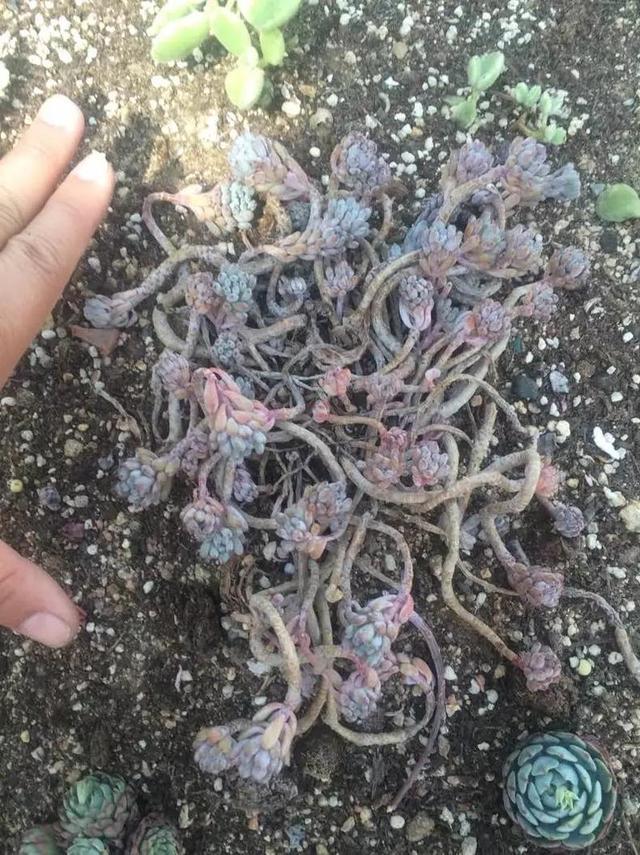
Many beginner succulent growers don't know what to do when their succulents develop root rot. It feels like a waste to throw them away, but they don't know how to deal with them either. Today I'll teach you 4 steps to get a brand new succulent.
First, let's understand what causes root rot in succulents so we can solve the problem properly. There are two most common causes of root rot in succulents: one is watering too much and too frequently, and the other is using a growing medium with poor drainage and aeration (cause one is the most common).
The roots of succulents are hidden in the soil, so it's hard for us to tell whether the roots underground have rotted. We can only judge by the condition of the upper leaves and the plant. If it's dropping leaves like crazy, the leaves are shriveling, drying out and turning yellow, and it's barely growing, then we can consider whether the roots have a problem and take the plant out of the pot and soil to check.
Once you clearly notice that the succulent is not doing well, in most cases the roots have already gone wrong, such as the roots being dried out, too many dead roots, or even rot. The rotting roots will slowly spread up to the stem at the base. At this point, here's what we need to do.
1. Properly remove the succulent from its pot and soil. Pay attention to whether the potting soil is really too wet. If so, pour it out to dry before reusing. If the medium has poor drainage and aeration, it's recommended to change the soil.
2. Wash the roots of the succulent. After rinsing the roots clean, it's easier for us to see the rotten parts of the roots directly. Use scissors to cut off the rotten and decayed roots, and apply carbendazim to the wounds. If even the stem at the base has rotted, don't hesitate - cut off whatever needs to be cut, and keep cutting until you can't see any rotten roots. Then place it in a cool, ventilated spot to let the wounds dry slowly.
3. Once the wounds on the succulent's roots have dried, you can consider re-rooting. You can use a plastic bottle for water rooting, or use river sand to root, or lay it at an angle in soil to root naturally. The succulent will quickly grow new roots.
4. Plant the succulent that has already grown new roots into fresh potting soil, and let it enjoy a pleasant root-adjusting period in a spot with bright indirect light and good ventilation. Once it has established itself, you can water and provide light as normal.
Isn't it simple? For a rotten succulent, as long as there are still some stems and leaves left, you can re-root and propagate it to get a brand new succulent.