-
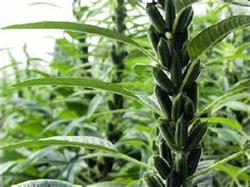
Four key steps to ensure a high yield of black sesame in summer
First, thin and finalize the seedlings in time, and check for and fill gaps: because sesame seeds are small and germinate in large numbers, the seedlings should be thinned when the first pair of true leaves appears after emergence; they should be thinned again when 2 to 3 pairs of true leaves have grown, and finalized at 4 pairs of true leaves, generally leaving about 8000 plants per mu; if poor soil moisture at sowing causes missing plants and broken rows, transplanting from dense areas to sparse ones or sowing after sprouting can be used to ensure...
-

Detailed Guide to Bean Sprout Cultivation Methods and Steps, Beginners Can Easily Learn
Bean Sprout Cultivation Methods
-

-

-
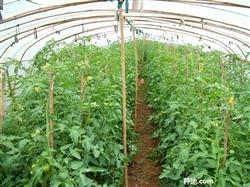
How to Prune Greenhouse Tomatoes? Key Steps and Methods Explained
How to prune greenhouse tomatoes? Please explain the guidance: to achieve early maturity and high yield in greenhouse tomatoes, the single-stem pruning method is often used. For early-maturing varieties, only the main axis of the tomato is kept, and all lateral branches in the leaf axils are removed. For mid-to-late-maturing varieties, because of their strong growth vigor, continuous single-stem extension pruning and continuous pinching are usually adopted...
-
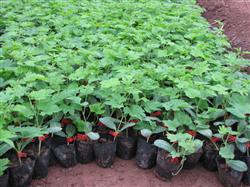
How to sprout bitter melon seeds? Learn these steps for fast and uniform germination
Preparation before sowing: 15-20 days before sowing, deep plow and turn the soil, and together with plowing and turning apply 3000 kg-4000 kg of decomposed barnyard manure per mu, combined with 15 kg-20 kg of ternary compound fertilizer. Sun-dry the field for 7-10 days, then close and cover the shed for 5-7 days, using sunlight and high-temperature shed sealing to fully sterilize and disinfect the soil and the greenhouse. After raking the ground level...
-
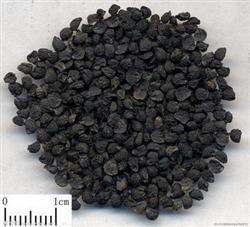
How to sow chive seeds? Detailed methods and steps
How are chive seeds sown? What to pay attention to when planting chive seeds: 1. Sowing time: after the soil thaws until the Autumn Equinox, sowing can be done at any time, generally from late March to early May, with spring sowing being preferable; for summer sowing, earlier is better than later. 2. Sowing rate: 4-5 kg of seed per 667 sq m. Open-field seedling raising...
-

Five key steps for transplanting rapeseed on stubble fields
1. Symptom characteristics. Rapeseed white rust mainly infects leaves, stems, flower stalks and floral organs. The symptoms on leaves and stems are characterized by blister-like lesions. The blister surface is white or milky white, slightly raised, small (ranging from 1 to 3 mm), and numerous; after rupturing, it releases a white powdery substance (the sign of disease), eventually causing the leaves to turn yellow and drop early....
-
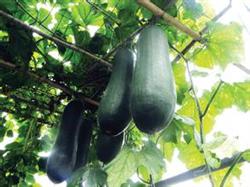
How to Grow Winter Melon for High Yields? Focus on Three Key Steps
Agricultural experts point out that to achieve high yields of winter melon, you should plant at a reasonable density, control diseases and the number of dead seedlings so that the final number of fruit-bearing plants is sufficiently large but not too dense; you should also fertilize reasonably and control various diseases, especially fungal diseases, so that the plants grow vigorously and the winter melon's expansion rate increases; and you should extend the lifespan of the winter melon plants as much as possible, thereby...
-
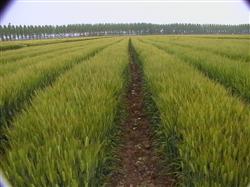
How to grow malting barley? Mastering these four steps is enough
Actively developing malting barley production is of great significance for meeting the needs of the beer industry's development and accelerating the pace of farmers getting rich. To achieve high and stable yields of malting barley, four appropriate measures should be taken: 1. Appropriately select improved varieties. Malting barley is a special barley used for brewing beer. When planting, you should choose varieties with high yield...
条件筛选