-
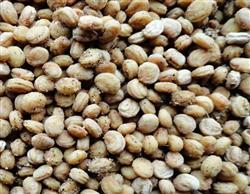
Detailed Explanation of Ginseng Seed Germination Methods and Steps
How to germinate ginseng seeds? What should be noted? We hope experienced readers can help explain. Ginseng seeds need germination treatment before sowing. Zhongdiwang has compiled the germination methods for ginseng seeds of the current year and seeds from the previous year, listed below for readers' reference. Germination method for ginseng seeds of the current year: ...
-
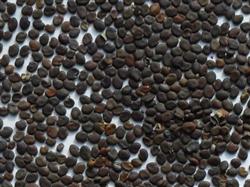
How to propagate Astragalus membranaceus with seeds? Detailed method and steps
How do you propagate Astragalus membranaceus with seeds? Please give guidance. To propagate Astragalus membranaceus with seeds, you can refer to the following methods: 1. Properly treat hard seeds. Be sure to pay attention to this point when growing Astragalus membranaceus for the first time. For hard seed conditions, use a roller mill until the seed coat is scratched without damaging the kernel, otherwise seedling emergence will be seriously affected. 2. Choose...
-
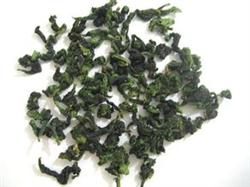
How to Make Goji Leaf Health Tea and Detailed Steps
Goji leaves are rich in betaine, rutin, and various amino acids and trace elements. Regularly drinking goji leaf tea has health benefits such as nourishing the liver and improving eyesight, and softening blood vessels. The production method is as follows: 1. Picking leaves: Pick fresh goji leaves that are tender green in color, free of pests and diseases, and thick and plump. Wash off the dust on the leaf surface with clean water...
-

How to hand-pollinate Gastrodia elata? Detailed methods and steps
How to hand-pollinate Gastrodia elata
-

A detailed guide to kapok grafting propagation techniques, with a full breakdown of methods and steps
Kapok grafting propagation techniques
-

The Production Method and Detailed Steps for Goji Berry Wine
Traditional Chinese medicine holds that goji berries have the functions of nourishing weakness, supplementing essence and qi, dispelling cold wind, strengthening yang, stopping tears, and fortifying the waist and legs; regular consumption strengthens the sinews and bones and prolongs life. Modern scientific research has proven that the active component of goji berries is goji polysaccharide, whose main components include arabinose, glucose, galactose, mannose, xylose, and rhamnose. Goji polysaccharide has the effects of enhancing body immunity, resisting tumors, and resisting aging, and also has obvious effects in lowering blood lipids, lowering blood sugar, tolerating hypoxia, and resisting fatigue. It can be processed into goji berry wine and other goji berry
-
A Detailed Guide to Drying Goji Berries: Methods and Key Steps
1. After harvesting, first dry them in a cool, shaded shed; once the skin becomes wrinkled, sun-dry them until completely dry. 2. Set up shelves in a room, place a stove in the middle, and bake them until dry.
-
Detailed explanation of the key points of Lingzhi (Ganoderma lucidum) production technology, master the key cultivation steps
In recent years, bag-cultivated Ganoderma lucidum has been widely promoted. The author has summarized many years of Ganoderma lucidum production practice, and now introduces several key production technology points as follows: 1. Choose a suitable cultivation period: In Taizhou City, Jiangsu Province, the most suitable cultivation period for Ganoderma lucidum is from April 10 to May 10, and after May 20 the bags are opened one after another for mushroom emergence. June to July each year is the plum rain season, therefore, it is necessary to ensure that all bags are opened for mushroom emergence before June 10, so that the growth of Ganoderma lucidum fruiting bodies can be in a high-temperature and high-humidity environment, thereby achieving high and stable yields. 2. The culture material must
-
How to Make Schisandra Wine and the Detailed Steps
1. Because schisandra berries are low in sugar and high in acid, a mixed fermentation method is used in which white granulated sugar liquid is added to dilute the acidity. 2. Adjust the alcohol content of the free-run juice to about 13° (by volume), then freeze and filter. Specific procedure: after the berries are crushed, the free-run juice (within 6 hours) is stored in a clean tank, adjusted to 13° (by volume) with deodorized alcohol, then subjected to post-fermentation, followed by freezing and filtration. Generally, the free-run juice accounts for about 11% of the total fermented base wine. 3. The pre-fermentation temperature is controlled at around 20°C, and the fermentation time is generally
-
How to sow licorice? 5 steps to easily get planting done
Sowing licorice is a relatively simple method for this type of herb, but its key points should also be noted when cultivating it. The key points are as follows: 1. Sowing method. Site selection and land preparation. Licorice has wide adaptability and does not have strict requirements for the cultivation environment. It can be cultivated in semi-arid and arid areas with an average temperature of 4°C to 12°C and more than 2600 hours of sunshine, and it can also be planted on poor farmland returned from cultivation. However, it should also be noted that waterlogged low-lying areas, areas with a high groundwater table, and areas with heavy clay and acidic soil are not suitable for planting licorice.
条件筛选