How to grow malting barley? Mastering these four steps is enough
Actively developing malting barley production is of great significance for meeting the needs of the beer industry's development and accelerating the pace of farmers getting rich. To achieve high and stable yields of malting barley, four appropriate measures should be taken: 1. Appropriately select improved varieties. Malting barley is a special barley used for brewing beer. When planting, you should choose varieties with high yield...
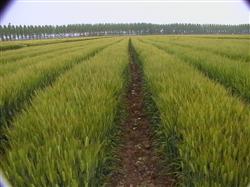
Actively developing malting barley production is of great significance for meeting the needs of the beer industry's development and accelerating the pace of farmers getting rich. To achieve high and stable yields of malting barley, four appropriate measures should be taken:
I. Appropriately select improved varieties
Malting barley is a special barley used for brewing beer. When planting, you should choose seeds with high yield, strong disease resistance, strong stress resistance, thin husk, light yellow color, luster, and no diseased or spotted kernels. Seeds should also be free of musty or off odors. You should also choose two-row barley or multi-row barley with a high germination rate, strong germination vigor, uniform kernels, and moderate protein content.
II. Appropriate sparse sowing
Practice has proved that the method of relying on increasing the sowing rate and enlarging the population structure to obtain yield is unscientific. Appropriate sparse sowing not only saves seed quantity but also improves tillering ability. However, note that when sowing sparsely, the seed germination rate must be maintained above 90%. For plots with early sowing, more fertilizer, and higher soil fertility, a sowing rate of 8 kg per mu is suitable; for plots with late sowing and low soil fertility and fertilizer application levels, the sowing rate is about 10 kg per mu. Try to achieve intensive and careful cultivation and uniform sowing. The most suitable sowing period for malting barley is around Frost's Descent. Therefore, arrangements should be properly made according to the crop rotation.
III. Appropriately control nitrogen and increase phosphorus
Malting barley requires moderate grain protein content and high 1000-grain weight. For early-maturing No. 3 barley with a yield of more than 400 kg per mu, the total fertilizer application throughout the growth period is 20 kg of pure nitrogen. For a yield of 250-300 kg per mu, 10-15 kg of pure nitrogen is needed. Therefore, the application of organic fertilizer and phosphorus and potassium fertilizer should be increased and used as base fertilizer. Quick-acting nitrogen fertilizer should be used up before the three-leaf stage. Spring fertilizer must be applied early, and according to seedling conditions, it should be applied sparingly or not at all, so as to avoid excessive nitrogen fertilizer causing delayed maturity and lodging.
IV. Harvest at the appropriate time
Malting barley has strict requirements for the harvest period. When the stems, leaves, and sheaths are found to have lost green color and turned yellow, the ears appear light yellow, the grains are losing water normally, and the grains feel hard with some softness when pressed by hand, harvesting at the dough stage is best. The grains harvested at this time have moderate protein content and can improve beer quality. Because beer uses malting barley as a raw material and is brewed through processes such as malting and saccharification, when harvesting malting barley, you should seize sunny days to harvest, thresh promptly, dry in the sun, and clean by winnowing. Never pile and store it before it is dry, so as to avoid heating inside the stack, "steaming" the seed embryos, reducing the germination rate, and affecting color and quality.