Four key steps to ensure a high yield of black sesame in summer
First, thin and finalize the seedlings in time, and check for and fill gaps: because sesame seeds are small and germinate in large numbers, the seedlings should be thinned when the first pair of true leaves appears after emergence; they should be thinned again when 2 to 3 pairs of true leaves have grown, and finalized at 4 pairs of true leaves, generally leaving about 8000 plants per mu; if poor soil moisture at sowing causes missing plants and broken rows, transplanting from dense areas to sparse ones or sowing after sprouting can be used to ensure...
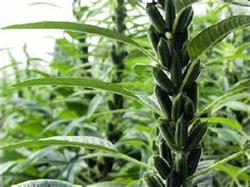
First, thin and finalize the seedlings in time, and check for and fill gaps: because sesame seeds are small and germinate in large numbers, the seedlings should be thinned when the first pair of true leaves appears after emergence; they should be thinned again when 2 to 3 pairs of true leaves have grown, and finalized at 4 pairs of true leaves, generally leaving about 8000 plants per mu; if poor soil moisture at sowing causes missing plants and broken rows, transplanting from dense areas to sparse ones or sowing after sprouting can be used to ensure full and strong seedlings.
Second, hoeing and weeding, and earthing up to prevent lodging: as the saying goes, "Hoe millet when dry, hoe cotton when wet, and hoe sesame when neither dry nor wet." After thinning, the soil should be shallow-hoed to loosen it and remove weeds. When the seedlings are 5 cm tall, carry out the second hoeing and finalize the seedlings, then hoe 1 to 2 more times, taking care not to damage the roots. When the seedlings grow to about 33 cm, soil should be mounded around the base of the plants to resist wind and prevent lodging.
Third, topdressing at flowering and pinching off the growing tips: sesame needs a lot of nutrients during flowering, so 10 to 12.5 kg of urea per mu should be applied at the early flowering stage, and at the full flowering stage 120 to 150 g of potassium dihydrogen phosphate or active humic acid, foliar fertilizer, etc. should be diluted with water for foliar topdressing; at the topping stage, choose a sunny day and remove the plant tips by hand, with a pinching length of 2 cm being appropriate.
Fourth, chemical regulation to promote increased yield: after the full flowering stage, use 40 to 50 g of paclobutrazol per mu diluted in 25 to 30 kg of water and spray evenly on the leaves. Spray less on poor-growing plants and an appropriate amount more on well-growing plants. Early spraying can increase yield by 8% to 10%.