-
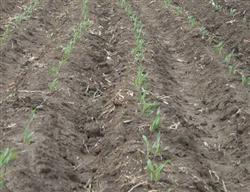
Key Technical Points for High-Ridge, Sparse-Planting, High-Yield Cultivation of Spring Corn
Many excellent spring corn varieties now require high ridges and sparse planting, but farmers generally adopt low ridges and dense planting, so the superior traits of corn cannot be fully expressed, seriously affecting farmers' income growth. This is especially true for excellent varieties such as Dongdan 60, Sanbei No. 6, Dongdan 13, and Zunyan No. 1, whose planting density per mu must not exceed 3000 plants, while...
-
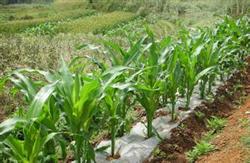
A Full Analysis of Key Spring Corn Cultivation Techniques
Adapt to local conditions and select improved varieties. For plains and hilly areas, promote Yedan 13 and Xiyu No. 3, paired with Huayu No. 4, Zhongdan 32, Chenghai No. 1, and Yuanzheng 808; for intercropping in cotton fields, choose the short-stalked, short-growth-period Yedan 22, Yedan 51, and 9362; in suburban areas where fresh eating is the main purpose, waxy corn varieties such as Zhongnuo No. 1 can be planted; in western Hubei, promote...
-
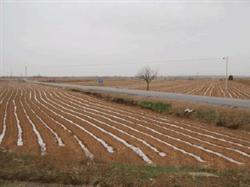
A Complete Analysis of the Key Technical Points for Soil Testing and Formula Fertilization in Spring Corn
1. Choose suitable varieties. Select suitable and superior varieties according to local conditions; based on heat resources and actual production conditions, choose medium-to-late maturing varieties with a growth period of 120-130 days. Among spring corn varieties with relatively outstanding comprehensive traits, the main one is Nongda 108, etc. 2. Fine land preparation. Spring corn requires deep plowing, and the earlier the autumn plowing...
-
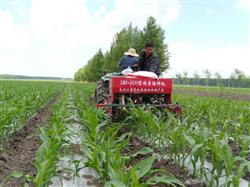
Key Technical Points and Operation Methods for Conservation Tillage of Spring Maize
Maize is a high-yield crop with a relatively large fertilizer requirement and is also very sensitive to medium and trace element fertilizers. Rational fertilization is essential to meet the nutrient needs of maize throughout its entire growth period. According to experiments, producing 100 kg of maize grain requires 2.5 kg of nitrogen, 1 kg of phosphorus, and 2.1 kg of potassium. If the yield is 500 kg of maize per mu, then 3... kg of urea is needed per mu.
-
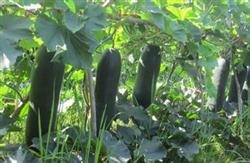
Key Technical Points for High-Yield Cultivation of Winter Melon in Greenhouses in Early Spring
Trellised cultivation of winter melon in greenhouses not only brings it to market early, but also gives higher early and total yields. 1. Varieties: generally use Guangdong Province green-skinned winter melon, Yichuanling No. 4, etc. 2. Raising seedlings: raise seedlings with heating in early January, using 8×8 cm plastic seedling pots. 1-2 days before sowing, the seeds must be sun-dried; after soaking and disinfecting the seeds...
-

Detailed Explanation of Key Points for Drought-Resistant Cultivation Techniques of Spring-Sown Corn
In recent years, as the area of spring-sown corn has increased, corn dwarf mosaic virus disease has also shown a worsening trend and has become a major disease of spring-sown corn. 1. Symptom identification: Corn dwarf mosaic virus disease can infect corn throughout the entire growth period, with damage being most severe at the seedling stage. Symptoms can appear as early as the three-leaf stage of corn, initially on...
-
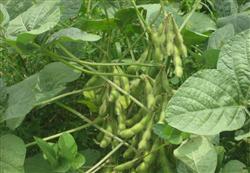
Spring planting fertilization tip: Effective potassium application boosts high yields in spring corn
Delayed senescence (staying green and late-maturing) refers to soybeans that, when they should be maturing, still have green branches and leaves with vigorous growth and seeds that are not yet plump, though not shriveled pods or shriveled seeds. The main cause of delayed senescence is excessive application of nitrogen fertilizer or application too late, causing excessive vegetative growth, delaying maturity, and affecting yield. To prevent delayed senescence in soybeans, it is necessary to timely...
-
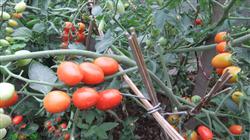
Detailed Explanation of Key Techniques for Early Spring Cultivation of Cherry Tomatoes
Cherry tomato, native to Taiwan, China, is a type of cherry tomato grown mainly for fresh fruit consumption, commonly known as "shengnyu guo" (cherry tomato). For early spring cultivation, a plastic greenhouse with a span of 6 m can be used, with seedlings raised in mid-November, transplanted in February of the following year, and fresh fruit harvested in early May, yielding 6000 kg of fresh fruit per mu. 1. Seed treatment. ...
-
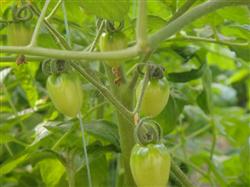
Cherry Tomato Winter-Spring Crop Cultivation Techniques in Solar Greenhouses
Cherry tomato, also known as mini tomato, contains various vitamins, minerals, and other nutrients. Like ordinary tomatoes, it is not cold-tolerant nor heat-tolerant. For the winter-spring crop, ordinary or improved solar greenhouses can be used. Generally, sowing takes place from late October to early November, transplanting from mid-to-late January to early February of the following year, and harvesting from early-to-mid March through June...
-
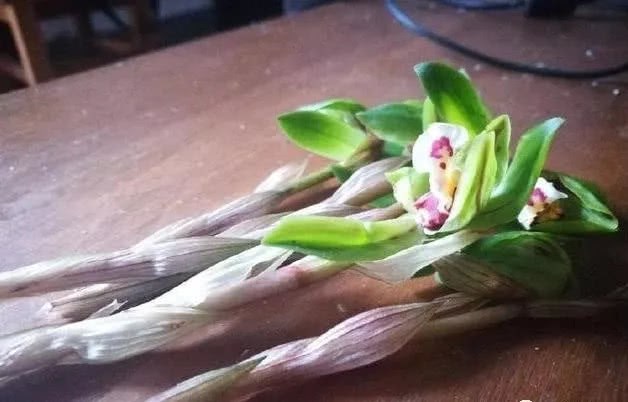
Spring orchid buds dry up as soon as they emerge? It's not too late if you do these things well
Autumn is the bud-forming period for spring orchids (Cymbidium goeringii), and orchid growers' interest shifts from admiring new shoots to looking forward to flower buds. Generally speaking, spring orchids in the Yangtze River basin form flower buds between the end of August and the end of September, and the buds mostly emerge from the soil in October. Some orchid growers, when talking with Haoshe Nongfu...
条件筛选