-
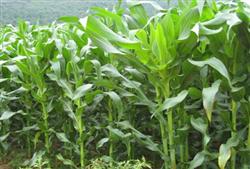
Want high yields from spring-planted corn? Remember these seven criteria when choosing seed
At sowing, apply 30-40 kg of compound fertilizer per mu; the fertilizer should be placed between two rows or two corn plants, at a depth of more than 10 cm, and covered with soil after application. At the 3-leaf stage, water once with dilute manure water, 1500-2000 kg per mu. After thinning at the 5-leaf stage, depending on the amount of base fertilizer and the corn's growth, appropriately apply a top dressing to promote...
-
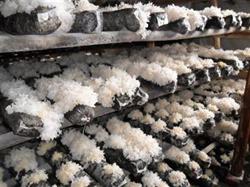
How to reduce contamination in spring cultivation of white fungus
In spring white fungus cultivation, most damage is caused by green mold, with some contamination by Rhizopus and Mucor, while Neurospora is rare. Green mold, Mucor and Rhizopus often occur at the edges of the inoculation holes in the fungus bags, or when the mycelial rings of two holes meet 9-10 days after inoculation, appearing at the front of the mycelium, and also on the bag walls. Green mold also occurs on the fruiting bodies, causing the fungus fronds to rot. Neurospora mostly occurs at the gaps where the bag openings are tied. The main causes of contamination are incomplete sterilization of the substrate bags, lax aseptic technique, holes in the bag film, impure spawn carrying contamination, or contamination of the environment.
-

Get one of these plants in autumn and, with good care, it can bloom from winter all the way to spring.
Once the hot summer has passed and the weather turns cooler, the flowers we grow at home start growing again! Autumn is a crucial stage for many flowers! Take the three flowers below, for example: if you don't care for them well in autumn...
-
What three things should be noted in spring management of dryland rapeseed?
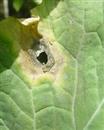
Sclerotinia rot of rapeseed is a major disease harming rapeseed, and its control must be taken seriously to reduce the damage and minimize losses. Symptoms: when the disease occurs, the lesions on rapeseed leaves are round or irregular, grayish brown or yellow-brown in the center, dark bluish in the middle, with a yellow halo on the outer edge. When dry, the lesions rupture and perforate; under humid conditions...
-
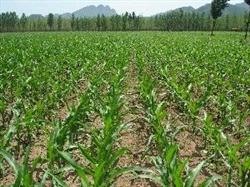
How to plant spring corn well? Master these key points
1. Adapt to local conditions and select good varieties. In plains and hilly areas, promote Yedan 13 and Xiyu No. 3, paired with Huayu No. 4, Zhongdan 32, Chenghai No. 1, and Yuanzheng 808; for intercropping in cotton fields, choose short-stalked, short-growth-period Yedan 22, Yedan 51, and 9362; in suburban areas, mainly for fresh eating, you can plant Zhongnuo 1...
-
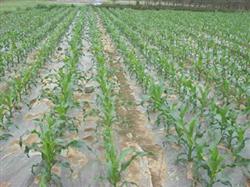
What are the key cultivation techniques for spring corn?
Adapt measures to local conditions and select improved varieties. In plain and hilly areas, promote Yedan 13 and Xiyu No. 3, paired with Huayu No. 4, Zhongdan 32, Chenghai No. 1, and Yuanzheng 808; for intercropping in cotton fields, select short-stalked, short-growth-period Yedan 22 and Yedan 51; in suburban areas, where fresh eating is the main purpose, waxy corn such as Zhongnuo No. 1 can be planted. Apply sufficient base fertilizer and skillfully apply topdressing...
-
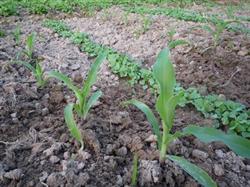
Detailed Explanation of Key Techniques for Raising Seedlings and Transplanting Spring Corn
The spring corn sowing period is approaching, and in production, work on raising seedlings and transplanting should be done well to promote early and steady growth of corn and achieve high and stable yields. For plots selecting improved varieties to harvest tender corn cobs, it is advisable to choose varieties with good quality such as the Jiangnan Huanuo and Suyunuo series; for plots harvesting corn grain, it is advisable to choose high-yielding varieties such as Zhengyu...
-
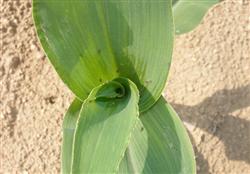
Key Technical Points for Transplanting Spring Corn with Plastic Film Mulch Cultivation
Q: The spring corn already has more than ten leaves, and now the field has a very high population of small brown planthoppers. Can I spray chlorpyrifos or fipronil to control them? A: The main damage small brown planthoppers cause to corn is spreading the viral disease maize rough dwarf. According to relevant data, the susceptible leaf-age period for corn runs from emergence to the 6-leaf stage (9 visible leaves),...
-
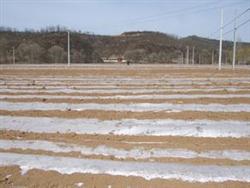
Detailed Cultivation Techniques for Spring Corn Intercropped with Autumn Cucumber
Land preparation and fertilization: Choose a sunny, well-ventilated plot with deep, loose, fertile soil, abundant water and good drainage. Base fertilizer should be mainly organic fertilizer, applied as early as possible in combination with autumn plowing, so that the fertilizer can fully decompose and blend with the soil. According to experiments, applying base fertilizer in autumn increases yield by 14.9% compared with applying it in spring. The base fertilizer can be...
-
Why Spring Corn Fertilization Should Be Light Early and Heavy Late
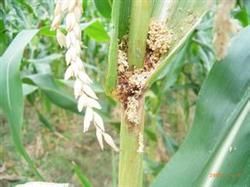
The corn borer, also known as the corn stalk borer. Spring corn is currently at the late whorl stage (funnel stage), and this period is the best time to control the corn borer. At the funnel stage, most newly hatched corn borer larvae crawl into the leaf whorl tube and feed on the mesophyll of the not yet unfolded leaves, and spraying at this stage makes it easy for the spray liquid to enter the leaf whorl tube, improving control effect...
条件筛选