Key Technical Points for Spring Greenhouse Cultivation and Management of Chili Peppers
Since last winter up to now, the market for mildly spicy chili peppers grown in greenhouses has been consistently strong. Therefore, this newspaper hereby introduces its cultivation techniques as follows: 1. Raising seedlings. The flower buds in the middle and lower parts of the chili pepper have already completed differentiation during the seedling stage, so cultivating sturdy seedlings is very important for the quality of flower bud differentiation and for earlier flowering and fruiting. During the seedling period, the suitable...
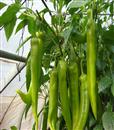
Since last winter up to now, the market for mildly spicy chili peppers grown in greenhouses has been consistently strong. Therefore, this newspaper hereby introduces its cultivation techniques as follows:
1. Raising Seedlings
The flower buds in the middle and lower parts of the chili pepper have already completed differentiation during the seedling stage, so cultivating sturdy seedlings is very important for the quality of flower bud differentiation and for earlier flowering and fruiting. Within the suitable temperature range during the seedling period, the seedling age is generally about 35 days, and transplanting is done when flower buds appear but before flowering. Generally 9-13 true leaves. Too short a seedling age is unfavorable for flowering and fruit setting.
2. Land Preparation, Fertilization, and Transplanting
(1) Chili peppers favor potassium fertilizer and phosphorus fertilizer. Phosphorus fertilizer should be composted together with organic fertilizer until decomposed and applied once as a basal dressing in full, and more potassium fertilizer should be applied. Under normal circumstances, use 50 kg of triple superphosphate (containing 46% phosphorus) per mu. Excessive single application of nitrogen fertilizer results in large leaves and tender branches, making plants prone to excessive vegetative growth, which is unfavorable for flowering, fruit setting, and later growth; the fruit color turns darker green and the fruit swelling rate becomes slow. (2) For winter warm sheds, transplanting should be carried out around late September. (3) Before and after transplanting, thoroughly disinfect the soil and the transplanting holes, and promptly prevent root rot and stem base rot (phytophthora blight, i.e. rotten neck root).
3. Management
(1) Chili peppers are neither drought-tolerant nor waterlogging-tolerant. This variety has a well-developed root system and vigorous growth. Before flowering and fruit setting, do not flood irrigate or water too frequently; growth should be controlled to prevent excessive vegetative growth and root suffocation. (2) Chili peppers adapt to a growing temperature between 15.5-35°C; too high or too low a temperature will both affect normal flowering and fruiting. The suitable temperature inside the greenhouse should be controlled at 18-28°C. (3) Timely harvest the first fruit and the second fruit to ensure normal flowering and fruit setting in the middle and upper parts. (4) This product has a strong ability for continuous fruit setting in the middle and upper parts, with large fruit and high yield. After fruit setting, fertilizer and water management should be strengthened. Apply timely topdressing with fertilizers high in nitrogen, potassium, and calcium and containing medium and trace elements to ensure yield and fruit marketability in the middle and late periods. (During the heavy fruiting period, apply fertilizer with a nitrogen:phosphorus:potassium ratio of 18:5:22 and containing trace elements such as calcium, magnesium, zinc, and iron, at 30-50 kg per mu (effective area) per topdressing. When harvesting chili peppers, the plants should not be left bare, to prevent excessive vegetative growth in the upper part without fruit setting. (5) Before and after harvesting chili peppers, a fungicide should be sprayed promptly to prevent pathogens from invading through wounds and causing stem rot.
4. Related Tips
(1) Root rot and stem base rot (phytophthora blight, i.e. root rot) are important diseases of chili peppers. When transplanting chili peppers, special preparations should be applied into the holes for early control and prevention. (2) When this variety is sprayed with chemical growth regulators such as B9, chlormequat chloride, mepiquat chloride, paclobutrazol, and uniconazole, if the timing and temperature are not handled well, the fruit may become shorter, curved, and darker in color, affecting yield and quality, so they should be used with caution.