-

An old tree with abundant branches and green leaves paints the colors of the three spring months, its twisting, sturdy form carved all over with traces of time's vicissitudes
Featured content Do you like this article? Share it right away so more people can know about it! This site is rich in substantial and profound content...
-
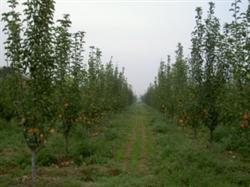
Detailed Explanation of Early Spring Management Techniques for Pear Trees
1. Dig planting holes or planting trenches. ① For pear orchards with colored varieties spaced more than 3 m apart, planting holes can be dug; centering on the planting hole, dig a circular or square planting pit 1 m deep and 1 m wide, placing the topsoil and subsoil separately on either side of the hole. ② For pear orchards with spacing below 2 m, planting trenches must be dug, with a trench depth of 1 m, ...
-
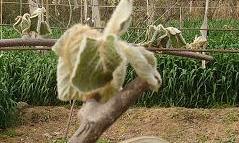
Protect kiwifruit from frost damage in spring, growers should prepare early
In recent years, the "late spring cold" phenomenon has been extremely prominent. Spring frost damage is one of the disastrous weather events that causes few kiwifruit buds to sprout, poor pollination, a low fruit-setting rate, delayed growth period, and setbacks to high yield and increased income. Preventing spring frost damage to kiwifruit is an important part of spring management work for kiwifruit. Recently, the reporter went to Shaanxi...
-
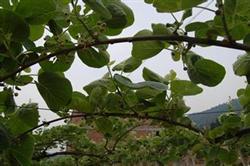
Kiwifruit Spring Orchard Cleaning: Timing and Key Methods
1. Prevent pests and diseases early: Before bud break and during the budding stage, spray the trees with 100 to 150 times diluted barium polysulfide to control pests, or use 3 to 5 degrees Baume lime sulfur mixture to kill insect eggs and overwintering pathogens. After leaf expansion, spray the foliar fertilizer Nongkang 120, which both supplements nutrients and prevents disease. 2. Apply the bud-promoting fertilizer early: For large fruiting trees, apply compound...
-
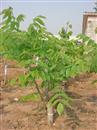
Detailed Explanation of Key Technical Points for Spring Management of Ma Walnut Trees
I. Planting of Ma Walnut Trees 1. The suitable time for planting is from March to mid-April, after the soil thaws and before the buds sprout. Early planting makes it easy to survive, with deep rooting. When choosing a site, the specific environmental requirements for walnut growth and development should be considered. The orchard site is best chosen on sunny flat land or gentle slopes, with sandy loam soil being ideal, and requires a soil layer of more than 1 m, with the groundwater level more than 2 m below the surface. The planting area should be leveled, aged, and measures taken to prevent alkalinity and waterlogging. For mountainous areas, fish-scale pits can be built first, then the tree discs gradually expanded. Before planting, large pits must be dug and sufficient base fertilizer applied. The correct method of digging pits is: dig pits 80-100 cm square, keep topsoil and subsoil separate, and apply one small cartload (50-100 kg) of barnyard manure organic fertilizer per tree. When backfilling the pit, first fill with topsoil mixed with base fertilizer, then fill with subsoil, tamping while filling, and water thoroughly before planting.
-
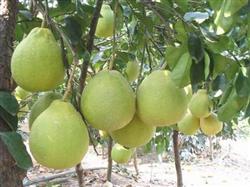
Detailed Guide to Spring Fertilization Methods After Pomelo Trees Bear Fruit
I. Fertilization for 1-3 year old young trees: To accelerate the growth of young trees and bring forward high yields, fertilization should be carried out multiple times in line with the pomelo tree's characteristic of sending out new shoots several times. Fertilizing before shoot emergence can promote shoot emergence and make the shoots grow robustly. Topdressing should mainly use quick-acting fertilizers. Fertilization method: apply frequently and in small amounts, with more fertilizer applied for spring shoots. The fertilization times are February, May and July respectively....
-
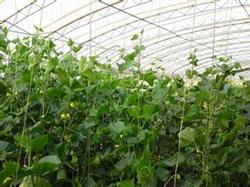
Detailed Guide to Raising Dry Cucumbers in Spring Greenhouses
Generally sow in late February to early March, choosing early-maturing varieties that are high-yielding, disease-resistant, tolerant of low temperature and weak light, and have good market quality. Before sowing, prepare the nutrient soil, add an appropriate amount of superphosphate and diammonium phosphate to the nutrient soil, and be sure to disinfect the nutrient soil after it is prepared; before sowing, disinfect the cleaned seeds, soak them in 55°C...
-
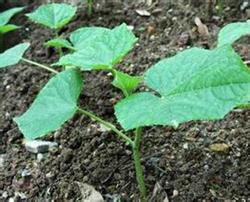
How to prevent root burn and seed rot when raising cucumber seedlings in winter and spring
Winter and spring are seasons with low temperatures, short daylight, and weak light. These natural conditions are all important factors affecting the formation of strong seedlings. However, under current production levels, it is difficult to fundamentally solve them artificially, especially the light conditions. Therefore, in the winter and spring seedling-raising season, if management is improper, the cucumber seedlings will easily...
-
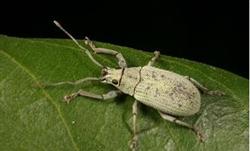
Management Measures for Spring Planting and Cultivation of Chestnut
The chestnut weevil, also known as the chestnut snout beetle, lays eggs in August, and the eggs hatch into larvae in September. The larvae bore into and feed on chestnut fruits, causing the damaged fruits to be filled with insect droppings, affecting their edibility and making them unsuitable for seed. Fruit damage generally ranges from 20% to 40%, and can reach 90% in severe cases. The control method is to spray insecticide on chestnut trees. Use 50% fenitrothion at 800 times dilution...
-
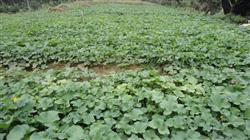
Key Technical Points for Open-Field Spring Muskmelon Cultivation
Apply all the base fertilizer at once, open a furrow 30 cm from the plants, and apply 50-100 kg of potassium sulfate compound fertilizer per mu, or 2-3 cubic meters of decomposed livestock and poultry manure. Or apply 50-100 kg of ternary bio-organic fertilizer, and in the middle and late stages spray the leaves with potassium dihydrogen phosphate + Xin Gao Zhi Mo (New High Lipid Film) at 600-800 times dilution, while also spraying Cuihua Wang No. 3 to balance vegetative growth...
条件筛选