-

Spring Disease Prevention and Treatment Methods and Technical Points for Sick Pigeons
In spring, temperatures fluctuate abnormally, and pigeons, irritated by colds and severe cold, are prone to rhinitis. Sick pigeons show sneezing, moist cere, dull feathers, listlessness, watery eyes, and reduced appetite, and in severe cases it can even lead to death. Therefore, in spring, the flock should be carefully observed, and sick pigeons should be treated promptly so they can recover their health as soon as possible. The prevention and treatment measures are: 1. Strengthen feeding management. Keep the cage and loft air circulating and fresh, do a good job of cold protection and warmth, and strictly prevent drafts and "thief wind" from invading. 2. Drug treatment. Sick pigeons are given oral streptomycin, each time
-
How to Do a Good Job of Disinfection in Rabbit Farms in Late Spring and Summer
Late spring and early summer is the time when bacteria and viruses begin to multiply in large numbers. Therefore, disinfection work on rabbit farms should be placed in an important position. To this end, the disinfection techniques for rabbit farms in early summer are introduced as follows: 1. Rabbit house disinfection: disinfect once a week. Before disinfection, thoroughly remove leftover feed, bedding straw and other filth, scrub clean with clean water, and disinfect after drying. The disinfectant can be a 2% caustic soda solution, etc.; a blowtorch or the flame of burning firewood and grass can also be used for disinfection, which is very effective at killing insect eggs and parasites. 2. Feeding utensil disinfection: every
-
Current key technical points for spring tea production management
Early picking and early marketing of spring tea, thereby increasing spring tea yield and output value, is the key to improving tea industry efficiency and increasing tea farmers' income. Combined with the actual tea production situation in Fuyang City, before spring tea picking, the main tasks are tea garden fertilization, tea tree pruning, freeze damage prevention, and tea factory and tea machine maintenance. 1. Shallow tillage and fertilization. Through shallow tillage, the soil can be loosened, the soil temperature raised, and early sprouting of spring tea promoted. Shallow tillage is generally carried out from late February to early March. When shallow tilling, combine with applying spring tea bud-promoting fertilizer. For tea gardens where base fertilizer was not applied in the previous autumn and winter, apply the spring tea bud-promoting fertilizer and base fertilizer at the same time. The amount of fertilizer applied depends on tea yield.
-
Detailed Explanation of Key Management Techniques for Peach Orchards in Early Spring
I. Clearing ditches and drainage. Low-lying terrain, heavy clay soil and waterlogging are the main constraints on high yield and quality of peach trees. If the ditch system in a peach orchard drains poorly, wet damage will injure the roots and weaken tree vigor. Therefore, the outflow ditches of the peach orchard must be thoroughly cleared to ensure unimpeded drainage, and where conditions permit, the furrow ditches should be deepened. II. Applying spring fertilizer early according to tree vigor. For all mid-season varieties with heavy fruit set, such as: Bai Feng, Feng Lu, Taqiao and other peach trees, as well as weak trees that have not received winter fertilizer since the start of winter, spring fertilizer should be applied early. Fertilizer rate: imported compound fertilizer 0.5-1 per tree
-
Key Technical Points for Spring Broodstock Conditioning of the Four Major Chinese Carps
Spring is an important period for the maturation of broodstock gonads. From the beginning of spring to spawning, a large amount of nutrients in the broodstock's body is diverted to gonad development, so broodstock conditioning should be intensified in spring to meet the needs of gonad development, promote timely maturation of broodstock and ensure smooth spawning. The conditioning techniques are: 1. Divide ponds early. Adjusting stocking density and species combination is the primary condition for good broodstock conditioning. The pond area for broodstock division should preferably be 2000-2600 sq m. Before dividing the ponds, first drain the pond water, remove wild trash fish, snails, mussels and harmful organisms, and at the same time remove part of the sludge
-

How to make potted tulips bloom at New Year's Day and Spring Festival
Grow tulips using the forcing method. After planting the bulbs, place them outdoors in a cool spot and keep the potting soil neither dry nor wet, until 1~2 months before the planned flowering period, then move the pots to a temperature of 5~10°C; after the leaves emerge, move them to 15~18°C in a sunny spot, and increase watering and fertiliser
-

What are the precautions for raising rabbits in spring? Explained clearly in one article
Precautions for raising rabbits in spring
-
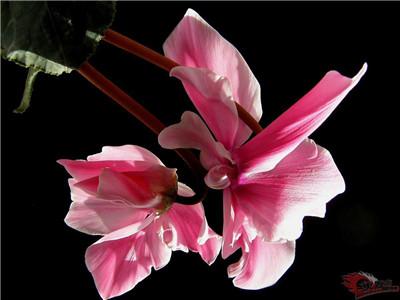
How to care for cyclamen in spring? An analysis of care methods and key points
Cyclamen is a flower that blooms in winter and spring. In spring, proper care of cyclamen will extend its blooming period, make the flower colors more vivid, and increase its ornamental value. Therefore, in spring, the care of cyclamen is extremely important. Cyclamen is a light-loving flower, and winter and spring are the periods of vigorous growth and blooming. To make the flower buds abundant,
-
How to prune potted camellias? A illustrated guide to the best pruning timing and methods around Spring Festival
As one of China's top ten famous flowers, the camellia is very beautiful, with bright and lovely blooms that people adore. However, if you want your camellia to grow beautifully, pruning is essential, because proper pruning ensures better growth and keeps it looking attractive. So how do you prune a camellia?
-
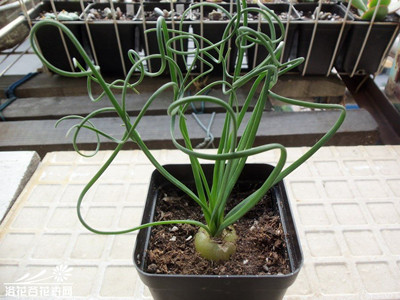
Propagation Methods and Pest and Disease Control Tips for the Spring Grass
Spring Grass can be propagated by division or by seed. 1. Division: This can be done together with repotting in autumn. The method is to break off the small bulbs that sprout around the large bulb and plant them separately in potting soil; they will survive whether they have roots or not. 2. Sowing: This method is suitable for mass propagation and is carried out in autumn. After sowing, cover with a thin layer of soil
条件筛选