-

Swine spring diarrhea is swine dysentery; early prevention and early treatment are key
Swine dysentery is an intestinal infectious disease caused by Brachyspira hyodysenteriae. It occurs mostly in growing pigs, with few cases in piglets and adult pigs. It spreads slowly, has a long epidemic period, a high incidence rate, and a low mortality rate, and can harm pig herds over the long term. Affected pigs pass feces mixed with large amounts of mucus and blood, often in a jelly-like form. Drug treatment for this disease is effective, but relapse is easy after withdrawal, making it difficult to cure completely. Drugs such as mequindox, berberine, bacitracin, olaquindox, and tetracycline can be selected for treatment. If the therapeutic effect is found to be poor, the drug should be switched as soon as possible.
-
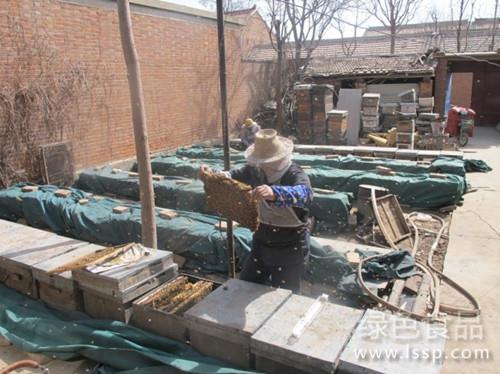
Key points for spring bee management: how to restore colony strength and make use of nectar sources
How to restore colony strength and make use of nectar sources: key points for spring bee management
-
After spring tea harvesting, attention should be paid to summer management of the tea garden.
After spring tea harvesting is finished, summer tea garden management work should be done promptly. 1. Fertilize in time. Apply 15-20 kg of urea per mu, or 25 kg of Zhongcha No. 1 fertilizer. Do not apply compound fertilizer with a high proportion of phosphorus and potassium, otherwise it will accelerate the reproductive growth of tea plants. During midsummer, carry out foliar topdressing. 2. Cultivate and weed. After June, apply chemical weed control once every 25 days. Commonly used herbicides include 10% glyphosate and 25% paraquat aqueous solution, etc. In July, deep-plow the tea garden once, which can both
-
How to carry out early-stage spring tea management? A detailed explanation of nine steps
Spring tea is the tea crop with the highest yield and the best quality of the year, fetching high prices and delivering good economic returns. Practice has proven that doing a good job of early-stage spring tea management plays a major role in increasing spring tea yield and improving spring tea quality and profitability. Therefore, it is essential to promptly complete tea garden management before the Spring Festival. 1. Apply additional and early topdressing. The time for applying the bud-forcing fertilizer is generally 15-30 days before the tea plant buds break, that is, before the end of February, applying 25-30 kg of urea per mu or 50-60 kg of ammonium bicarbonate or 50 kg of special compound fertilizer for tea plants.
-
What is good to feed rabbits in spring and summer? Don't miss these three treasures
Garlic, dried tangerine peel and chili pepper are common seasonings in home cooking and are known as the "three treasures of the kitchen". Because they contain a variety of nutrients, are non-toxic and have no side effects, do not easily cause harmful residues in livestock products, and also have disease-prevention and therapeutic effects, they are also called the three treasures of pure natural agriculture and forestry breeding. In recent years, the author has used the three treasures in domestic rabbit production and achieved good results. 1. They can increase rabbits' appetite. Adding an appropriate amount of garlic powder, dried tangerine peel powder and chili powder to the feed can mask the unpleasant odor of certain feed ingredients, increase aroma, and improve the feed
-
Spring Care Methods and Precautions for Pet Dogs
In this season, many families with pets surely also hope their beloved fur babies can stay healthy and well, but recently they keep finding that their pets are either coughing or having diarrhea, which worries pet owners terribly, so here we introduce some knowledge about spring pet care. 1. Transmission routes of spring diseases 1. Airborne transmission; in spring, the wind in Beijing is relatively strong, and there are often sandstorm days. Pet feces, after being weathered over a winter, become relatively dry, while infectious diseases, parasites, and parvovirus, etc. can still remain infectious within a year. The wind will blow animal feces far away, expanding the range in which animals can become infected.
-
Why peach blossoms are called a good spring medicine
In the third month of spring, peach blossoms are in full bloom. Besides being ornamental, peach blossoms also have fairly high medicinal value. They contain kaempferic acid, coumarin, trifolioside, naringenin, and vitamins A, B, and C, among other components. They are bitter in taste and neutral in nature, non-toxic, and suitable for treating illness both internally and externally. Traditional Chinese medicine holds that the peach is sweet and warming in nature, with a pungent and sour taste, and has the effects of improving complexion and relieving consumptive fever. Fresh peaches tonify the middle and boost qi, and promote fluid production to quench thirst. For patients with high blood pressure, eating one peeled fresh peach morning and evening each day is beneficial for keeping blood pressure stable; for patients with iron-deficiency anemia and iron deficiency, regularly eating fresh peaches has a certain
-
How to prune goji berry in spring? Detailed methods and techniques
1. Thinning branches. First, cut off dead branches, diseased and pest-infested branches, damaged branches, thorn branches and crossing branches, then thin out overly dense fruiting branches. When thinning fruiting branches, first remove shaded branches, downward-growing branches and thin weak branches; then remove upward-growing branches and middle branches; if still too dense, thin out the branches on both sides, so that after pruning the distance between fruiting branches is 5-6 cm, and all are plump, strong-fruiting white-stem branches. 2. Handling water sprouts. Water sprouts growing on the drooping parts of scaffold branches are kept as extension branches of the scaffold branches and appropriately cut back, so that the branch vigor and extension direction remain stable; if there is space near the water sprout
-
How can you distinguish spring tea, summer tea, autumn tea and winter tea after brewing?
Spring tea: when brewed, the tea leaves sink relatively quickly, the aroma is strong and lasting, the taste is mellow, the liquor is clear and bright, the brewed leaves are soft and thick, there are many normal buds and leaves, and the leaf veins are fine and dense with inconspicuous serrations on the leaf margin. Summer tea: when brewed, the tea leaves sink relatively slowly, the aroma is not high enough, the taste is somewhat bitter and astringent, the brewed leaves are thin and rather hard, there are relatively many opposite leaves (with inconspicuous terminal buds), the leaf veins are coarser, and the serrations on the leaf margin are obvious. Autumn tea: the aroma is not high, the taste is light and slightly astringent, there are many opposite leaves, the serrations on the leaf margin are obvious, and the leaf blades vary in size. Winter tea: the aroma tends toward a light fragrance type, and the taste is smooth and softer than spring tea
-
Six key technical points for spring tea management
Weeding and loosening the soil: After 4-5 months of rain and snow, the tea garden soil has become compacted, and some weeds have already grown. At this time, the soil temperature is relatively low. Therefore, weeding and loosening the soil before the spring tea harvest helps to loosen the soil, raise the soil temperature, eliminate weeds, and reduce the consumption of water and nutrients, which promotes earlier sprouting of spring tea. Weeding and loosening the soil is generally carried out from the end of February to early March, with a depth of 10-15 cm. Applying bud-promoting fertilizer: The bud-promoting fertilizer should be applied early rather than late, with a trench opened 15-20 cm from the tea plant roots
条件筛选