How to manage spring tomatoes after transplanting? Practical methods are here
1. Timely intertillage. Intertillage should be carried out promptly after transplanting. Early and deep intertillage helps raise soil temperature and promotes rapid root development and recovery growth. It is even more important for early-maturing cultivation. Intertillage should be carried out 3-4 times in succession, with the depth becoming shallower each time. This promotes the growth of adventitious roots at the stem base and expands the root system. 2. Fertilizer and water management. Tomatoes...
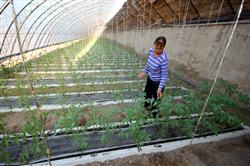
1. Timely intertillage. Intertillage should be carried out promptly after transplanting. Early and deep intertillage helps raise soil temperature and promotes rapid root development and recovery growth. It is even more important for early-maturing cultivation. Intertillage should be carried out 3-4 times in succession, with the depth becoming shallower each time. This promotes the growth of adventitious roots at the stem base and expands the root system.
2. Fertilizer and water management. Tomatoes have a relatively high fertilizer requirement and are fairly tolerant of fertilizer. After transplanting and recovery, a seedling-promoting fertilizer should be applied once. Apply 250-500 kg of decomposed manure or 10-12.5 kg of ammonium sulfate per mu in holes. When the fruit of the first cluster begins to swell, apply the second fertilizer. This topdressing amount should be increased, and nitrogen and phosphorus should be combined, applying 10-12.5 kg of urea and 20-25 kg of superphosphate per mu. When the second cluster of fruit is quite large, a third topdressing should be carried out, with the same amount as the second. During the peak fruiting period, foliar feeding or leaf surface fertilization can be used as a supplement.
3. Plant adjustment. Non-self-topping tomato types can use single-stem pruning or double-stem pruning. Single-stem pruning: keep about 7 clusters of fruit per plant. For the 1st-4th clusters, keep 2-3 fruits per cluster; after the 5th cluster, keep 3-4 fruits per cluster, and remove the excess. Remove side buds at the right time and thin flowers and fruits promptly to keep the fruit uniform.
4. Pest and disease control. The main diseases include early blight, leaf mold, gray mold, and bacterial canker. In the early stage of disease, 1:2:200 Bordeaux mixture can be used for control; in the later stage, 70% thiophanate-methyl 800-1000 times solution or 75% chlorothalonil 600 times solution can be sprayed for control. The main pests include cotton bollworm, cabbage caterpillar, and aphids, which damage leaves and fruits. Tianrun Insecticide No. 1 or Tianrun Insecticide No. 2 has a good control effect on cotton bollworm and cabbage caterpillar.
5. Flower drop and its control. There are many causes of flower drop, which can be summarized mainly into the following two aspects: (1) Flower drop due to nutritional deficiency. (2) Flower drop due to reproductive development disorders. To prevent flower drop, cultivation management must be fundamentally strengthened by cultivating strong seedlings, transplanting at the right time and paying attention to root protection, strengthening fertilizer and water management, preventing soil drought and waterlogging, ensuring sufficient nutrition, preventing excessive application of nitrogen fertilizer alone, and carrying out plant adjustment in a timely manner, etc.