-
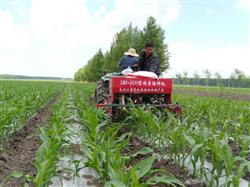
Key Technical Points and Operation Methods for Conservation Tillage of Spring Maize
Maize is a high-yield crop with a relatively large fertilizer requirement and is also very sensitive to medium and trace element fertilizers. Rational fertilization is essential to meet the nutrient needs of maize throughout its entire growth period. According to experiments, producing 100 kg of maize grain requires 2.5 kg of nitrogen, 1 kg of phosphorus, and 2.1 kg of potassium. If the yield is 500 kg of maize per mu, then 3... kg of urea is needed per mu.
-
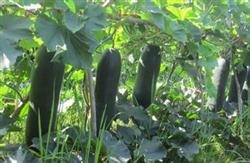
Key Technical Points for High-Yield Cultivation of Winter Melon in Greenhouses in Early Spring
Trellised cultivation of winter melon in greenhouses not only brings it to market early, but also gives higher early and total yields. 1. Varieties: generally use Guangdong Province green-skinned winter melon, Yichuanling No. 4, etc. 2. Raising seedlings: raise seedlings with heating in early January, using 8×8 cm plastic seedling pots. 1-2 days before sowing, the seeds must be sun-dried; after soaking and disinfecting the seeds...
-
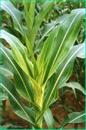
Detailed Explanation of Key Points for Drought-Resistant Cultivation Techniques of Spring-Sown Corn
In recent years, as the area of spring-sown corn has increased, corn dwarf mosaic virus disease has also shown a worsening trend and has become a major disease of spring-sown corn. 1. Symptom identification: Corn dwarf mosaic virus disease can infect corn throughout the entire growth period, with damage being most severe at the seedling stage. Symptoms can appear as early as the three-leaf stage of corn, initially on...
-
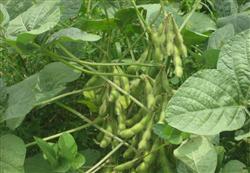
Spring planting fertilization tip: Effective potassium application boosts high yields in spring corn
Delayed senescence (staying green and late-maturing) refers to soybeans that, when they should be maturing, still have green branches and leaves with vigorous growth and seeds that are not yet plump, though not shriveled pods or shriveled seeds. The main cause of delayed senescence is excessive application of nitrogen fertilizer or application too late, causing excessive vegetative growth, delaying maturity, and affecting yield. To prevent delayed senescence in soybeans, it is necessary to timely...
-
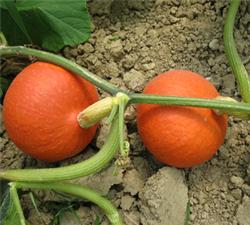
High-Quality New Pumpkin Varieties and Key Points of Spring Cultivation Techniques
Pumpkin is a nutritious and healthy vegetable, and the Western pumpkin (Cucurbita maxima) introduced from abroad has low fruit water content, high solids, high levels of non-reducing sugars and starch, a starch-to-total-sugar ratio exceeding 1, low crude fiber and high crude protein, so its eating quality and mouthfeel are excellent, and its quality greatly surpasses that of domestic local pumpkins, making it deeply...
-
Detailed Explanation of Key Techniques for Spring Sowing and Seedling Cultivation of Winter Squash
1. Seed treatment Before sowing, first prepare seedling pots (specification: 10 cm x 10 cm x 8 cm) and nutrient soil (50% decomposed organic fertilizer, 50% field sandy loam soil, mix evenly). Before sowing, seed treatment should be carried out: remove shriveled and deformed seeds, select plump seeds, and sun the seeds on a sunny day for 1-2 days, ...
-
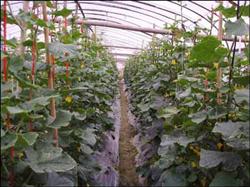
Key Techniques for Spring Greenhouse Cultivation of Winter Squash (Western Pumpkin)
1. Varieties: At present there are many varieties of Western pumpkin. According to the results of comparative trials of introduced varieties at our institute, the "Dongsheng" and "Yipin" selected by Taiwan Nung You Seed Co., Ltd.; and the "Juhong" series and "Lübao" selected by Jiangsu Chia Tai Seed Co., Ltd. of Thailand's Chia Tai Group "...
-
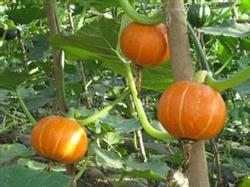
Key Cultivation Techniques for Western Pumpkin in Spring Greenhouses
Pumpkin is a nutritious and healthy vegetable, and the Western pumpkin introduced from abroad is deeply loved by consumers because its fruit has low water content, high solids, high non-reducing sugars and starch, a starch/total sugar ratio exceeding 1, low crude fiber, and high crude protein, giving it excellent taste and mouthfeel, with quality far surpassing domestic local pumpkins...
-
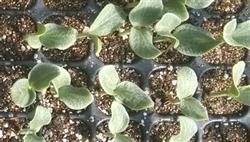
Detailed Guide to Early-Maturing Spring Cultivation Techniques for Japanese Pumpkin
Japanese pumpkin, also known as Western pumpkin, is a new type of vegetable pumpkin introduced in recent years from Japan, South Korea and other places as a high-quality pumpkin. This pumpkin has firm, fine flesh that is sticky or mealy, with excellent flavor, and the fruit is relatively small; when harvested as a vegetable, a single fruit generally weighs 1 kg. It is early-maturing with stable fruit set...
-
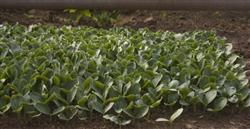
Key Technical Points for Raising Seedlings of Pumpkin in Solar Greenhouses with Vertical Trellis Cultivation for the Winter-Spring Crop
①Determining the sowing date The sowing date is mainly determined by the heat retention of the solar greenhouse. A solar greenhouse with good light transmission and good heat retention can be sown and raised as seedlings in late November. The melons are harvested in mid-March of the following year. Otherwise, the sowing date can be postponed to January of the following year. With the above-mentioned solar greenhouse, sowing and seedling raising are generally carried out from late December to early January of the following year...
条件筛选