-

Sorghum, barley and other imports must be licensed, intent to strengthen regulation is obvious
Starting from September 1, imports of four categories of goods - barley, sorghum, cassava and corn distillers' grains - will require an additional procedure: obtaining an automatic import license. On August 6, the Ministry of Commerce and the General Administration of Customs issued Joint Announcement No. 34 of 2015, deciding to include barley, sorghum, cassava and
-
Barley, Sorghum and Others Included in Automatic Import Licensing Administration Starting September 1
In accordance with the Foreign Trade Law of the People's Republic of China, the Regulations of the People's Republic of China on the Administration of Import and Export of Goods, and the Measures for the Administration of Automatic Import Licensing of Goods, it is hereby decided to include barley, sorghum, cassava and corn distillers grains in automatic import licensing administration (see
-
Staple grain imports fall while sorghum and barley rise: changes in import structure prompt reflection
Affected by factors such as the inversion of domestic and international prices and demand pull, China's grain (cereal) imports in 2014 continued to maintain rapid growth, with imports reaching 19.516 million tons, up 33.8% year on year, and net imports of 18.747 million tons, up 40% year on year. At the same time, the structure of grain imports showed three
-
Sorghum prices keep falling: how should growers respond in 2014?
Since the start of 2014, sorghum prices have failed to match last year's highs and have kept falling. As of December 9, the purchase price of new-crop sorghum held at 1.00 yuan/jin, down another 11% compared with September, while the ex-factory price of old-crop cleaned grain fell by as much as 22%. 2014 sorghum prices
-
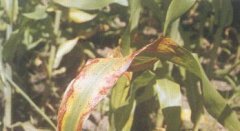
Causes, Symptoms and Control Methods of Sorghum Sheath Blight
What causes sorghum sheath blight? What are its symptoms? How should it be controlled? Let's take a look together. Symptoms: It mainly damages the leaves and the base of the stem. On the leaf sheaths near the ground level, small white-green water-soaked lesions first appear, then expand into oval shapes, with brown margins and lighter centers. Lesions on the leaves appear grayish-green or grayish-white and cloud-like, and most of the lesions merge into a tiger-stripe pattern, causing the entire leaf to wither and die.
-
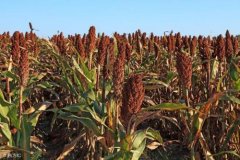
When is sorghum harvested, and what is the current purchase price per jin?
When is sorghum harvested? How is the purchase price? Let's take a look together. Sorghum is ready for harvest 35~40 days after heading, when the stems and leaves turn yellow and the grains are hard and milky white; the heads should be cut and harvested promptly with a sickle. After the sorghum heads are sun-dried, they can be threshed by rolling with a cart wheel
-
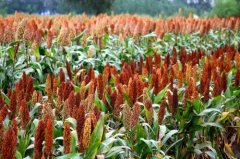
What Is Sweet Sorghum? Differences from Sorghum and a Detailed Guide to Growing Techniques
Do you know sweet sorghum? Why is sweet sorghum called sweet sorghum? Let's take a look at how it differs from sorghum. Sweet sorghum is a variety of grain sorghum and can also produce 5000-6000 kg of grain per hectare, but the seeds are smaller, with a 1000-grain weight
-
How much is red sorghum per jin? Latest price trends
Sorghum is one of China's cash crops, and it can be used to make sorghum liquor. After processing, the sorghum grain becomes sorghum rice, which can be used to make noodles, mianyu (fish-shaped noodles), noodle rolls, pancakes, steamed cakes, sticky cakes, and more. So how much is red sorghum per jin? Is growing sorghum
-
Detailed Explanation of Sorghum-Sudangrass Hybrid Planting Techniques and Management Methods
Sorghum-Sudangrass Hybrid is a cross between sorghum and Sudan grass, with relatively high yield and relatively high digestibility. It also has relatively strong resistance. Let's take a look at Sorghum-Sudangrass Hybrid planting techniques below. I. Sorghum-Sudangrass Hybrid Planting Techniques Sorghum-Sudangrass Hybrid has no strict requirements for sowing time and utilization period
-
How to Grow Sorghum? A Detailed Guide to Sorghum Planting Methods and Techniques
Sorghum is a common crop. After processing, the sorghum grain becomes sorghum rice, and it is a staple food in China, Korea, the former Soviet Union, India, Africa and other places. So, how do you grow sorghum? 1. Site Selection and Land Preparation. Sorghum has a well-developed root system and a strong ability to absorb water and nutrients, so it is best to choose flat, loose and relatively fertile plots for planting.
条件筛选