-
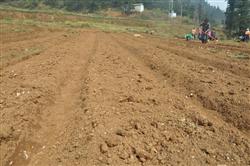
Isatis root planting methods and cultivation techniques explained in detail
How is Isatis root cultivated? Please provide the process. For the method of cultivating the medicinal herb Isatis root, you can refer to the following methods: Selection of Isatis root cultivation site: Isatis root is not suitable for planting in low-temperature waterlogged land, as it is prone to root rot after waterlogging. In order to reduce the occurrence of pests and diseases, it is advisable to ridge-cultivate with gramineous and leguminous plants. If the soil is fertile,...
-

What is Atractylodes rhizome root rot? Disease knowledge that Atractylodes growers need to know
What is Atractylodes rhizome root rot? How should Atractylodes rhizome root rot be prevented and controlled? Please explain that in Atractylodes rhizome root rot, the fine roots of the underground part of affected plants generally turn brown and rot, then spread to the upper fleshy rhizome and stems, showing dark brown sunken rotting spots, and the aboveground part begins to wilt. On the cut surface of the rhizome and stem, the vascular bundles show an obvious discoloration ring; in the later stage, the root...
-
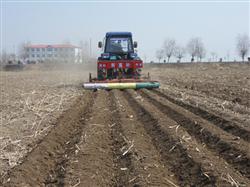
How to Grow Isatis Root for High Yield? Master These Planting Techniques
How can Isatis root be planted for high yield? Please provide detailed guidance methods. To achieve high yield when planting Isatis root, you can refer to the following methods: 1. Land preparation and fertilization for Isatis root planting. Because Isatis root is a deep-rooted plant, it is advisable to choose flat terrain, well-drained, fertile and loose sandy loam. Combined with land preparation, per mu...
-
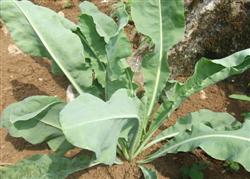
Detailed Explanation of Isatis Root Planting Management Methods and Technical Points
How to manage Isatis root planting? Please introduce the daily management methods. The daily management of Isatis root mainly includes field management and pest and disease control. For detailed methods, please refer to the following: Isatis root field management methods: When the seedlings are 7-10 cm tall, thin them out; when the seedlings are 12 cm tall, set the spacing, with a plant spacing of 7-10...
-
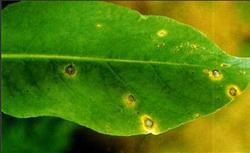
Isatis root cultivation: How to prevent and control pests and diseases of Isatis root?
How to prevent and control pests and diseases of Isatis root? Please explain the methods. Common pests and diseases of Isatis root include downy mildew, root rot, cabbage white butterfly, diamondback moth, etc. The prevention and control methods are described in detail below for reference: 1. Downy mildew: mainly damages leaves and petioles. Pay attention to drainage and ventilation with light; before and at the early stage of the disease, spray with 50% Tuzet 1000...
-
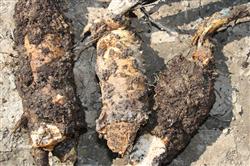
How to prevent and control ginseng root rot? These methods you need to master
How to prevent and control ginseng root rot? Please give an introduction. Symptoms of ginseng root rot: it mainly damages the roots of seedlings and the stem parts below the soil surface. The rotting ginseng roots appear dark brown and wet-rotten, and later become decayed and hollow, with only the hollow root skin remaining. The aboveground parts of affected ginseng seedlings show no obvious symptoms in the early stage, and in the middle and late stages the leaves fade to yellow, wilt and die....
-
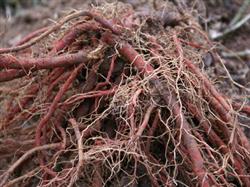
What are the control methods for root-knot nematode disease in Danshen (Salvia miltiorrhiza)?
How to control root-knot nematode disease in Danshen (Salvia miltiorrhiza)? What are the symptoms of root-knot nematode disease in Danshen (Salvia miltiorrhiza)? The control methods for root-knot nematode disease in Danshen (Salvia miltiorrhiza) can be referred to as follows: 1. Damage symptoms. The disease damages the roots of Danshen (Salvia miltiorrhiza). The affected taproots, lateral roots and fibrous roots all bear tumor-like root galls; the taproots and lateral roots become thinner, and the fibrous roots increase in number. On the galls...
-
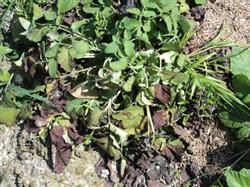
What are the control methods for root rot in red sage (Salvia miltiorrhiza)?
How do you control root rot in red sage? Please provide an introduction. Red sage root rot: 1. Harmful symptoms: Red sage root rot occurs in hot, rainy seasons and harms the plant's roots. In the early stage, only a few roots or part of the underground rhizome become diseased first, gradually spreading to the entire root system. After the roots are damaged, wet rot occurs, the outer skin turns black,...
-
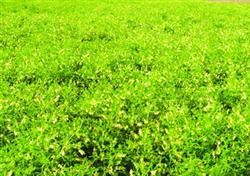
What are the control methods for purple root rot of Astragalus membranaceus?
How to control purple root rot of Astragalus membranaceus? Please explain the methods. The pathogen of purple root rot of Astragalus membranaceus is a kind of basidiomycete fungus, which mainly damages the underground roots. It first occurs on the underground fibrous roots, then spreads to the lateral roots and the main root. In the early stage of the disease, a layer of white thread-like material can be seen wrapped around the roots; as the disease develops, it turns purplish brown and...
-
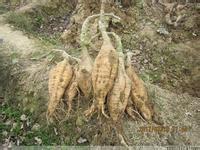
Characteristics and Artificial Cultivation Techniques of Wild Kudzu Root Explained
I. Characteristics. Kudzu root has strong adaptability, does not demand strict climate or geographical conditions, and is easy to cultivate. It is suited to a warm and humid growing environment. Kudzu root likes warmth and tolerates heat; when the average daily temperature reaches about 12°C, it begins to sprout; the suitable average daily temperature for growth is 20-33°C; 25-30°C is suitable for tuberous root formation, and 15-20°C is suitable for tuberous root...
条件筛选