Isatis root planting methods and cultivation techniques explained in detail
How is Isatis root cultivated? Please provide the process. For the method of cultivating the medicinal herb Isatis root, you can refer to the following methods: Selection of Isatis root cultivation site: Isatis root is not suitable for planting in low-temperature waterlogged land, as it is prone to root rot after waterlogging. In order to reduce the occurrence of pests and diseases, it is advisable to ridge-cultivate with gramineous and leguminous plants. If the soil is fertile,...
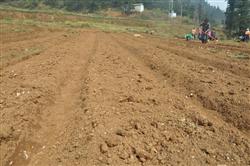 How is Isatis root cultivated? Please provide the process.
For the method of cultivating the medicinal herb Isatis root, you can refer to the following methods:
Selection of Isatis root cultivation site:
Isatis root is not suitable for planting in low-temperature waterlogged land, as it is prone to root rot after waterlogging. In order to reduce the occurrence of pests and diseases, it is advisable to ridge-cultivate with gramineous and leguminous plants. If the soil is fertile, rush planting is also possible.
Land preparation and fertilization for Isatis root planting:
Isatis root is a deep-rooted plant, so apply 4-5 cubic meters of decomposed organic fertilizer per 667 sq m. Before application, crush it finely first, then spread it evenly on the ground. Deep plow 20-30 cm, harrow finely and level, and make flat beds 1 m wide. When the ground is dry, water thoroughly, and sow again when the surface soil is slightly dry and loose.
Sowing of Isatis root:
It is divided into spring sowing and summer sowing. Spring sowing is around Qingming, at the latest no later than the Grain Rain solar term. Summer sowing is around Mangzhong. When sowing, in the prepared bed, draw furrows 1.5 cm deep at a row spacing of 20 cm, evenly scatter the seeds into the furrows, then cover with soil, level it, press lightly, and water immediately. Generally, seedlings emerge in 7-10 days, using 1.5-2 kg of seed per 667 sq m. In some production areas, Isatis is intercropped with grain crops or vegetables, which can make full use of the land and achieve increased income.
Daily management of Isatis root
After sowing, keep the soil moist. When the seedlings are 6-10 cm high, thin them to a set spacing (you can also set the spacing all at once, or first thin and then set the spacing), removing the weak and keeping the strong. If there are missing seedlings, transplant in time to fill the gaps. The focus of management is cultivating and weeding. After the seedlings emerge, hoe shallowly to prevent crushing and injuring the seedlings. After the spacing is set, loosen the soil and weed, keep the surface loose at all times, and keep the field free of weeds. For those mainly harvesting Daqingye, fertilize 3 times a year. The first topdressing is after the spacing is set, applying 10-12 kg of urea per 667 sq m, applied in furrows between rows, and watering in case of drought; the second and third times are both topdressed immediately after harvesting the leaves. For those mainly harvesting Isatis root, do not cut the leaves during the vigorous growth period, and apply less nitrogen fertilizer; 30-40 kg of cake fertilizer can be applied.
Seed retention of Isatis root
Spring-sown Isatis cannot bloom and set seed in the same year. In order to collect seeds, it must undergo low temperature. There are the following two methods:
One is that in late October, when digging and harvesting Isatis root, select pest-free, disease-free, thick and straight main roots, transplant them to the seed collection nursery and strengthen management, cover with horse manure in November to protect against the cold, and the seeds mature from late May to early June of the following year. Select and keep plump, full seeds for propagation the next year.
The second is to sow in August on a sunny, fertile plot, and the seedlings can reach about 30 cm high in the same year. Before winter, fertilize and water fully to promote seedling growth. After greening up the following year, thin the seedlings twice, keeping seedlings at a row spacing of 30-40 cm. They bloom in mid-to-late April, and seeds can be harvested from May to June. For any Isatis that has produced seeds, its roots should no longer be used for medicinal purposes.
Pest and disease control of Isatis root
The main disease of Isatis root is downy mildew. This disease damages the leaves. When it occurs, white or grayish-white mold-like material appears on the back of the leaves, with no obvious lesions. In severe cases, the leaf sheath turns brown and may even wither. The control method is mainly agricultural control: rational close planting to reduce soil moisture; reasonably rotate with gramineous crops when arranging cropping sequences; when diseased plants are found, remove them promptly at the early stage of the disease. Chemical control can also be used. At the early stage of the disease, spray with 1:1:100 Bordeaux mixture.
Spray evenly on the leaf surface and back of the leaves, once every 7-10 days, for 3 consecutive days; you can also use 65% zineb wettable powder 500-fold solution spray for control. The main pest harming Isatis root is the cabbage caterpillar, which damages tender leaves. During the larval stage, spray 90% trichlorfon 800-fold for control.
Harvesting and processing of Isatis root
For those mainly harvesting Daqingye, 2-3 cuttings can be taken in a year. The first cutting is around Mangzhong during the vigorous growth season, the second cutting is before the Beginning of Autumn, and the third cutting is between the End of Heat and White Dew. When cutting the leaves, choose a sunny day to harvest and dry them immediately. Those with green color are of good quality. If encountering overcast and rainy weather, dry them promptly. For those mainly harvesting Isatis root, do not cut the leaves during the growth period, or cut the leaves only once, and dig them up in late October when the aboveground part withers, avoiding breaking the main root. Dry the dug-up Isatis root in the sun until 60-70% dry, remove the soil, tie into small bundles, and then sun-dry until fully dry, at which point it is commercial Isatis root.
Management methods for Isatis root planting
Disease control methods for Isatis root